
Ardhanareeswarar temple, Tiruchengode, Namakkal
The Ardhanareeswarar Temple in Tiruchengode, Tamil Nadu, is an ancient Hindu temple dedicated to Ardhanarishvara, the composite form of Shiva and Parvati. It is renowned for its unique deity image and its location atop a sacred hill, accessible by a climb of 1156 steps. The temple holds significant religious importance, being praised in ancient Saivite hymns and renovated by various dynasties.
Key Facts
- ›Dedicated to Ardhanarishvara, the half-male, half-female form of Shiva and Parvati.
- ›Located on a 650 ft high hill in Tiruchengode, Tamil Nadu, accessible by 1156 steps.
- ›Praised in the Tevaram hymns and mentioned in the ancient Tamil epic Cilappatikaram.
- ›Features an Emerald Lingam (Margatha Lingam) with specific darshan timings.
- ›Renovations were undertaken by Chola, Pandya, Nayak kings, and a British colonial officer.
- ›The hill is also known as 'Nagagiri' and features a 60 ft long snake carving.

Ardhanarishvara, Shiva, Parvati, Murugan, Ganesha, Adi Kesava Perumal
- Paadal Petra Sthalam
- Historical Site With Inscriptions From Chola, Vijayanagar, and Nayak Periods
- Pilgrimage Site, Especially During Vaikasi Festival and Girivalam
- Architectural Significance of the Hill Temple and Deity Image
Chola, Pandya, Nayak, Vijayanagar
Annual Chariot Festival, Girivalam, New Moon Days
Stone, Emerald
Sambandar, Arunagirinathar, Muthuswami Dikshitar, Chola Kings, Pandya Kings, Nayak Kings, British Colonial Officer Davis, Vijayanagar Kings, Krishna Devarayar, Sadasiva Maharaj, Nagammalai Gounder, Chennaraja Chikendar, Kondabhupathi
- Ardhanarishvara Image
- 60 ft Long Snake Carving On the Hill
- Sculptures In Front of the Chengottu Velar Shrine
- Embossed Figures On the Rajagopuram
River Kaveri, Sangu Theertham, Ammaiyappar Theertham
About Ardhanareeswarar temple, Tiruchengode, Namakkal
Ardhanareeswarar Temple, Tiruchengode
The Ardhanareeswarar Temple, also known as Tirukodimada Chenkundrur, is an ancient Hindu temple situated in Tiruchengode, Tamil Nadu, India. It is dedicated to Ardhanarishvara, a divine form that represents the union of the Hindu deities Shiva and his consort Parvati, embodying both masculine and feminine energies. The temple is located atop a sacred hill, accessible by a climb of 1,156 steps, and is a significant site within the Saivite tradition.
History and Significance
The temple is recognized as one of the 275 Paadal Petra Sthalams, sites praised in the Tevaram hymns composed by Saivite saints such as Sambandar, who lived in the 5th century. The ancient Tamil epic Cilappatikaram also mentions the locality by the name Neduvelkundru. Significant renovations to the temple have been carried out over centuries by the Chola, Pandya, and Nayak dynasties, as well as by a British colonial officer named Davis, whose image is found in a nearby shrine. The temple is currently maintained by the Hindu Religious and Charitable Endowments Department of the Government of Tamil Nadu.
Legends and Mythology
Several legends are associated with the Ardhanareeswarar Temple. One popular narrative recounts how Parvati performed austerities to unite with Shiva, leading to the Ardhanarishvara manifestation. Another legend explains the origin of the hill's name, Chengodu, stemming from a celestial battle between the serpent Adishesha and the wind-god Vayu, which caused a part of Mount Meru to break off and form the red hill. The hill itself is referred to as 'Nagagiri' in ancient hymns and features a striking 60-foot-long carving of a snake.
Architecture and Features
The temple complex is spread across a hill that is approximately 650 feet high. The main shrine is dedicated to Shiva as Maathoru Paagar and his consort as Baagampiriyaalammai, with the presiding deity, Ardhanareeswarar, depicted as a six-foot-tall image with its right half male and left half female. The temple also houses a shrine for Murugan, known as Sengottu Velar, located behind the main sanctum. A notable feature is the Margatha Lingam (Emerald Lingam), which has specific viewing times. The temple complex includes various mandapams and ancient pillars, some of which are in disrepair, while newer additions like the motorway and renovated Rajagopuram are of recent origin. The sanctum faces West, with the entrance from the South. A unique water spring, believed to be divinely manifested, is found at the foot of the deity's image.
Festivals and Practices
The Ardhanareeswarar Temple is a vibrant center for religious observance. The most significant annual festival is the 15-day chariot festival of the Sengottuvelavar temple, celebrated in the Tamil month of Vaikasi, featuring four separate chariots for the processional deities. Another important practice is 'Girivalam,' the circumambulation of the sacred hill on foot, which draws large crowds on full-moon days. The temple is also considered one of the important religious places in South India, with numerous associated water bodies ('Theerthangal'), the most prominent being the Ammaiyappar Theertham.
Source: Wikipedia ↗
Frequently Asked Questions
What is the significance of the Ardhanareeswarar Temple?
The temple is significant for being dedicated to Ardhanarishvara, representing the unity of Shiva and Parvati. It is one of the 275 Paadal Petra Sthalams praised in Saivite hymns and holds historical importance due to renovations by various rulers.
What are the legends associated with the Ardhanareeswarar Temple?
One legend describes Parvati performing austerities to unite with Shiva as Ardhanareeswarar, while another explains the origin of the hill's name 'Chengodu' from a battle between Adishesha and Vayu, which caused the mountain's peak to break and form the red hill.
What is special about the Margatha Lingam at this temple?
The temple houses an Emerald Lingam (Margatha Lingam). Viewing of this lingam is particularly special during the early mornings of the Margali month and during the daily Ucchi Kala Poojai.
What architectural features are notable at the Ardhanareeswarar Temple?
The temple is situated atop a hill with a climb of 1156 steps. It features a 5-tiered main gopuram and compound walls. The main deity's image is unique, with the right half male and the left half female. The hill itself has a 60 ft long snake carving.
Which deities are worshipped at the Ardhanareeswarar Temple complex?
The main deity is Ardhanarishvara. The complex also includes a shrine for Murugan (Chenkottu Velar) and a separate shrine for Ganesha (Ucchi Pillaiyar Kovil).
What are the important festivals celebrated at the temple?
The most significant festival is the annual chariot festival of the Sengottuvelavar temple, which lasts for 15 days in the Tamil month of Vaikasi. During this festival, four chariots carry processional deities of Ganesha, Murugan, Ardhanareeswara, and Adikeshava Perumal.
Related Temples (Hindu)
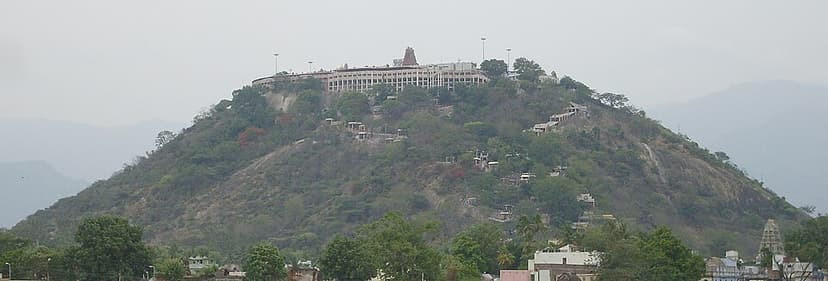
Palani Murugan Temple
The Palani Murugan Temple, also known as Dhandayuthapani Swamy Temple, is a significant Hindu temple dedicated to Lord Murugan, located atop a hillock in Palani, Tamil Nadu. It is revered as one of the Six Abodes of Murugan and is a major pilgrimage site, drawing devotees for its unique rituals and prasadam.
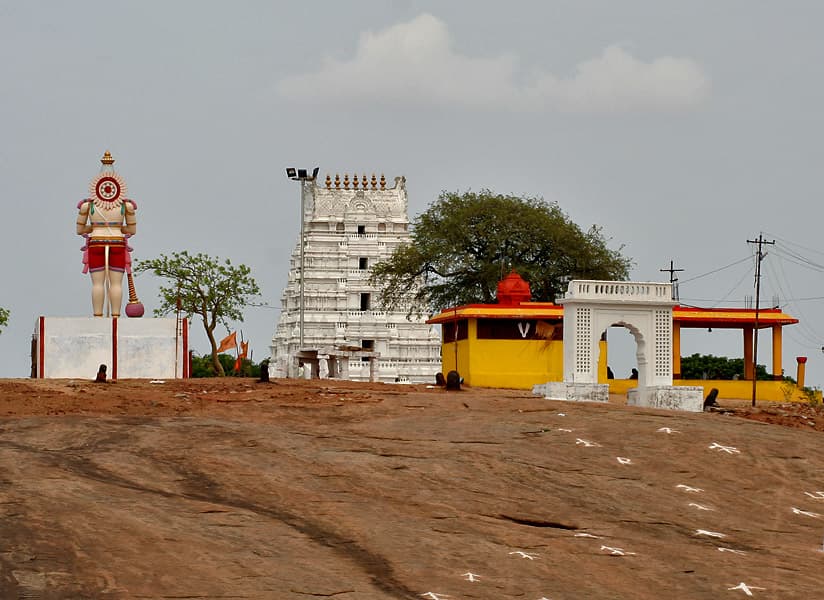
Keesaragutta Temple
Keesaragutta Temple, located in Telangana, India, is a significant Hindu temple dedicated to Lord Shiva and Parvati. Legend states that Lord Rama installed the primary lingam here, leading to its name Ramalingeswara, and it is believed to be a Swayambhu Linga. The temple is a popular pilgrimage site, especially during Maha Shivaratri and the month of Kartika.

Jogeshwari
Jogeshwari is a prominent suburb in western Mumbai, India, renowned for its ancient cave temples. The most notable among these is the Jogeshwari Caves, which houses shrines dedicated to the deities Jogeshwari, Shiva, and Hanuman and is considered one of the oldest Hindu cave temples in the region.