
Porphyrius of Gaza
Porphyrius of Gaza was the bishop of Gaza from 395 to 420. He is primarily remembered for his efforts to Christianize the pagan city of Gaza, which involved the demolition of its temples. His life and episcopate are known mainly from the Vita Porphyrii, a biography by Mark the Deacon, though modern scholarship debates its historical accuracy.
Key Facts
- ›Porphyrius served as bishop of Gaza from 395 to 420.
- ›He is credited with demolishing pagan temples in Gaza and Christianizing the city.
- ›His life is primarily documented in the Vita Porphyrii, written by his deacon Mark.
- ›Gaza was historically hostile to Christians, with paganism deeply entrenched.
- ›Porphyrius obtained imperial decrees to close and destroy pagan temples, including the prominent Marneion.
- ›A church named Eudoxiana was erected on the ruins of the Marneion at the expense of Empress Eudoxia.
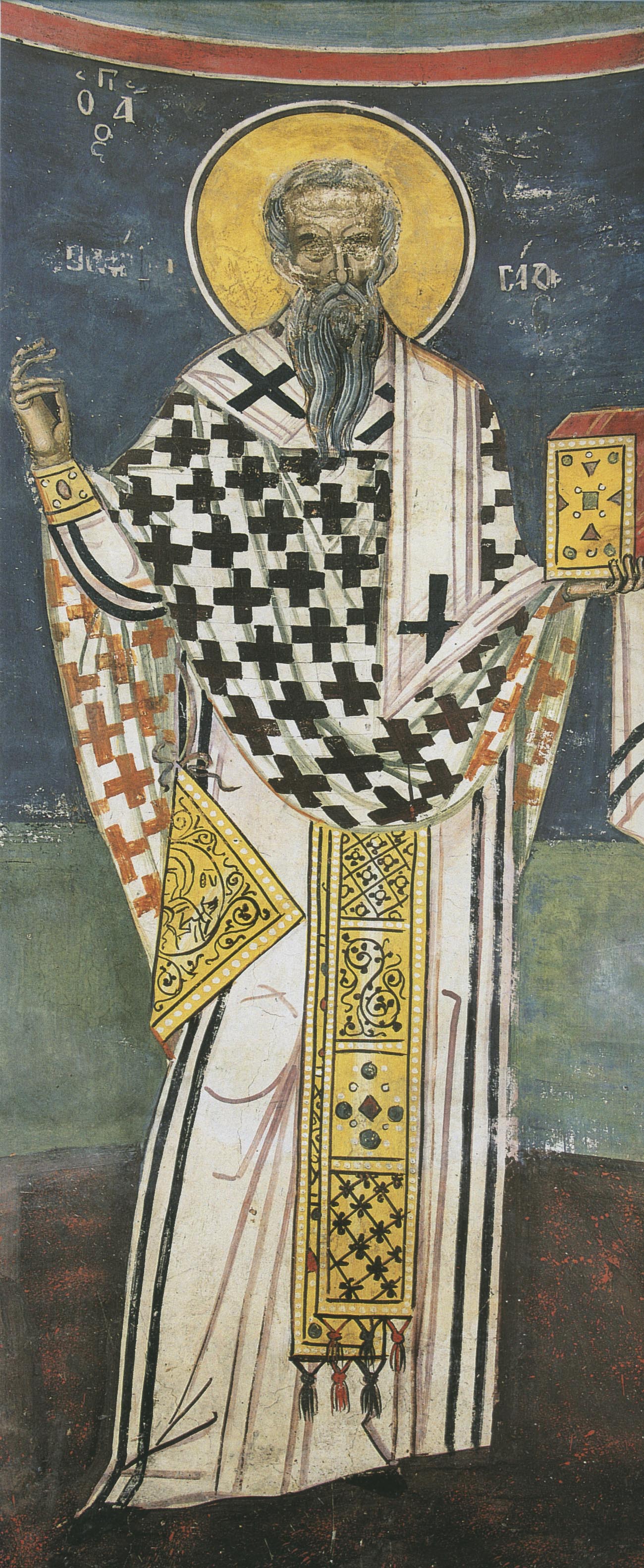
Porphyrios, Porfiriy
About Porphyrius of Gaza
Porphyrius of Gaza was the bishop of Gaza from 395 to 420 AD. His episcopate is primarily known through the Vita Porphyrii, a biography attributed to his deacon, Mark. This text details Porphyrius's significant efforts to transform Gaza, a city with a long history of paganism and hostility towards Christians, into a predominantly Christian center.
Life and Historical Context
During the late Roman period, Gaza was known for its resistance to Christianity. The city had witnessed Christian martyrdoms during the Diocletian persecution and a pagan revival under Julian. The Christian community was small, and the church was situated outside the city walls for safety. Porphyrius, who arrived in Gaza at the age of 45, faced considerable opposition from the pagan population and local officials, who initially blamed him for misfortunes like a drought.
Demolition of Pagan Temples
A pivotal aspect of Porphyrius's ministry involved the systematic destruction of pagan temples. He traveled to Constantinople to secure imperial decrees for this purpose. With the support of Empress Eudoxia and Emperor Arcadius, an imperial envoy executed the decree in May 402 AD, resulting in the demolition or burning of eight major temples, including the Marneion, dedicated to Zeus Marnas. Private idols and pagan libraries were also seized and destroyed.
Legacy and Historiography
On the site of the destroyed Marneion, a large church, the Eudoxiana, was erected in honor of Empress Eudoxia and dedicated in 407 AD. The Vita Porphyrii presents these events as the official end of paganism in Gaza. However, modern scholarship debates the historical reliability of the Vita, with some viewing it as hagiography containing stereotyped elements, while others defend its historical value due to its detailed knowledge of Gaza in late antiquity. Despite these scholarly debates, Porphyrius's actions are recognized as a significant event in the Christianization of the region and the broader Roman Empire.
Porphyrius's body is said to be buried beneath the ruins of Saint Porphyrius' Church in Gaza City. A street in Zejtun, Malta, bears his name.
Source: Wikipedia ↗
Frequently Asked Questions
Who was Porphyrius of Gaza?
Porphyrius was the bishop of Gaza from 395 to 420 AD. He is known for his role in the Christianization of the city and the demolition of its pagan temples.
What is the primary source for Porphyrius's life?
The primary source for Porphyrius's life is the Vita Porphyrii, a biography written by his deacon, Mark. This text chronicles the end of paganism in Gaza during the early fifth century.
What challenges exist regarding the historical accuracy of the Vita Porphyrii?
Some scholars view the Vita Porphyrii as hagiography rather than strict history, suggesting it contains stereotyped fictional events. However, others argue that the text reflects intimate knowledge of Gaza in late antiquity and has a historical basis.
What were the main obstacles Porphyrius faced in Gaza?
Gaza was historically hostile to Christians, with a strong pagan population and local officials who supported pagan practices. The Christian community was small, and its church had to be built outside the city walls.
How did Porphyrius achieve the demolition of pagan temples?
Porphyrius sought imperial intervention, traveling to Constantinople to obtain decrees from Emperor Arcadius and Empress Eudoxia. These decrees led to the destruction of eight major pagan temples in Gaza in 402 AD.
What happened to the Marneion temple?
The Marneion, a temple dedicated to Zeus Marnas, was set afire and burned for many days. Its stones were later reused for paving the streets of Gaza, and a large Christian church, the Eudoxiana, was built on its ruins.
Related Saints
Euthymius the Great
Euthymius the Great was an influential abbot and hermit in 5th-century Palestine, renowned for founding several monasteries in the Judaean Desert. He played a crucial role in promoting the decisions of the Council of Chalcedon in Jerusalem, despite opposition from local monks. Euthymius is remembered for his commitment to solitary monasticism while also guiding a significant monastic community and influencing the region's theological landscape.

Gerasimus of the Jordan
Gerasimus of the Jordan was a 5th-century Christian saint, monk, and abbot known for his ascetic life and establishment of a monastery near the Jordan River. He is chiefly remembered for the widely known anecdote of taming a lion by removing a thorn from its paw and for his spiritual guidance and healing of the sick.
Severian of Scythopolis
Severian was the bishop of Scythopolis in Palestine who was martyred for implementing the Chalcedonian faith. He is remembered for his zealous resistance to Eutychian heresy and his death in late 452 or early 453.