
Olga Nikolaevna
Grand Duchess Olga Nikolaevna was the eldest daughter of the last Russian emperor, Nicholas II, and Empress Alexandra Feodorovna. She is remembered for her compassionate nature, her service as a nurse during World War I, and her subsequent canonization as a passion bearer by the Russian Orthodox Church following her murder after the Russian Revolution. Olga's life was marked by her close family relationships, early marriage speculations, and the tumultuous events leading to the end of the Romanov dynasty.
Key Facts
- ›She was born on November 15, 1895, to Emperor Nicholas II and Empress Alexandra Feodorovna.
- ›Olga served as a nurse in a military hospital during World War I.
- ›She was murdered on July 17, 1918, following the Russian Revolution.
- ›The Russian Orthodox Church canonized her as a passion bearer.
- ›Her remains were identified through DNA testing and reburied in St. Petersburg.
- ›She was known for her charitable acts and strong will, though sometimes described as temperamental.

Olga Nikolaevna Romanova
Passion Bearer, Nun
Amulet With Rasputin's Image
About Olga Nikolaevna
Olga Nikolaevna of Russia
Grand Duchess Olga Nikolaevna of Russia (1895–1918) was the eldest daughter of Emperor Nicholas II, the last ruler of the Russian Empire, and his wife Empress Alexandra Feodorovna. Her life, though tragically short, spanned a period of immense change and upheaval in Russia, culminating in the revolution that ended centuries of Romanov rule.
Life and Historical Context
Born into immense privilege, Olga was the first child of Nicholas II and Alexandra, and for a time, her birth raised the possibility of her inheriting the throne before the birth of her younger brother, Alexei. She was raised with her four siblings and educated by tutors, developing a keen intellect and a musical talent. Descriptions of her personality highlight a blend of compassion and strong will; she was known for her charitable actions, once giving away her doll to a crying child, yet could also be temperamental and disobedient. During World War I, Olga, like her mother and sisters, served as a nurse in a military hospital, tending to wounded soldiers.
Family and Relationships
Olga shared a particularly close bond with her sister Tatiana, and they were often referred to as "The Big Pair." She idolized her father but had a more complex relationship with her mother, Empress Alexandra, marked by occasional tension. Her family's deep reliance on the counsel of Grigori Rasputin was a significant aspect of her upbringing, though as she matured, Olga became more aware of the political implications of this association. She also had a close relationship with her paternal aunt, Grand Duchess Olga Alexandrovna, who noted a resemblance in their characters.
Death and Legacy
The tumultuous events of the Russian Revolution led to the execution of the entire imperial family in 1918. Grand Duchess Olga Nikolaevna was murdered along with her parents and siblings on July 17, 1918. Following the discovery and identification of her remains through DNA testing in the 1990s, she was reburied with her family in the Peter and Paul Cathedral in St. Petersburg. The Russian Orthodox Church subsequently canonized Olga Nikolaevna as a passion bearer, recognizing her martyrdom and the suffering she endured during the final days of the Romanov dynasty.
Source: Wikipedia ↗
Frequently Asked Questions
Who was Grand Duchess Olga Nikolaevna?
Grand Duchess Olga Nikolaevna was the eldest daughter of the last Russian emperor, Nicholas II, and his wife Empress Alexandra Feodorovna. She was born in 1895 and was part of the imperial Romanov family.
Why is Olga Nikolaevna considered a saint?
Olga Nikolaevna was canonized as a passion bearer by the Russian Orthodox Church. This title is given to those who suffered and died for their faith, often in a violent manner, mirroring the sufferings of Christ.
What was Olga Nikolaevna's role during World War I?
During World War I, Olga Nikolaevna served as a nurse in a military hospital, tending to wounded soldiers. This demonstrated her compassionate nature and willingness to contribute during wartime.
How did Olga Nikolaevna die?
Grand Duchess Olga Nikolaevna was murdered on July 17, 1918, along with her parents and siblings, by Bolshevik forces following the Russian Revolution. This event marked the tragic end of the Romanov dynasty.
Where are Olga Nikolaevna's remains?
Olga Nikolaevna's remains were identified through DNA testing in the 1990s. They were subsequently buried in a funeral ceremony at the Peter and Paul Cathedral in St. Petersburg, alongside her parents and two of her sisters.
What was Olga Nikolaevna's personality like?
Contemporaries described Olga as compassionate, charitable, and intelligent. She also exhibited a strong will and could be temperamental, willful, and disobedient at times, particularly in her youth.
Related Saints
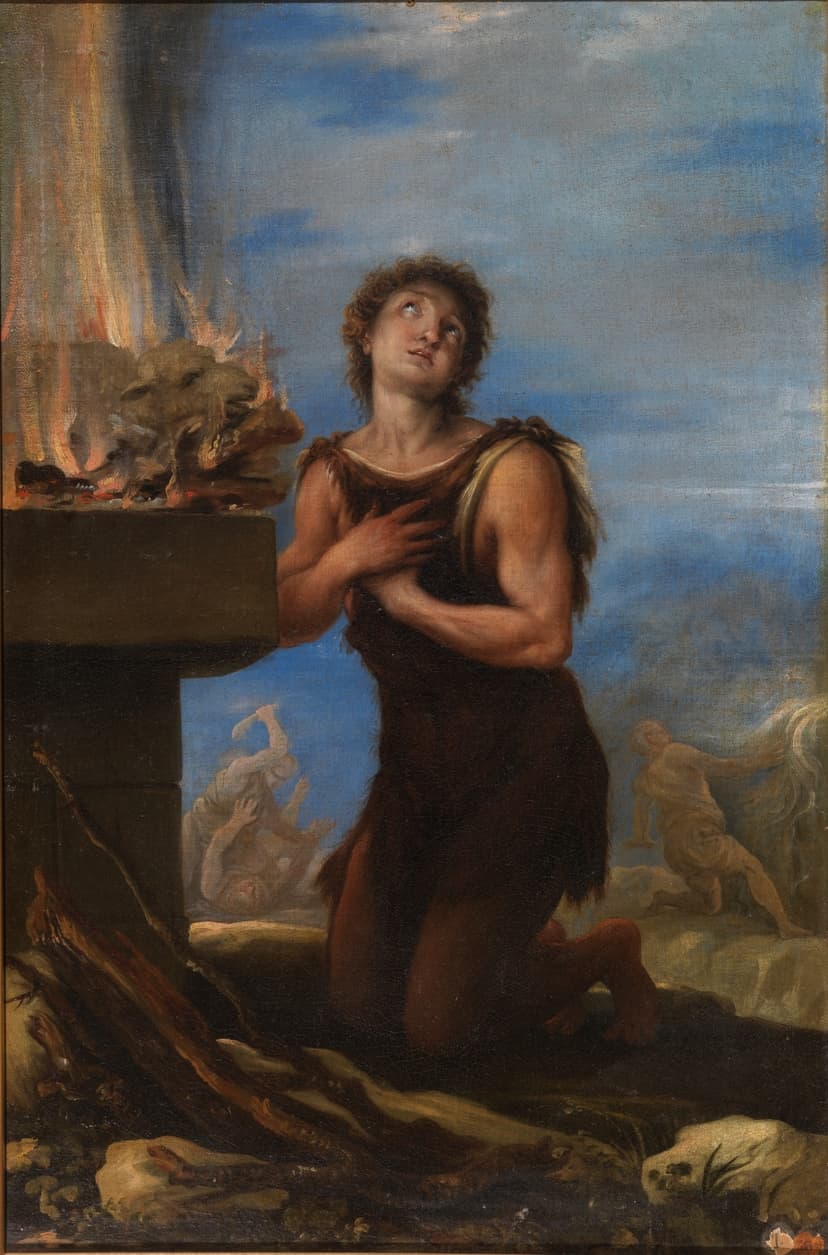
Abel
Abel is a biblical figure from the Book of Genesis, the second son of Adam and Eve. He is remembered as a righteous shepherd whose religious offering was accepted by God, unlike his brother Cain's. This led Cain to murder Abel, making him the first victim of death and the first martyr in biblical history.
Edward the Martyr
Edward the Martyr was the King of the English from 975 until his death in 978. He is remembered as a saint and martyr, though his veneration is considered by historians to be undeserved due to his known violent behavior. His brief reign was marked by disputes over monastic lands and ended with his murder.
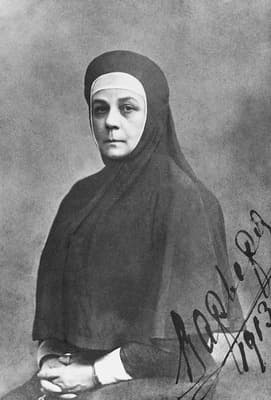
Barbara Yakovleva
Varvara Alexeyevna Yakovleva, known as Nun Barbara, was a Russian Orthodox nun who served as Grand Duchess Elizabeth Fyodorovna's maid before taking her vows. She is remembered as a martyr, having been killed by the Bolsheviks in 1918 along with the Grand Duchess and other members of the imperial family.