
Nicetas of Novgorod
January 31·12th century·Ukraine
Nicetas of Novgorod was a monk of the Kiev Pechersk Lavra who embraced a life of solitude as a hermit. He is remembered for his spiritual struggles with demonic delusion, his subsequent repentance and gift of miracle-working, and his service as Bishop of Novgorod. His intercessions are credited with ending a drought and extinguishing a fire.
Key Facts
- ›Nicetas was a monk of the Kiev Pechersk Lavra who chose a solitary hermit's life.
- ›He experienced spiritual delusion, believing a demon to be an angel who advised him to cease praying.
- ›Nicetas was rescued from his delusion by elders who drove away demons and taught him humility.
- ›Following his repentance, he was believed to have received the gift of miracle-working.
- ›He served as Bishop of Novgorod from 1096 until his death in 1108.
- ›His intercessions are said to have brought rain during a drought and extinguished a city fire.
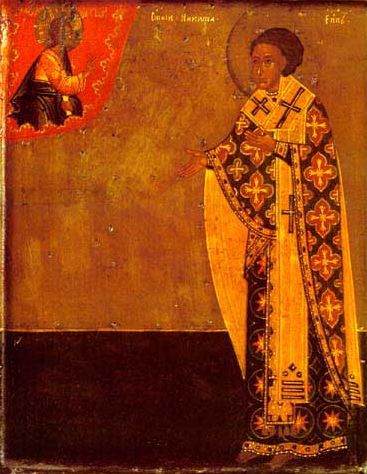
Niketas
About Nicetas of Novgorod
Nicetas of Novgorod (1030–1108) was a monk of the Kiev Pechersk Lavra who is venerated as a saint in both the Eastern Orthodox and Catholic traditions. He is remembered for his intense spiritual life, which included periods of profound struggle and eventual miraculous gifts.
Life and Historical Context
Born in 1030, Nicetas embraced the life of a monk and later chose to become a solitary hermit, despite initial objections from the Abbot of the Caves. During his time in solitude, tradition holds that Nicetas was severely tested by demonic forces. He was deceived by a demon appearing as an angel, which led him to believe he did not need to pray, as the demon would do it for him. This delusion caused him to gain an extensive knowledge of the Old Testament but to neglect the Gospel.
The monastery elders recognized Nicetas's spiritual peril and intervened, driving out the demons with prayer. This experience caused Nicetas to forget much of what he had learned and even how to read. He was subsequently taught to read again and continued his hermitage, this time with a renewed sense of humility.
Ministry and Legacy
Following his repentance and spiritual recovery, Nicetas was believed to have been blessed by God with the gift of miracle-working. In 1096, he was appointed Bishop of Novgorod. During his episcopate, his prayers were credited with significant intercessions, including the cessation of a severe drought and the extinguishing of a fire that threatened the city. He served as bishop for thirteen years until his repose on January 31, 1108.
Nicetas was officially glorified as a saint in 1558. His relics have been transferred between various cathedrals and churches in Novgorod over the centuries, eventually finding their permanent resting place in the St. Sophia Cathedral. His feast days are observed on January 31, April 30, and May 14 in the Eastern Orthodox Church, and on January 31 in the Catholic Church.
Source: Wikipedia ↗
Frequently Asked Questions
Who was Nicetas of Novgorod?
Nicetas of Novgorod was a monk of the Kiev Pechersk Lavra who lived as a hermit and later served as the Bishop of Novgorod. He is known for his spiritual struggles and his role in interceding for the people of Novgorod.
What spiritual challenges did Nicetas face?
According to tradition, Nicetas was heavily tormented by demons. One demon appeared to him as an angel and convinced him to stop praying, claiming it would pray for him. This led Nicetas into a state of spiritual delusion.
How did Nicetas overcome his spiritual delusion?
The elders of the monastery recognized Nicetas's state of delusion and intervened by driving away the demons with prayers. They then helped Nicetas to repent, relearn how to read, and continue his hermitage with humility.
What miracles are attributed to Nicetas?
After his repentance, Nicetas was believed to have received the gift of miracle-working. His intercessions are credited with bringing rain during a severe drought and extinguishing a fire in Novgorod.
When is Nicetas of Novgorod commemorated?
Nicetas of Novgorod is commemorated on January 31 in the Catholic Church, which is the day of his repose. In the Eastern Orthodox Church, he is venerated on January 31, April 30, and May 14 (corresponding to February 13, May 13, and May 27 in the Gregorian calendar).
Related Saints
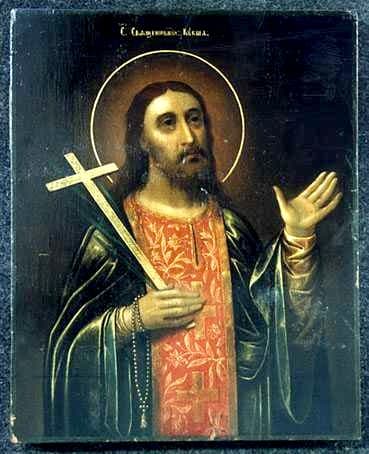
Kuksha of the Kiev Caves
Kuksha of the Kiev Caves was a monk and missionary from the Kiev Pechersk Lavra who is venerated as a saint in the Russian Orthodox Church. He is remembered for his efforts to spread Christianity among the Vyatichi people and for his martyrdom, for which he is honored as a confessor and martyr.
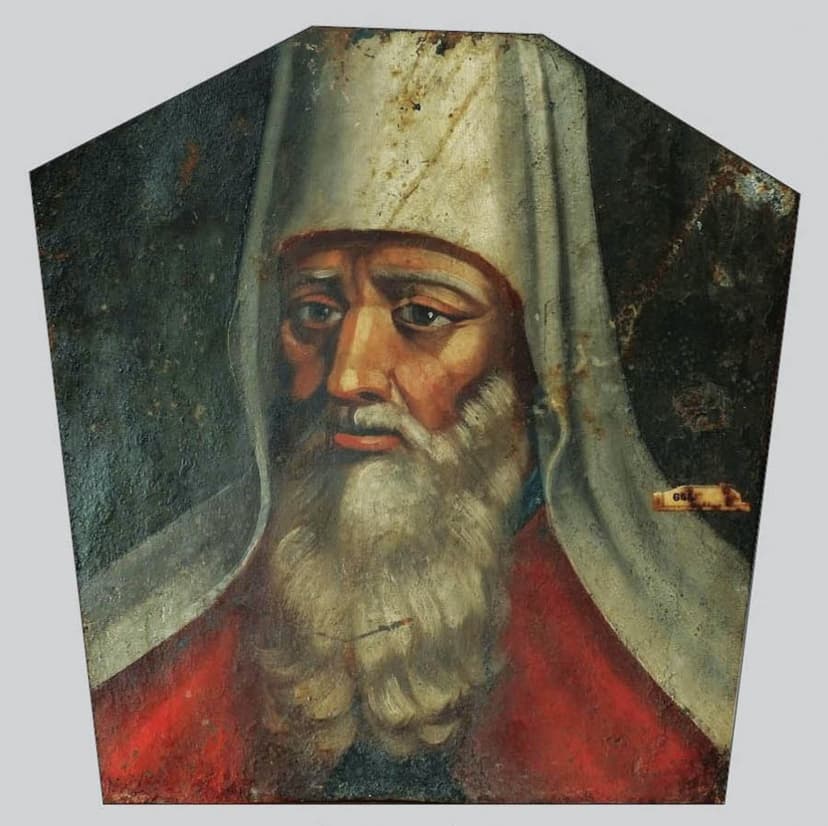
John of Tobolsk
John of Tobolsk was a Ukrainian Cossack-born clergyman who served as the Russian Orthodox archbishop of Chernigov and later metropolitan of Tobolsk and all Siberia. He is remembered for his theological writings, particularly "Iliotropion," and for his missionary and educational work in Siberia. Officially canonized by the Russian Orthodox Church in 1916, he is venerated for his spiritual leadership and the miracles attributed to him.
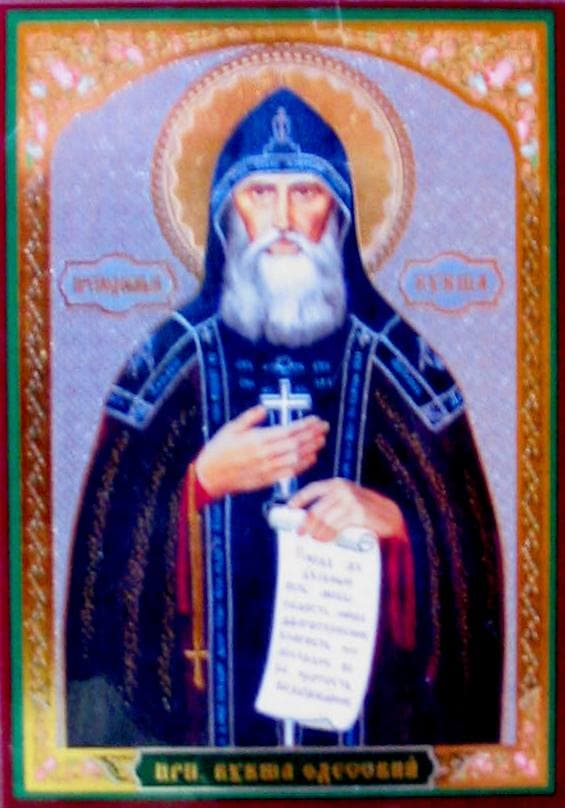
Kuksha of Odessa
Kuksha of Odessa, born Kuzma Kirillovich Velichko, was an imperial Russian priest and a Ukrainian Orthodox Church saint. He is remembered for his devout monastic life, his suffering in Soviet labor camps, and his eventual canonization. Kuksha is venerated for his piety and spiritual resilience.