
Nephon II of Constantinople
August 11·16th century·Greece
Nephon II of Constantinople, also known as Nicholas, was a three-time Ecumenical Patriarch of Constantinople. He is honored as a saint in the Eastern Orthodox Church for his ascetic life and missionary work, particularly in Wallachia and Macedonia. His feast day is celebrated on August 11th.
Key Facts
- ›Nephon II was born Nicholas in the Peloponnese to an Albanian father and a Greek mother.
- ›He served as Ecumenical Patriarch of Constantinople in three separate periods: 1486-1488, 1497-1498, and briefly in 1502.
- ›His patriarchal elections were notably influenced by the rulers of Wallachia.
- ›He was exiled multiple times due to scandals and political intrigues.
- ›Nephon II undertook missionary preaching in Macedonia and de facto led the Church of Wallachia.
- ›He died on Mount Athos and was recognized as a saint by the Eastern Orthodox Church in 1517.
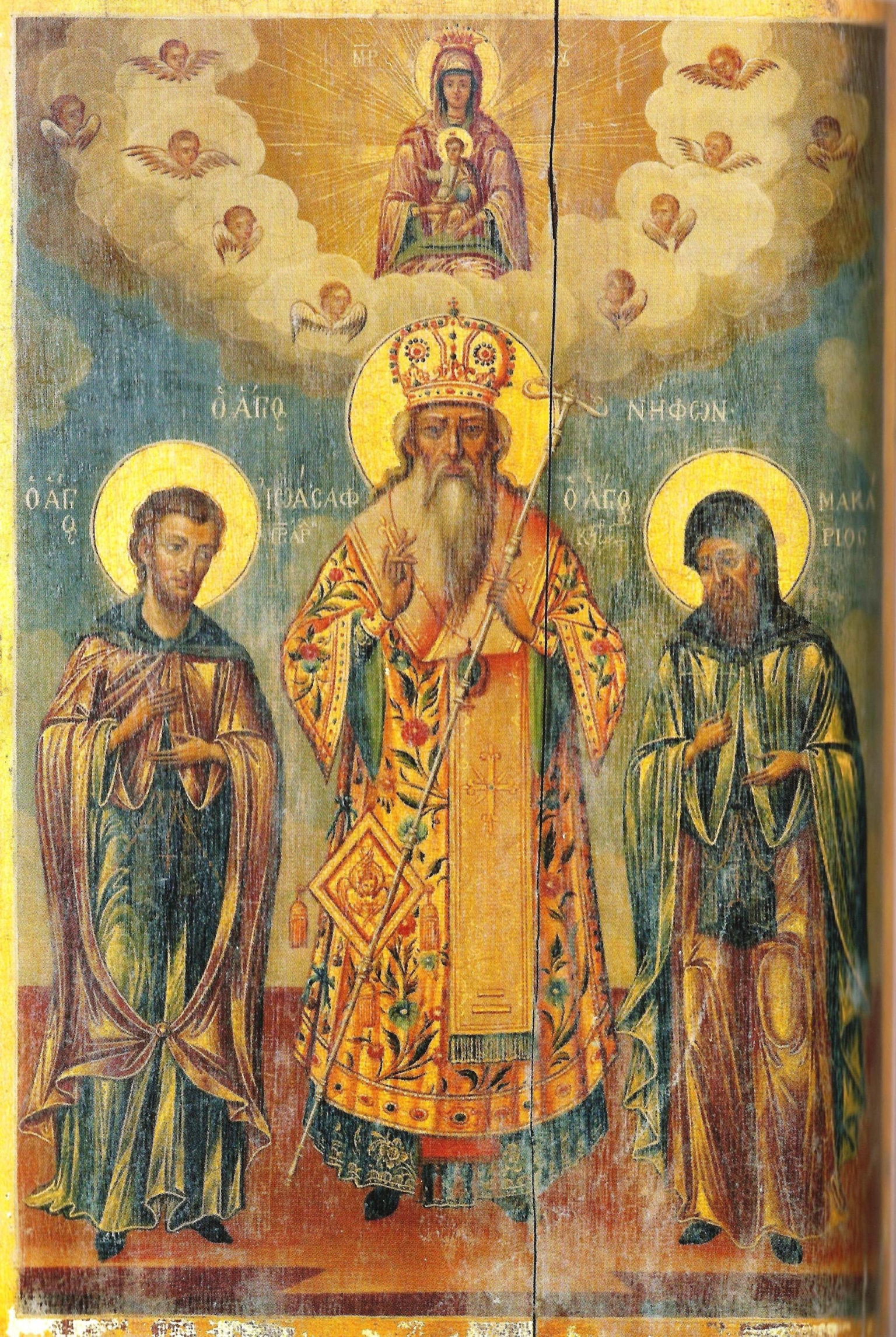
Nicholas, Nifon II
About Nephon II of Constantinople
Nephon II of Constantinople, born Nicholas, was a significant figure in the Eastern Orthodox Church, serving as Ecumenical Patriarch of Constantinople on three separate occasions. His life, marked by both spiritual devotion and political entanglements, concluded with his veneration as a saint.
Life and Historical Context
Born in the Peloponnese peninsula of southern Greece to an Albanian father and a Greek mother, Nicholas embraced monastic life, taking the name Nephon. He was a skilled calligrapher and copier of manuscripts. His early monastic journey included time at Epidaurus and later at the Monastery of the Theotokos in Ohrid with a monk named Zacharias. After Zacharias became Archbishop of Ohrid, Nephon pursued further asceticism on Mount Athos, where he was ordained a hieromonk.
In 1482, Nephon was elected Metropolitan of Thessaloniki. His first election as Patriarch of Constantinople occurred in late 1486, notably with the backing of Vlad Călugărul, the Prince of Wallachia, signaling an increased influence of Wallachian rulers in the Patriarchate's affairs.
Patriarchal Terms and Exiles
Nephon II's first patriarchal term lasted only eighteen months and ended due to a scandal involving the inheritance of his predecessor, Symeon I. To prevent church property from being seized by the Sultan, Nephon II employed monks to provide false testimony. When the deception was discovered by Sultan Bayezid II, Nephon II was exiled to an island off Sozopol in the Black Sea and deposed in early 1488. Scholar Steven Runciman characterized him as a "foolish and unsatisfactory patriarch" during this period.
His second election to the patriarchal throne took place in the summer of 1497, again with support from the Wallachian ruler Radu IV the Great. This reign was brief, lasting until August 1498, when he was deposed by Joachim I of Constantinople, who had the backing of King Constantine II of Georgia. Nephon II was subsequently sentenced to life imprisonment and exiled to Adrianople.
Later Life and Missionary Work
Despite his troubles, Nephon II retained considerable respect. Radu IV of Wallachia personally visited him during his imprisonment and later secured his release from the Ottoman Sultan. Nephon II then moved to Wallachia, where he was warmly received and ordained two bishops. In 1502, the Holy Synod elected him Patriarch for a third time, but Nephon II refused the appointment and did not return to Constantinople.
Between 1503 and 1505, Nephon II played a de facto leadership role in the Church of Wallachia. However, his intransigence led to a conflict with Prince Radu IV when Nephon II refused to officiate the marriage of Radu's sister, Calpea, to a man who was already married. Nephon II excommunicated the groom and prophesied misfortune, subsequently leaving the patriarchal vestments and departing. Despite attempts by Radu to appease him, Nephon II remained firm and left for Macedonia, where he engaged in missionary preaching throughout the region. He eventually returned to Mount Athos, where he died in the Monastery of Dionysiou in 1508.
Veneration and Legacy
Immediately after his death, Nephon II was honored as a saint in many areas. The Eastern Orthodox Church officially recognized him as a saint in 1517, establishing his feast day on August 11. His relics are preserved in a shrine at the Monastery of Dionysiou, which also features a chapel named in his honor. Nephon II's life is a testament to his unwavering faith and dedication to spiritual principles, even amidst significant worldly challenges.
Source: Wikipedia ↗
Frequently Asked Questions
How many times was Nephon II Patriarch of Constantinople?
Nephon II served as Ecumenical Patriarch of Constantinople three times. His tenures were from 1486 to 1488, from 1497 to 1498, and for a brief period in 1502.
Why was Nephon II exiled?
Nephon II was exiled due to involvement in a scandal concerning the inheritance of his predecessor, Symeon I. He was accused of using false testimony to protect church property from falling into the Sultan's treasury.
What role did Wallachia play in Nephon II's life?
The rulers of Wallachia, particularly Vlad Călugărul and Radu IV the Great, provided significant support for Nephon II's patriarchal elections. He later moved to Wallachia and de facto led its church for a period.
Where did Nephon II conduct missionary work?
After conflicts in Wallachia, Nephon II traveled to Macedonia, where he engaged in missionary preaching in various towns. He eventually returned to Mount Athos.
Related Saints
Jeremias I of Constantinople
Jeremias I of Constantinople served as Ecumenical Patriarch of Constantinople twice, from 1522 to 1524 and again from 1525 until his death in 1546. He is remembered for his efforts to prevent the conversion of churches into mosques and for his formal canonization by the Orthodox Church in 2023.
Maximus III of Constantinople
Maximus III of Constantinople, born Manuel Christonymos, was a scholar and served as Ecumenical Patriarch from 1476 until his death in 1482. He is honored as a saint in the Eastern Orthodox Church and is remembered for his role in the Church of Constantinople during a challenging period following its fall to the Ottoman Empire. His literary work includes a "Monody on the Capture of Constantinople."
Gregory V of Constantinople
Gregory V of Constantinople, born Georgios Angelopoulos, served as Ecumenical Patriarch of Constantinople for three non-consecutive terms. He is remembered for his restoration work on the Patriarchal Cathedral of St George and, tragically, for his execution by Ottoman authorities during the Greek War of Independence. He is venerated as an ethnomartyr.