
Gregory V of Constantinople
Gregory V of Constantinople, born Georgios Angelopoulos, served as Ecumenical Patriarch of Constantinople for three non-consecutive terms. He is remembered for his restoration work on the Patriarchal Cathedral of St George and, tragically, for his execution by Ottoman authorities during the Greek War of Independence. He is venerated as an ethnomartyr.
Key Facts
- ›He was born Georgios Angelopoulos in Dimitsana.
- ›Gregory V served as Ecumenical Patriarch of Constantinople three times: 1797-1798, 1806-1808, and 1818-1821.
- ›He undertook significant restoration work on the Patriarchal Cathedral of St George.
- ›Gregory V was executed by Ottoman authorities on Easter Sunday, April 10, 1821.
- ›His death occurred during the Greek War of Independence, and he was blamed by the Ottoman Sultan for the Greek uprising.
- ›His body was recovered by Greek sailors and eventually interred in the Metropolitan Cathedral of Athens.
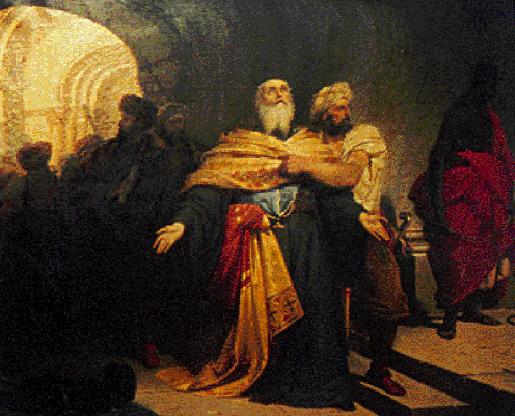
Georgios Angelopoulos
Greek Orthodox Church
Liturgical Vestments
About Gregory V of Constantinople
Gregory V of Constantinople, born Georgios Angelopoulos in 1746, served as the Ecumenical Patriarch of Constantinople for three non-consecutive terms: from 1797 to 1798, from 1806 to 1808, and from 1818 until his death in 1821. His patriarchal tenure was marked by significant restoration efforts, notably to the Patriarchal Cathedral of St George, which had suffered damage from fire.
Life and Ministry
Born in Dimitsana, Angelopoulos pursued his studies in Athens and Smyrna. He was tonsured a monk with the name Gregory at the monastery in Strofades and later studied at the Patmiada School. His ecclesiastical career advanced when he was ordained a deacon and subsequently consecrated as Metropolitan of Smyrna in 1785.
Gregory V's first election as Patriarch in 1797 was followed by his deposition the next year, leading to his exile to the Monastery of Iviron on Mount Athos. He was elected patriarch for a second time in 1806 but was again deposed in 1810, enduring periods of exile on the Princes' Islands and Mount Athos.
His third and final term as Patriarch began in 1818. However, with the outbreak of the Greek War of Independence in 1821, Gregory V faced immense pressure from the Ottoman Sultan Mahmud II. Despite his efforts to condemn the Greek revolutionary activities to protect the Orthodox Christian population of Constantinople from Ottoman reprisals, he was ultimately blamed for the uprising.
Death and Martyrdom
Gregory V was summarily executed by Ottoman authorities on April 10, 1821, the day of Easter Liturgy. Still in his liturgical vestments, he was taken from the Patriarchal Cathedral and executed, his body left exposed for two days. He is venerated as an ethnomartyr by the Greek Orthodox Church, symbolizing the suffering of the Greek Orthodox people under Ottoman rule.
Legacy
Following his execution, Gregory V's body was reportedly disposed of in the sea but was later recovered by Greek sailors and brought to Odessa. His remains were eventually interred in the Metropolitan Cathedral of Athens. The execution, particularly on such a solemn religious day, deeply affected the Greek populace and intensified the Philhellenism movement across Europe. In memory of his martyrdom, the Saint Peter Gate at the Patriarchate compound, where his body was displayed, was sealed shut in 1821 and has remained so to this day. His martyrdom is referenced in literary works, including Dionysios Solomos's "Hymn to Liberty," which later became the Greek national anthem.
Source: Wikipedia ↗
Frequently Asked Questions
Who was Gregory V of Constantinople?
Gregory V, born Georgios Angelopoulos, was the Ecumenical Patriarch of Constantinople for three separate periods. He was a significant figure in the Greek Orthodox Church, known for his restoration work and his tragic death.
Why is Gregory V considered a martyr?
Gregory V was executed by Ottoman authorities on Easter Sunday in 1821, during the Greek War of Independence. He is venerated as an ethnomartyr by the Greek Orthodox Church for his sacrifice.
What was Gregory V's role during the Greek War of Independence?
As the Ethnarch of the Orthodox millet, Gregory V was blamed by the Ottoman Sultan for the Greek uprising. Despite condemning the revolutionary activities to protect his flock, he was ultimately held responsible and executed.
What happened to Gregory V's body after his execution?
After his execution, Gregory V's body was reportedly dragged through the streets and thrown into the sea by Ottoman order. It was later recovered by Greek sailors and eventually interred in the Metropolitan Cathedral of Athens.
What is the significance of the Saint Peter Gate at the Patriarchate?
The Saint Peter Gate, the main entrance to the Patriarchal compound, was welded shut in 1821 after Gregory V's execution. It has remained closed ever since as a memorial to the patriarch.
Related Saints
Gabriel I of Serbia
Gabriel I of Serbia was the Patriarch of the Serbian Patriarchate of Peć from 1648 to 1655. He is remembered as a hieromartyr by the Eastern Orthodox Church for his martyrdom at the hands of the Ottomans. His efforts to secure support for the Patriarchate led him to Russia, a journey that ultimately contributed to his execution.
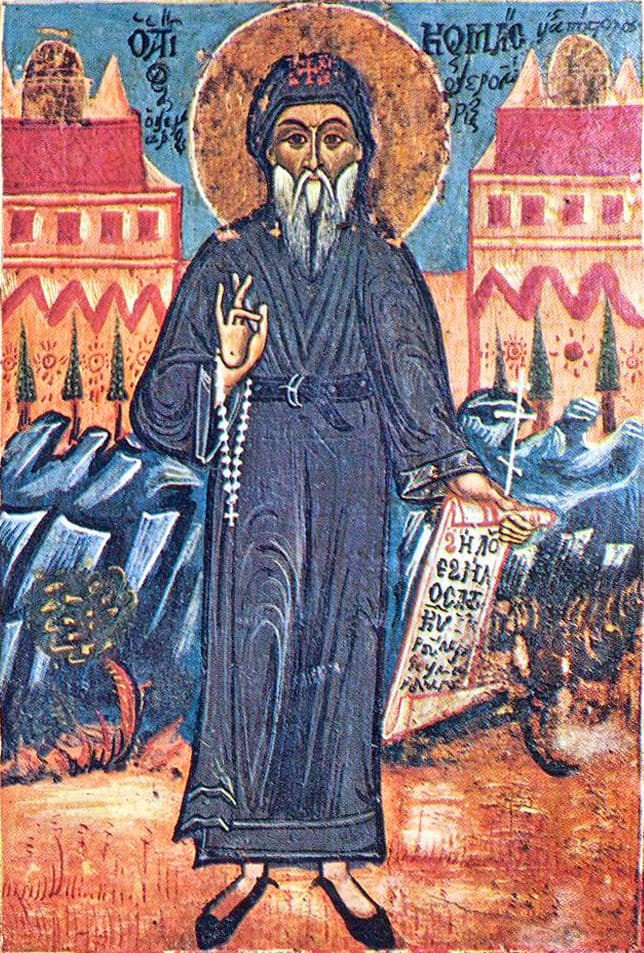
Cosmas of Aetolia
Kosmas the Aetolian was an Eastern Orthodox monk, recognized as a saint and a significant figure in twentieth-century religious movements in Greece. He is remembered for his extensive missionary tours, the establishment of numerous church schools, and his prophecies. He was martyred by Ottoman authorities in 1779.
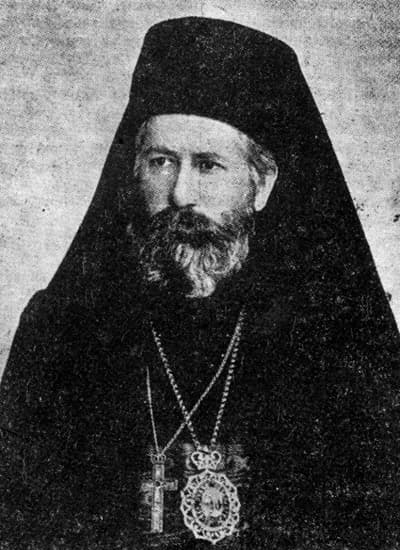
Joannicius I of Montenegro
Joannicius I of Montenegro was the Metropolitan of the Diocese of Montenegro and the Littoral. He is remembered for his collaboration with occupying Axis powers during World War II and his subsequent execution by Communist-led Yugoslav Partisans. Posthumously canonized by the Serbian Orthodox Church, he was recognized as a saint in 1999.