
Cosmas of Aetolia
August 24·18th century·Greece
Kosmas the Aetolian was an Eastern Orthodox monk, recognized as a saint and a significant figure in twentieth-century religious movements in Greece. He is remembered for his extensive missionary tours, the establishment of numerous church schools, and his prophecies. He was martyred by Ottoman authorities in 1779.
Key Facts
- ›Kosmas the Aetolian was born around 1714 in Aetolia, Greece.
- ›He became a monk and studied theology at Mount Athos.
- ›He undertook extensive missionary tours for sixteen years, establishing many church schools.
- ›His preachings were intended to counter the conversion of Christians to Islam.
- ›He was executed by Ottoman authorities on August 24, 1779, in present-day Albania.
- ›He is officially venerated as a saint in the Eastern Orthodox Church, with his feast day on August 24.
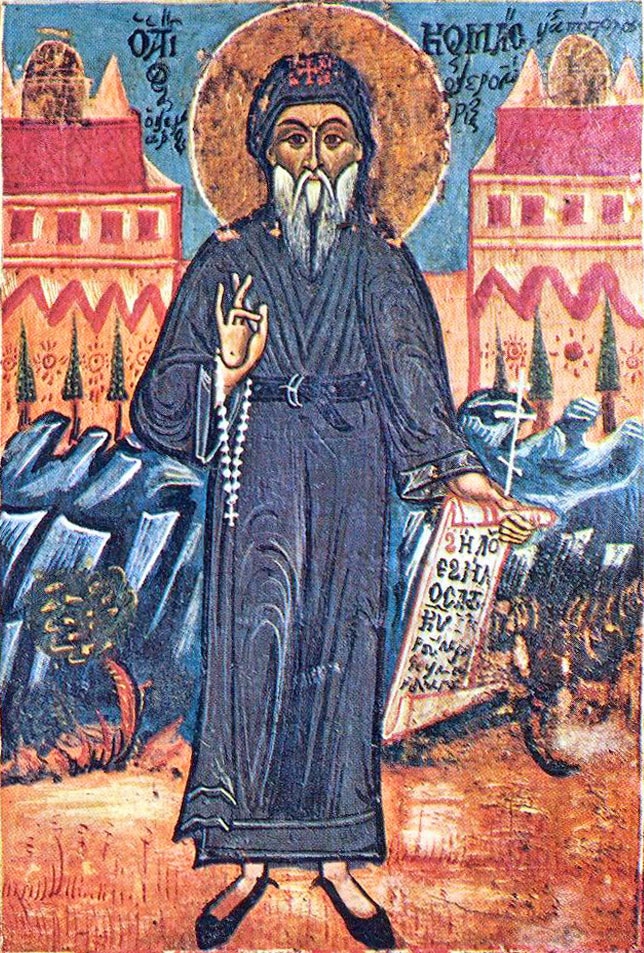
Kosmas the Aetolian, Patrokosmas, Father Kosmas
Education
Book
About Cosmas of Aetolia
Kosmas the Aetolian
Kosmas the Aetolian, also known as Patrokosmas or "Father Kosmas," was a prominent monk venerated as a saint in the Eastern Orthodox Church. Born around 1714 in Aetolia, Greece, he dedicated his life to spiritual and educational endeavors. He is recognized as a significant figure whose work contributed to religious movements in Greece and is remembered for his prophecies and missionary zeal.
Life and Ministry
Kosmas received his early education in Greek language and theology before becoming a monk. His spiritual journey led him to Mount Athos, where he attended the local Theological Academy. After leaving Athos, he studied rhetoric in Constantinople. In 1760, he received authorization from Patriarch Serapheim II to embark on extensive missionary tours throughout Thrace and later in Western and Northern Greece. His primary aim was to combat the growing trend of Christians converting to Islam in these regions.
Over a period of sixteen years, Kosmas established numerous church schools, urging Christians to learn Biblical Koine Greek to better understand the Scriptures and improve their general education. His activities extended to areas in present-day Albania, then under Ottoman rule. His preaching, however, drew opposition from the wealthy and influential, including village elders known as kotsampasides, who feared their power was threatened. He also faced suspicion from Venetian authorities in territories they controlled.
While Kosmas's sermons sometimes contained negative references to Jews, he also stated that those who wronged others, including Christians, Jews, or Turks, would face retribution. Some researchers suggest that anti-Jewish sentiments, possibly exacerbated by his influence on local commerce, played a role in his eventual condemnation by Ottoman authorities.
Martyrdom and Legacy
Accused of being a Russian agent, Kosmas was arrested by Ottoman authorities without formal charges or trial. He was executed on August 24, 1779, in Kolkondas, Fier District, Albania. His execution led to various theories regarding the motives behind it.
In the aftermath of his death, his legacy grew. In 1813, Ali Pasha, the ruler of Ottoman Epirus, commissioned a church near Kosmas's execution site and placed his remains there. In 1984, these remains were transferred to the Archaeological Museum of Fier, and other relics are preserved in the Metropolitan Cathedral of Athens. Kosmas the Aetolian was officially proclaimed a Saint by the Orthodox Church of Constantinople in 1961. His feast day is celebrated annually on August 24. He is also associated with certain Greek nationalist movements. Despite being a hellenizer, he remains highly regarded by Orthodox Albanians for his message of faith and education.
Source: Wikipedia ↗
Frequently Asked Questions
When and where was Kosmas the Aetolian born?
Kosmas the Aetolian was born around 1714 in the Greek village of Mega Dendron, near the town of Thermo in the region of Aetolia.
What was Kosmas the Aetolian known for during his life?
He was known for his missionary work, establishing numerous church schools, and encouraging Christians to educate themselves. He was also noted for his prophecies and his efforts to counter the conversion of Christians to Islam.
How did Kosmas the Aetolian die?
Kosmas the Aetolian was executed by Ottoman authorities on August 24, 1779, near the mouth of the Seman river in present-day Albania. He was accused of being a Russian agent.
When was Kosmas the Aetolian officially recognized as a saint?
He was officially proclaimed a Saint by the Orthodox Church of Constantinople on April 20, 1961.
Where are the relics of Kosmas the Aetolian kept?
Some of his remains were placed in a church built near his execution site by Ali Pasha. Later, his remains were transferred to the Archaeological Museum of Fier in 1984. Other relics are kept in the Metropolitan Cathedral of Athens.
What is the significance of Kosmas the Aetolian's writings?
Popular religious texts, including "Didaches" and "Prophecies," are attributed to him. However, no original manuscripts exist, and the texts are believed to be transcriptions and compilations of his preachings written after his death.
Related Saints
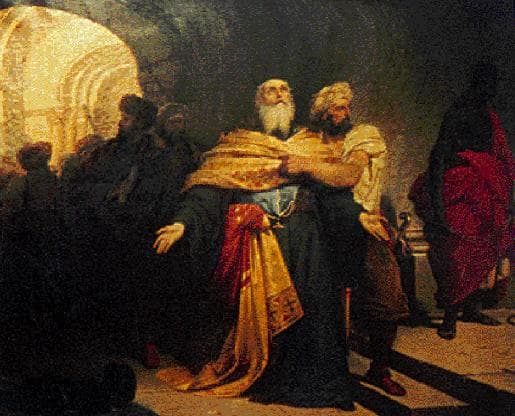
Gregory V of Constantinople
Gregory V of Constantinople, born Georgios Angelopoulos, served as Ecumenical Patriarch of Constantinople for three non-consecutive terms. He is remembered for his restoration work on the Patriarchal Cathedral of St George and, tragically, for his execution by Ottoman authorities during the Greek War of Independence. He is venerated as an ethnomartyr.
Abo of Tiflis
Abo of Tiflis was a Christian martyr of Arab origin who converted to Christianity after moving to what is now Georgia. He is remembered for his zealous confession of faith and martyrdom in Tbilisi under Arab rule.
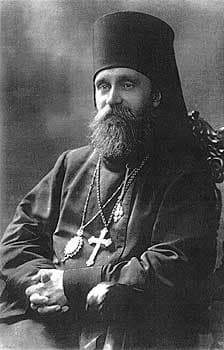
Platon Kulbusch
Platon Kulbusch was the first Orthodox saint of Estonian ethnicity, serving as a bishop during a period of significant political upheaval. He is remembered for his support of Estonian independence and his martyrdom during the Bolshevik invasion. His canonization by multiple Orthodox churches solidified his status as a significant figure in Estonian religious history.