
Maximus III of Constantinople
November 17·15th century·Greece
Maximus III of Constantinople, born Manuel Christonymos, was a scholar and served as Ecumenical Patriarch from 1476 until his death in 1482. He is honored as a saint in the Eastern Orthodox Church and is remembered for his role in the Church of Constantinople during a challenging period following its fall to the Ottoman Empire. His literary work includes a "Monody on the Capture of Constantinople."
Key Facts
- ›He was born Manuel Christonymos, likely in the Peloponnese region of Greece.
- ›He served as Grand Ecclesiarch of the Patriarchate of Constantinople before becoming Patriarch.
- ›He faced punishment, including having his nose cut off, for supporting Patriarch Joasaph I against a request for a second marriage.
- ›He was elected Patriarch of Constantinople in 1476 after first becoming a monk and taking the name Maximus.
- ›His patriarchate ended a period of troubles for the Church, marked by peace and consensus.
- ›His main literary work is the "Monody on the Capture of Constantinople".
Manuel Christonymos
About Maximus III of Constantinople
Maximus III of Constantinople (born Manuel Christonymos; died April 3, 1482) was a scholar and served as the Ecumenical Patriarch of Constantinople from 1476 until his death. He is venerated as a saint in the Eastern Orthodox Church, with his feast day observed on November 17.
Life and Historical Context
Manuel Christonymos was likely a native of the Peloponnese region of Greece. He rose to prominence within the Patriarchate of Constantinople, serving as Grand Ecclesiarch. This role, particularly after the Ottoman conquest of Constantinople in 1453, also entailed the duties of the skeuophylax, overseeing the holy treasures and relics of the Patriarchate. During this period, Manuel engaged in disputes with Patriarch Gennadius II over financial matters. He also played a significant role in church affairs for over two decades, influenced by the secretary of the Ottoman Sultan, Demetrios Kyritzes.
In 1463, Manuel supported Patriarch Joasaph I against George Amiroutzes, who sought to marry a second wife, a case of bigamy under Christian canon law. As a consequence of this support, Manuel had his nose cut off by order of Sultan Mehmed II. He later sponsored the election of Mark II of Constantinople in 1465 or 1466. He also opposed patriarchs supported by other factions, such as Symeon I and Dionysius I, leading to his temporary removal from church administration roles in 1467, though he and his associate George Galesiotes soon regained their influence.
In 1476, Maximus himself was elected Patriarch of Constantinople. As he was a layman at the time, he first became a monk, adopting the religious name Maximus, and was consecrated as a bishop the following day. His enthronement was performed by the Metropolitan bishop of Heraclea. His patriarchate is noted for ending a period of considerable trouble for the Church in the region, ushering in an era of peace and consensus. Maximus III died on April 3, 1482.
Major Contributions
Maximus III's primary literary contribution is his "Monody on the Capture of Constantinople," a significant work reflecting on the historical trauma of the city's fall. His patriarchate is also recognized for restoring stability and unity within the Church of Constantinople during a volatile period.
Source: Wikipedia ↗
Frequently Asked Questions
Who was Maximus III of Constantinople?
Maximus III of Constantinople, born Manuel Christonymos, was a scholar who served as the Ecumenical Patriarch of Constantinople from 1476 until his death in 1482. He is recognized as a saint within the Eastern Orthodox Church.
What is Maximus III of Constantinople remembered for?
He is remembered for his service as Patriarch during a challenging period following the Ottoman conquest of Constantinople and for his scholarly work, particularly his "Monody on the Capture of Constantinople." His patriarchate brought peace and consensus to the church.
When was Maximus III of Constantinople Patriarch?
Maximus III of Constantinople served as Patriarch from 1476 until his death on April 3, 1482.
What significant event occurred during his life?
A significant event during his life was the Fall of Constantinople to the Ottoman Empire in 1453. He also faced persecution, including having his nose cut off, for his stance on church matters.
What are the notable writings of Maximus III?
His most notable literary work is the "Monody on the Capture of Constantinople," a piece reflecting on the tragic event of the city's fall.
Related Saints
Lawrence Giustiniani
Lawrence Giustiniani was a Venetian Catholic priest and bishop who became the first Patriarch of Venice. He is venerated as a saint by the Catholic Church for his piety, reformatory work, and leadership during a time of crisis for Venice. He is remembered for his spiritual guidance and administrative efforts in rebuilding the diocese and leading the city after the fall of Constantinople.
Cyril I of Serbia
Cyril I of Serbia served as the Patriarch of the Serbian Patriarchate of Peć from 1407 to 1419. He assumed leadership during a period of recovery for medieval Serbia following the Battle of Kosovo, while the young despot Stefan Lazarević navigated numerous external threats. He is venerated liturgically on September 12th.
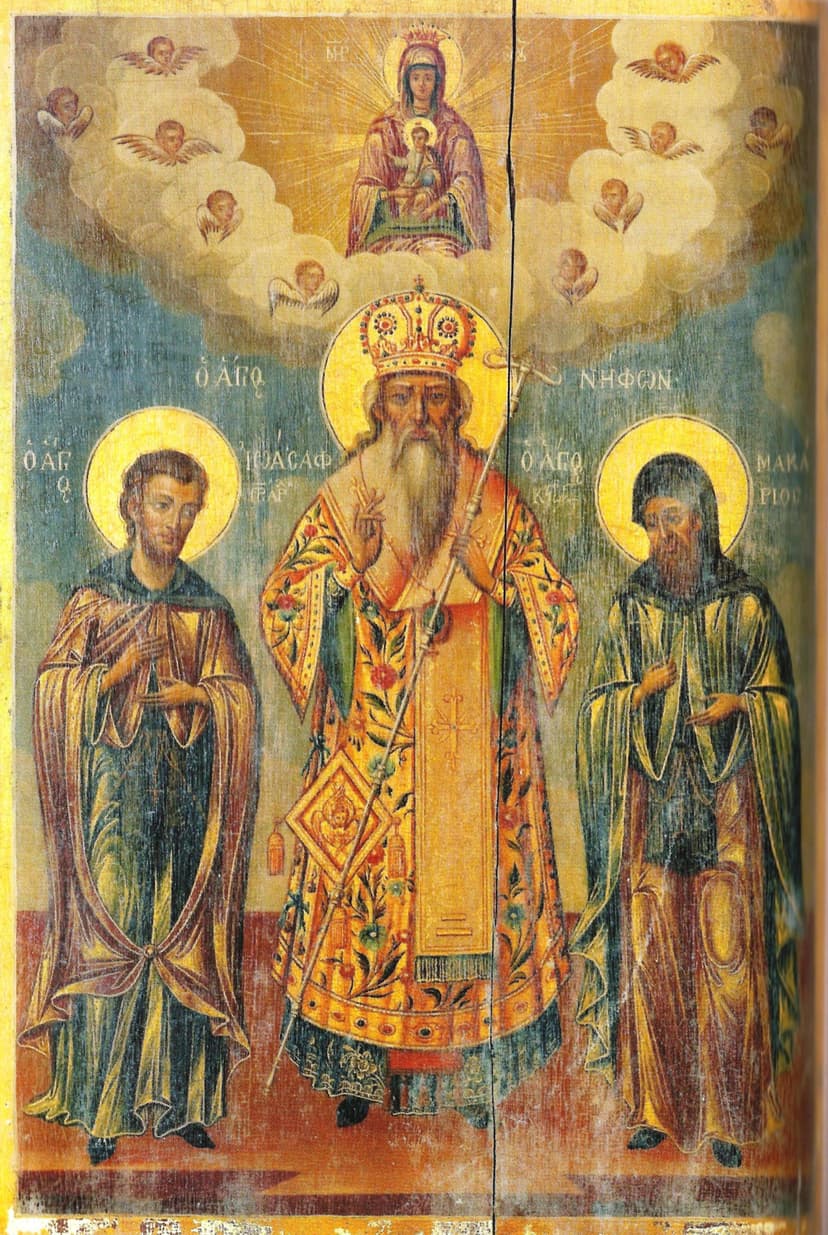
Nephon II of Constantinople
Nephon II of Constantinople, also known as Nicholas, was a three-time Ecumenical Patriarch of Constantinople. He is honored as a saint in the Eastern Orthodox Church for his ascetic life and missionary work, particularly in Wallachia and Macedonia. His feast day is celebrated on August 11th.