
Martin the Confessor
April 13·7th century·Italy
Pope Martin I, also known as Martin the Confessor, served as bishop of Rome from 649 to 653 or 654. He is remembered for his strong opposition to Monothelitism, which led to his arrest and exile by Emperor Constans II. Martin is venerated as a saint by both the Catholic and Eastern Orthodox Churches, and is recognized as the last pope to be considered a martyr.
Key Facts
- ›Pope Martin I was bishop of Rome from July 21, 649, to 653 or 654.
- ›He was elected without imperial mandate, a departure from custom for popes under Constantinople's control.
- ›Martin convened the Lateran Council in 649, which condemned Monothelitism and imperial interference in theological matters.
- ›His opposition to Monothelitism led to his arrest and exile to Cherson by Emperor Constans II.
- ›He died in exile on September 16, 655.
- ›Martin is recognized as a saint by both the Catholic Church and the Eastern Orthodox Church.
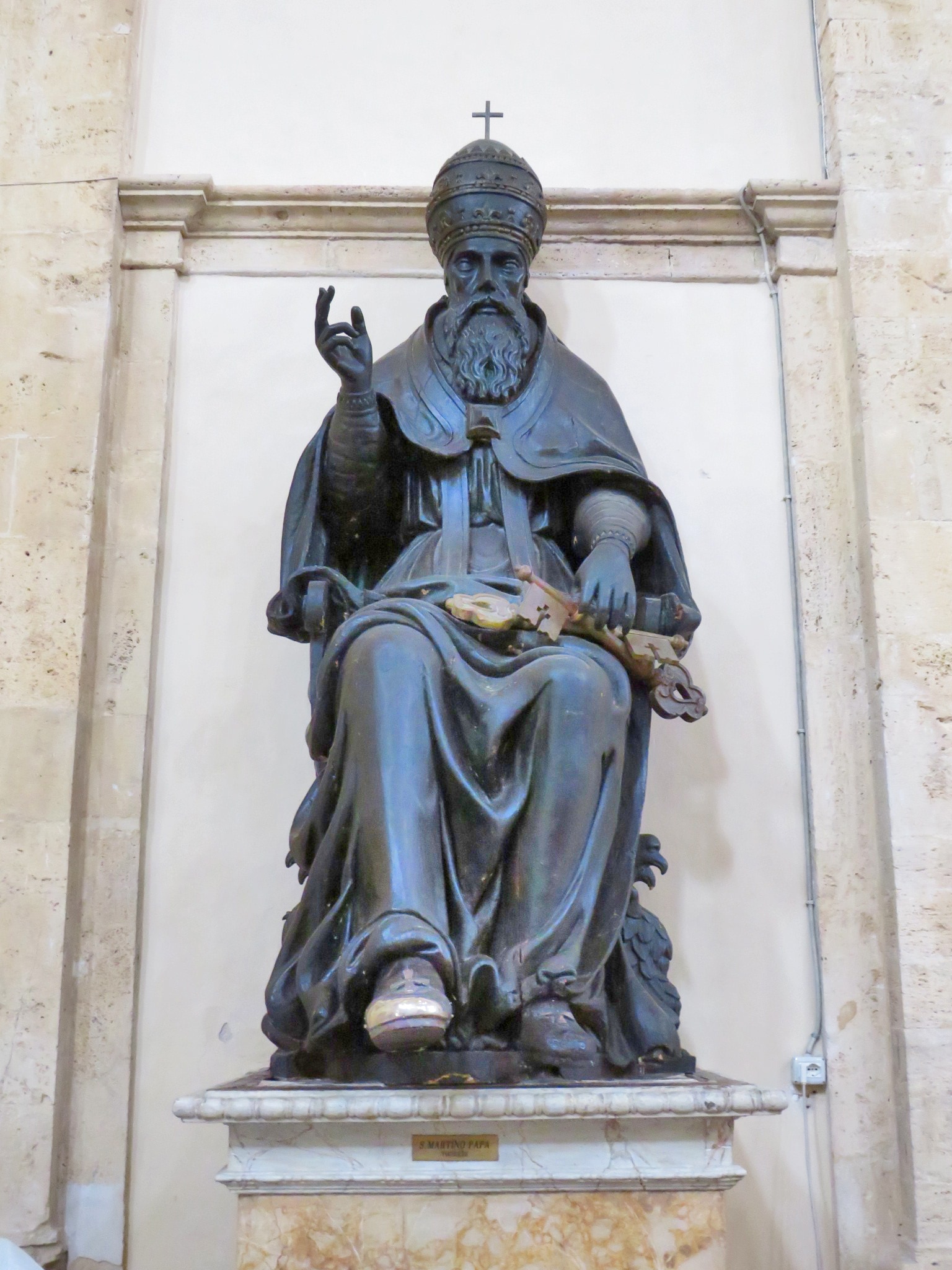
Martin the Confessor, Martinus I
Order of St Basil
About Martin the Confessor
Pope Martin I (Martin the Confessor)
Pope Martin I, born between 590 and 600 near Todi, Umbria, served as the bishop of Rome from July 21, 649, until his death in exile on September 16, 655. Known also as Martin the Confessor, he was the sole pope during a period when the imperial mandate was typically required for papal elections, yet his election did not await imperial approval. This act signaled his independent spirit and set the stage for his significant theological and political confrontations.
Early Life and Career
According to biographical accounts, Martin was of noble birth, possessing considerable intelligence and a charitable nature. Before his papacy, he was an abbot and served as Pope Theodore I's ambassador (apocrisiarius or legate) to Constantinople from around 642 to 649. In this role, he was instrumental in managing diplomatic relations between Rome and the Byzantine court, a testament to his preeminence. He also undertook significant charitable work, distributing funds to alleviate distress and redeem captives in Dalmatia and Istria.
Papacy and Opposition to Monothelitism
Martin's papacy was largely defined by his resolute opposition to Monothelitism, a theological doctrine asserting that Christ had only one, divine will. Emperor Constans II had promulgated the Typos, a document supporting this thesis, and sought to enforce it within the Church. In response, Martin convened the Lateran Council in October 649, which decisively censured Monothelitism, its writings, and imperial decrees that interfered with theological matters.
This condemnation provoked an angry reaction from the Byzantine court. Despite warnings, Martin proceeded to publish the council's decrees. As a consequence, he was arrested on June 17, 653, along with Maximus the Confessor, and transported to Constantinople. After enduring imprisonment and public indignities, he was banished to Cherson, where he died.
Legacy
Pope Martin I is venerated as a saint by both the Catholic Church and the Eastern Orthodox Church. He is remembered as a confessor and martyr for his unwavering defense of Orthodox faith against heresy and imperial overreach. His steadfastness in the face of persecution has been a source of inspiration, and his actions are seen as a significant moment in the assertion of papal authority against secular interference. The memorial of Saint Martin I is observed on April 13 in the Roman Calendar and April 14 in the Byzantine tradition.
Source: Wikipedia ↗
Frequently Asked Questions
Who was Pope Martin I?
Pope Martin I, also known as Martin the Confessor, was the bishop of Rome from 649 to 653 or 654. He is recognized for his strong stance against the Monothelite heresy.
Why was Pope Martin I exiled?
Martin I was exiled by Emperor Constans II for his strong opposition to Monothelitism and for convening the Lateran Council, which condemned the heresy and imperial interference in theological matters.
What was the Lateran Council of 649?
The Lateran Council was convened by Pope Martin I in 649. It was attended by 105 bishops and resulted in twenty canons that condemned Monothelitism, its proponents, and imperial documents like the Typos of Constans.
Is Pope Martin I considered a martyr?
Yes, Pope Martin I is considered a martyr by both the Catholic Church and the Eastern Orthodox Church. He is recognized as the last pope to be formally acknowledged as a martyr.
When is Pope Martin I's feast day?
The memorial of Saint Martin I is celebrated on April 13 in the General Roman Calendar. In Byzantine-rite Churches, his feast day is observed on April 14 (or April 27 in the New Style calendar).
Related Saints
Pope Martin I
Pope Martin I was the bishop of Rome from 649 to 653 or 654. He is remembered for his staunch opposition to Monothelitism, a theological doctrine concerning Christ's will, which led to his arrest, exile, and death. He is recognized as a saint by both the Catholic and Eastern Orthodox Churches and is the last pope to be acknowledged as a martyr.
George the Confessor
George the Confessor was an 8th-century Bishop of Antioch in Pisidia, venerated for his steadfast adherence to icon veneration. He is remembered for his refusal to comply with iconoclast councils, leading to his exile, and his later participation in the restoration of icon veneration.
Marcellus I of Rome
Marcellus I was the bishop of Rome from 308 to 309, succeeding Marcellinus after a period of vacancy. He is remembered for reorganizing the church's territorial administration in Rome and for the severe penances he imposed on Christians who had lapsed during persecution. His actions led to conflict and his eventual banishment from Rome by Emperor Maxentius, where he died in exile.