
Leontius Stasievich
Leontius Stasievich was a clergyman of the Russian Orthodox Church, recognized during his lifetime as a starets with gifts of healing and prophecy. He is remembered as one of the New Martyrs and Confessors of the Russian Orthodox Church, having endured multiple imprisonments in labor camps under Soviet rule. He was posthumously canonized and is venerated for his spiritual guidance and miracles attributed to him.
Key Facts
- ›Leontius Stasievich was born Lew Fomich Stasievich on March 20, 1884, in TarnogróD.
- ›He entered the St. Onuphrius Monastery in Jabłeczna at age 26, where he was ordained a deacon and priest.
- ›He was arrested and sentenced to labor camps three times between 1930 and 1955 for alleged counter-revolutionary activities.
- ›He was recognized as a starets during his lifetime, believed to possess gifts of healing and prophecy.
- ›He was canonized by the Russian Orthodox Church in 1999 and his veneration was permitted throughout the Moscow Patriarchate in 2000.
- ›His relics are venerated at the Church of Saint Michael the Archangel in Mikhaylovskoye.
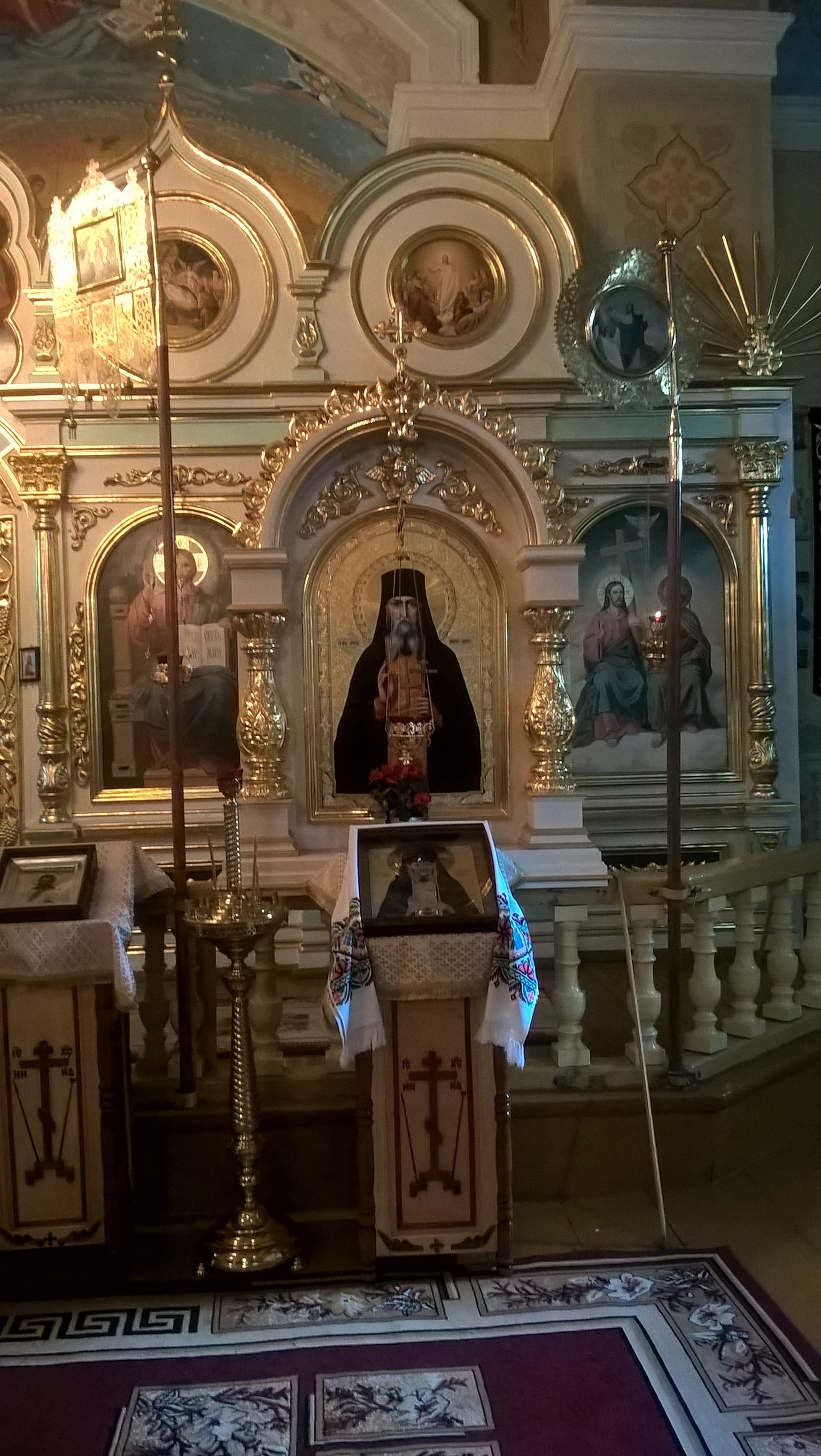
Lew Fomich Stasievich, Saint Leontius of Tarnogród
Cross
About Leontius Stasievich
Leontius Stasievich, born Lew Fomich Stasievich on March 20, 1884, in Tarnogród, was a prominent clergyman of the Russian Orthodox Church, recognized as one of the New Martyrs and Confessors. His life was marked by deep faith, spiritual discernment, and significant persecution under the Soviet regime.
Early Life and Monastic Calling
Coming from a deeply religious Orthodox peasant family in Tarnogród, Stasievich received his early education and worked as a clerk. His spiritual calling led him to abandon secular employment to pursue studies at the Orthodox Theological Seminary in Chełm. At the age of 26, he entered the St. Onuphrius Monastery in Jabłeczna, where he took monastic vows and was given the name Leontius. He was ordained a deacon in 1912 and a priest in 1913. His time at the monastery, particularly his devotion to its patron, Saint Onuphrius, profoundly shaped his spiritual life.
Persecution and Imprisonment
As the political climate in Russia shifted, Leontius Stasievich faced severe trials. He was exiled to Moscow with other monks in 1915 and later served as superior of the Transfiguration of the Lord and St. Euthymius of Suzdal Monastery. His commitment to traditional monastic life led to conflicts with some within the community and opposition from Soviet authorities. He was arrested and sentenced to labor camps on three separate occasions: from 1930 to 1933, 1935 to 1938, and 1950 to 1955. These imprisonments were under charges of counter-revolutionary agitation and organizing anti-Soviet associations. Despite the hardships and harassment, he maintained his faith.
Spiritual Gifts and Posthumous Recognition
Even during his lifetime, Leontius Stasievich was regarded as a spiritual elder, or starets, believed to possess gifts of healing and prophecy. Following his release from his final imprisonment in 1955, he continued his pastoral work in various parishes, notably in Mikhaylovskoye, where he was highly respected. He led a modest, ascetic life, dedicating his efforts to spiritual guidance and the care of his flock.
In 1989, he was posthumously fully rehabilitated by the Russian authorities. His spiritual significance was further recognized when he was canonized by the Russian Orthodox Church, with local veneration permitted in the Eparchy of Ivanovo and Voznesensk in 1999. In 2000, this veneration was extended throughout the Moscow Patriarchate, officially listing him among the New Martyrs and Confessors. The Polish Orthodox Church also venerates him, particularly in his birthplace of Tarnogród. Miracles are attributed to his intercession, and his relics are venerated at the Church of Saint Michael the Archangel in Mikhaylovskoye.
Source: Wikipedia ↗
Frequently Asked Questions
When and where was Leontius Stasievich born?
Leontius Stasievich, whose secular name was Lew Fomich Stasievich, was born on March 20, 1884, in Tarnogród, which is now in Poland.
What was Leontius Stasievich's religious background?
He came from a devout Orthodox peasant family and entered the St. Onuphrius Monastery in Jabłeczna at the age of 26. He was ordained a deacon and later a priest there.
Why was Leontius Stasievich arrested and imprisoned?
He was arrested three times by Soviet authorities and sentenced to labor camps on charges of counter-revolutionary agitation and organizing anti-Soviet associations. The immediate cause for one arrest was violating regulations against church bell ringing.
What spiritual gifts was Leontius Stasievich known for?
During his lifetime, he was recognized as a starets, believed to be endowed with the gifts of healing and prophecy. Miracles are attributed to him, including predictions of significant events.
When and by whom was Leontius Stasievich canonized?
He was proclaimed a saint by Bishop Ambrose of Ivanovo in 1999 for local veneration in the Eparchy of Ivanovo and Voznesensk. In 2000, the Moscow Patriarchate granted him veneration throughout the Russian Orthodox Church.
Where is Leontius Stasievich primarily venerated?
He is venerated in the Russian Orthodox Church, with his relics at the Church of Saint Michael the Archangel in Mikhaylovskoye. He is also venerated in the Polish Orthodox Church, with a significant center of devotion in Tarnogród.
Related Saints
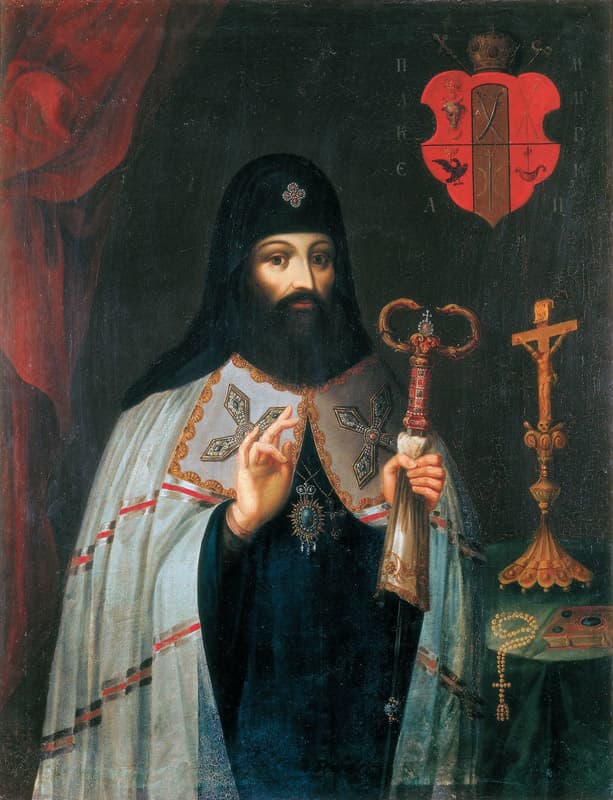
Peter Mogila
Petro Mohyla was the Metropolitan of Kiev, Galicia, and all Rus' in the Eastern Orthodox Church from 1633 to 1646, hailing from a prominent Romanian boyar family. He is remembered for his significant contributions to education and the preservation of Orthodox identity, most notably through the founding of the Kyiv Mohyla Academy and his role in standardizing Orthodox doctrine and ritual.
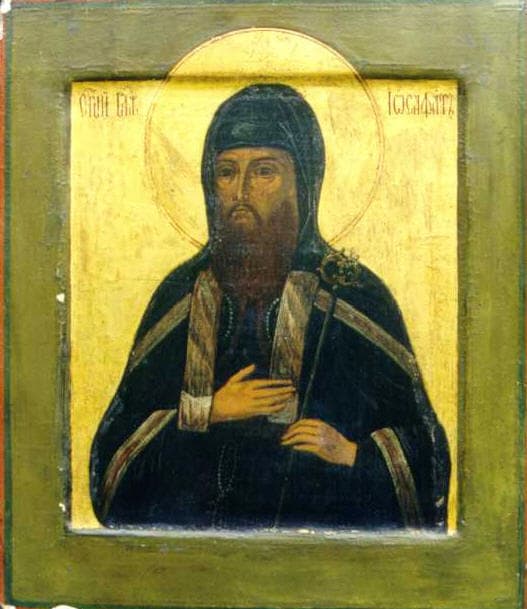
Josaphat Kuntsevych
Josaphat Kuntsevych was a Ruthenian Greek Catholic hieromonk and Archbishop of Polotsk who became a prominent figure in the conflict between Eastern Orthodox and Eastern Catholic Churches in the Polish-Lithuanian Commonwealth. He is remembered as a martyr for his role in spreading Eastern Catholicism and for his violent death during an anti-Catholic riot.
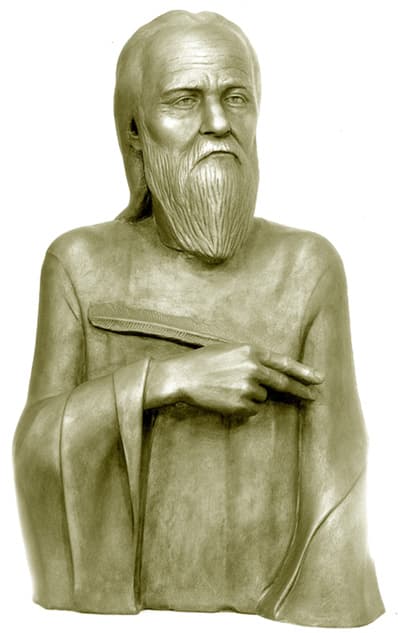
Nestor the Chronicler
Nestor the Chronicler was a monk of the Monastery of the Caves in Kiev and a prominent author in Kievan Rus'. He is chiefly remembered for writing two major hagiographies: the Life of the Venerable Theodosius of the Kiev Caves and the Account about the Life and Martyrdom of the Blessed Passion Bearers Boris and Gleb. While traditionally credited with authoring the Primary Chronicle, modern scholars debate his primary role in its creation, leading some to refer to him as Nestor the Hagiographer.