
Innocent of Alaska
March 31·19th century·Russia
Innocent of Alaska was a Russian Orthodox missionary priest who became the first Orthodox bishop and archbishop in the Americas, and later the Metropolitan of Moscow. He is primarily remembered for his extensive missionary work, scholarship, and administrative leadership in Alaska and the Russian Far East during the 19th century, particularly for his linguistic abilities and efforts to translate religious texts into indigenous languages.
Key Facts
- ›He was born Ivan Evseyevich Popov in 1797 and later renamed Veniaminov, then Innocent.
- ›He served as a missionary priest in Unalaska, Alaska, beginning in 1824, where he learned local languages and devised writing systems.
- ›He translated parts of the Bible and church materials into several indigenous Alaskan languages, including Aleut.
- ›He was consecrated Bishop of Kamchatka and the Aleutian Islands in 1840, later becoming Archbishop.
- ›In 1867, he was appointed Metropolitan of Moscow, where he worked to revise church texts and support impoverished clergy.
- ›He was canonized as a saint by the Russian Orthodox Church in 1977 with the title 'Enlightener of the Aleuts, Apostle to America'.
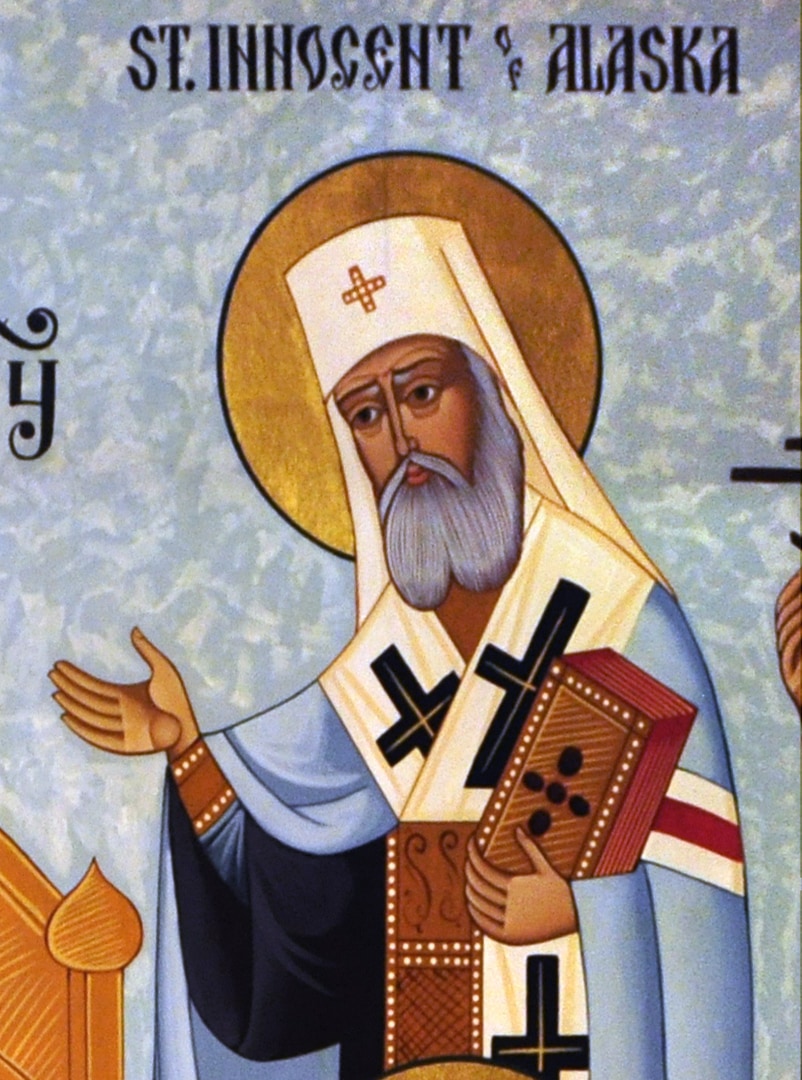
Innocent Metropolitan of Moscow, Ivan Evseyevich Popov, Veniaminov
Alaska, Indigenous Peoples of Alaska, Linguists
Book, Cross
About Innocent of Alaska
Innocent of Alaska (1797–1879), born Ivan Evseyevich Popov, was a pivotal figure in the history of the Russian Orthodox Church in North America and later served as the Metropolitan of Moscow. His life's work was characterized by profound missionary zeal, scholarly pursuit, and capable administration, leaving a lasting legacy in Alaska and the Russian Far East.
Early Life and Ministry
Born in the Irkutsk Governorate of Russia, Popov entered the Irkutsk Theological Seminary, where he was renamed Veniaminov. After marrying Catherine and being ordained a deacon and then a priest, he volunteered for missionary service in Unalaska, Alaska, in 1823. Arriving in 1824 with his family, he immediately immersed himself in learning the local languages and dialects, including Unangan Aleut, for which he created an alphabet. His efforts extended to building churches and ministering to the indigenous populations across the Aleutian Islands and the Alaskan mainland.
Scholarly and Administrative Contributions
Veniaminov's linguistic skills led him to write some of the earliest scholarly works on the native peoples of Alaska, including grammars, dictionaries, and translations of biblical and liturgical texts. His writings, published from 1840 onwards, were instrumental in understanding and evangelizing these communities. In 1834, he was transferred to Sitka, where he continued his studies of the Tlingit people. His dedication and effectiveness were recognized when, after the death of his wife, he was tonsured a monk with the name Innocent and consecrated Bishop of Kamchatka, the Kuril, and Aleutian Islands in 1840. He later became Archbishop and moved his see to Yakutsk, continuing his missionary journeys and translation work.
Metropolitan of Moscow and Canonization
In 1867, Innocent was appointed Metropolitan of Moscow, succeeding his mentor Filaret. In this high office, he undertook significant reforms, including revising church texts, improving conditions for clergy, and establishing a retirement home for them. Innocent passed away in 1879 and was buried at Trinity-St. Sergius Lavra. In recognition of his immense contributions, the Russian Orthodox Church canonized him in 1977 as "Enlightener of the Aleuts, Apostle to America," a title reflecting his pioneering role in spreading Orthodoxy and fostering cultural understanding in the New World.
Source: Wikipedia ↗
Frequently Asked Questions
Who was Innocent of Alaska?
Innocent of Alaska, born Ivan Evseyevich Popov, was a Russian Orthodox missionary priest who became the first Orthodox bishop in the Americas and later the Metropolitan of Moscow. He is renowned for his missionary zeal, scholarship, and administrative leadership in Alaska and the Russian Far East during the 19th century.
What is Innocent of Alaska most remembered for?
He is chiefly remembered for his extensive missionary work in Alaska, where he learned indigenous languages, devised writing systems, and translated religious texts. He also served as a capable administrator and leader within the Russian Orthodox Church, eventually becoming Metropolitan of Moscow.
When and where did Innocent of Alaska serve?
Innocent of Alaska served in Alaska from 1824, initially on Unalaska Island, and later in Sitka. He also ministered in the Russian Far East and eventually became Metropolitan of Moscow, serving there until his death in 1879.
What were some of his key achievements as a scholar and linguist?
Innocent mastered several indigenous Alaskan languages and dialects, for which he devised alphabets using Cyrillic letters. He authored scholarly works on the native peoples, including dictionaries and grammars, and translated parts of the Bible and other church materials into these languages.
When was Innocent of Alaska canonized?
Innocent of Alaska was canonized (glorified) as a saint by the Russian Orthodox Church on October 6, 1977. He was given the title 'Enlightener of the Aleuts, Apostle to America'.
What are the feast days for Innocent of Alaska?
Innocent's feast day is celebrated by the Orthodox Church on March 31 (the date of his repose), October 6 (the anniversary of his canonization), and October 18 (as part of the Synaxis of the Moscow Hierarchs). The Episcopal Church (USA) honors him on March 30.
Related Saints
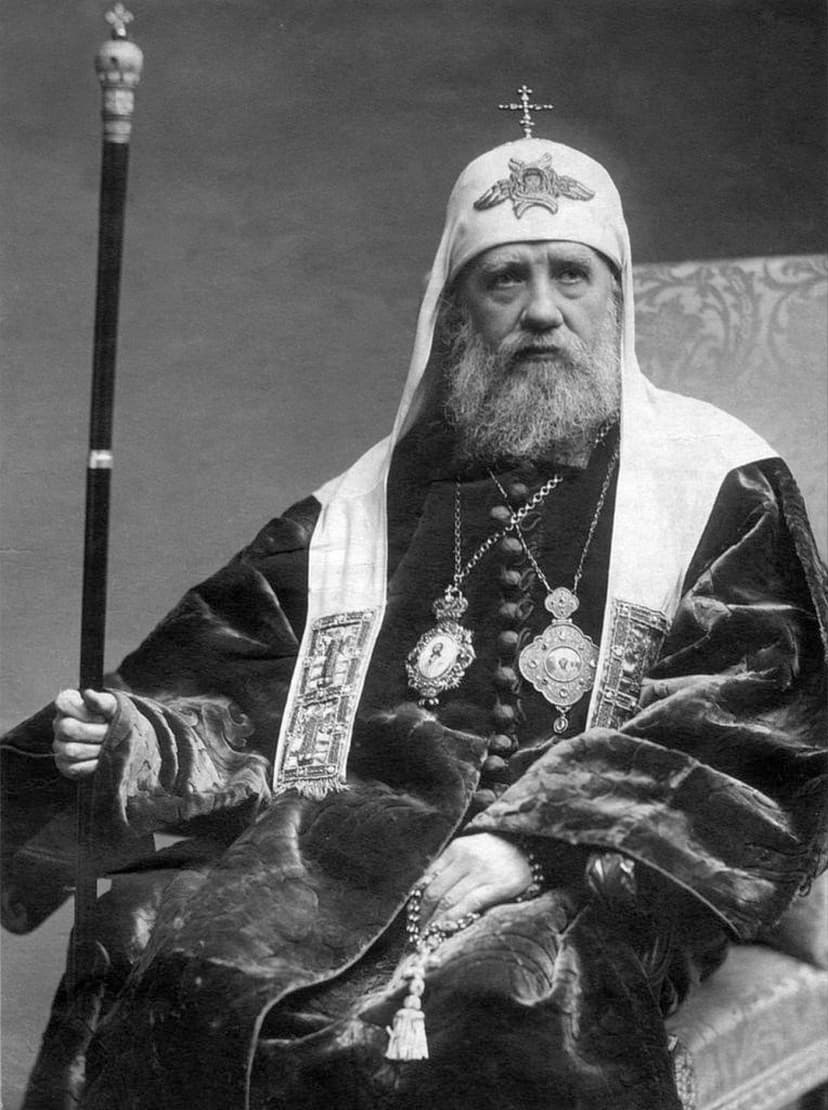
Tikhon of Moscow
Tikhon of Moscow, born Vasily Ivanovich Bellavin, was the 11th Patriarch of Moscow and All Russia, restoring the position after 200 years of Synodal rule. He is remembered for his leadership during a tumultuous period of the Russian Revolution and subsequent Soviet persecution of the Church, and was canonized as a confessor.
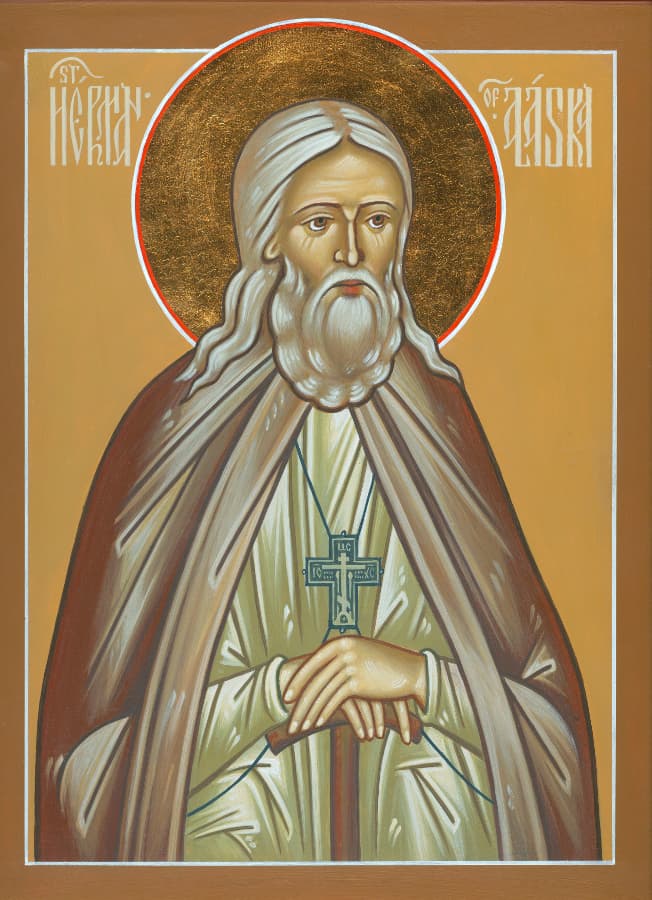
Herman of Alaska
Herman of Alaska was a Russian Orthodox monk and missionary, recognized as the first saint of North America to be canonized by the Orthodox Church. He is remembered for his zealous defense of the native Alaskan populations against the exploitative Russian-American Company and for his devout eremitic life on Spruce Island. His canonization in 1970 solidified his legacy as a spiritual father and protector of the indigenous peoples of Alaska.
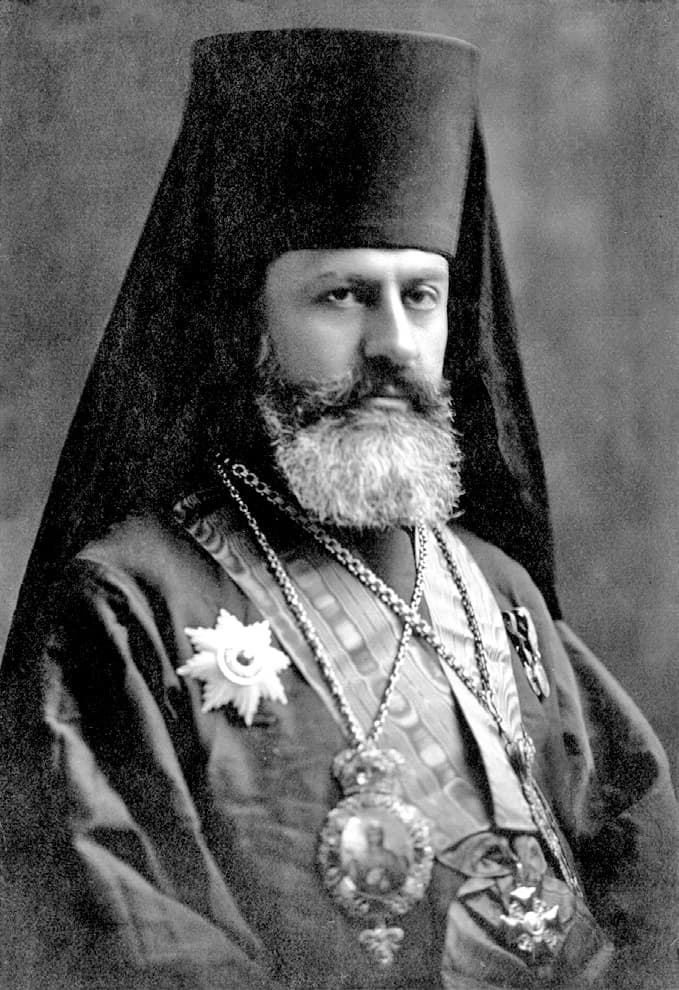
Raphael of Brooklyn
Raphael of Brooklyn was the first Eastern Orthodox bishop in America, serving as an auxiliary bishop for the Russian Orthodox Church and head of the Antiochian Syrian Christian mission. He is remembered for his strong opposition to ethnophyletism and exclusivism within the church, and for his pioneering efforts in integrating the Eastern Orthodox Church into multimedia through the first published Orthodox magazine. His missionary zeal led him across North America and even to the Caribbean, establishing numerous parishes and churches.