
Hermas of Philippopolis
May 31·Bulgaria
Hermas of Philippopolis was one of the Seventy Disciples and served as bishop in Philippopolis in Thrace. He is remembered for his fall into poverty due to sin and his sons' transgressions, leading to his repentance and the writing of "The Shepherd of Hermas." He ultimately died as a martyr.
Key Facts
- ›He was one of the Seventy Disciples.
- ›He served as bishop in Philippopolis in Thrace.
- ›He is mentioned in the New Testament book of Romans.
- ›He fell into poverty due to sin and the sins of his sons.
- ›He wrote "the Shepherd of Hermas" during a period of repentance.
- ›He ended his life as a martyr.
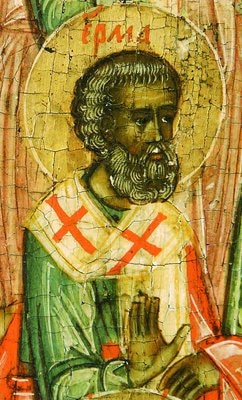
Hermas, Hermes
About Hermas of Philippopolis
Hermas of Philippopolis was an early Christian figure, venerated as one of the Seventy Disciples and as a bishop in the city of Philippopolis in Thrace (modern-day Plovdiv, Bulgaria). His life is associated with significant spiritual and literary contributions within the nascent Christian community.
Life and Historical Context
Hermas is noted for having been a wealthy individual who experienced a fall from grace, losing his fortune due to sin and the transgressions of his sons. This period of hardship is described as leading to a profound spiritual crisis and subsequent repentance. During this time, he is said to have been visited by an angel of repentance, who remained with him until his death. It was through this experience that he was inspired to write "The Shepherd of Hermas," a significant work of early Christian literature known for its allegorical style and moral teachings.
Martyrdom and Legacy
Hermas of Philippopolis is recorded as having met his end as a martyr, sacrificing his life for his faith. His feast day is observed on May 31, and he is also commemorated on November 5 alongside other apostles, and on January 4 as part of the group of the Seventy Disciples. While often identified with the author of "The Shepherd of Hermas," scholarly consensus suggests the author was a later figure, though the bishop's life and writings remain integral to the veneration of his name.
Source: Wikipedia ↗
Frequently Asked Questions
Who was Hermas of Philippopolis?
Hermas of Philippopolis was an early Christian figure, recognized as one of the Seventy Disciples and a bishop in Philippopolis, Thrace. He is also credited with writing the influential early Christian text, "The Shepherd of Hermas."
What is Hermas of Philippopolis remembered for?
He is remembered for his fall from wealth into poverty due to sin, his subsequent repentance, and his eventual martyrdom. His authorship of "The Shepherd of Hermas" is a significant part of his legacy.
Is Hermas of Philippopolis the same person as the author of "The Shepherd of Hermas"?
While often identified with the author of "The Shepherd of Hermas," historical accounts suggest that the bishop Hermas of Philippopolis lived earlier. The author Hermas was a second-generation Christian, living some time after the bishop.
When is the feast day of Hermas of Philippopolis?
The feast day of Hermas of Philippopolis is celebrated on May 31. He is also commemorated on November 5 with Apostles Patrobas, Linus, Gaius, and Philologus, and on January 4 as one of the Seventy.
What happened to Hermas of Philippopolis?
Hermas of Philippopolis was wealthy but fell into poverty due to sin. He later experienced a period of repentance, during which he wrote "The Shepherd of Hermas," and he ultimately died as a martyr.
Related Saints
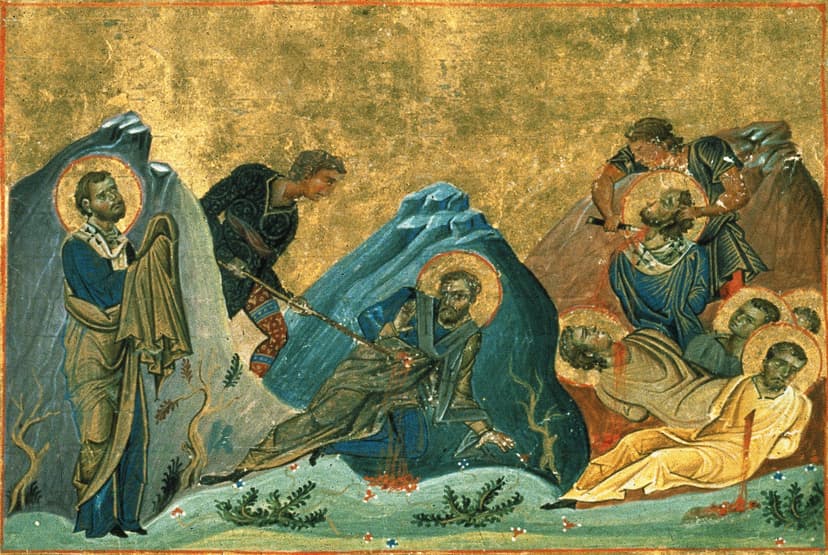
Ampliatus
Ampliatus was a Roman Christian mentioned by the Apostle Paul in his letter to the Romans. He is venerated as one of the Seventy Disciples in the Eastern Orthodox Church and is traditionally believed to have died a martyr. He is commemorated liturgically on October 31st.
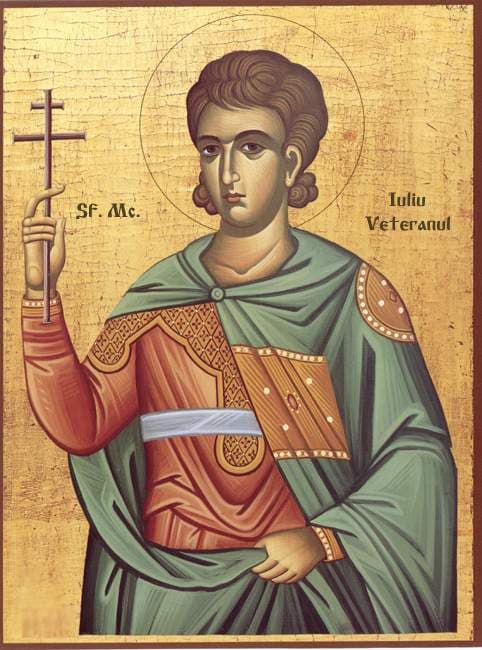
Julius the Veteran
Saint Julius the Veteran was a Roman soldier who served for 27 years and participated in seven military campaigns. He is venerated as a Christian martyr for refusing to renounce his faith and make a public sacrifice to Roman gods, a decision that led to his execution by the sword in Durostorum. Julius is remembered for his steadfast devotion and martyrdom during the Diocletian Persecution.
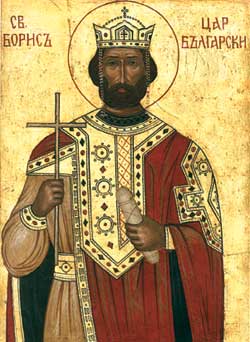
Boris I of Bulgaria
Boris I, also known as Saint Boris I, was the ruler of the First Bulgarian Empire from 852 to 889. He is chiefly remembered for the Christianization of Bulgaria in 864, which abolished paganism and significantly shaped Bulgarian and European history. Boris I was also instrumental in securing an autocephalous Bulgarian Church and providing refuge to the disciples of Saints Cyril and Methodius, thereby preserving the Glagolitic script and promoting the development of Slavic literature.