
Boris I of Bulgaria
May 2·10th century·Bulgaria
Boris I, also known as Saint Boris I, was the ruler of the First Bulgarian Empire from 852 to 889. He is chiefly remembered for the Christianization of Bulgaria in 864, which abolished paganism and significantly shaped Bulgarian and European history. Boris I was also instrumental in securing an autocephalous Bulgarian Church and providing refuge to the disciples of Saints Cyril and Methodius, thereby preserving the Glagolitic script and promoting the development of Slavic literature.
Key Facts
- ›Boris I ruled the First Bulgarian Empire from 852 to 889.
- ›He was baptized as Michael, with Emperor Michael III of Byzantium as his godfather.
- ›Boris I abolished paganism and established Christianity as the state religion of Bulgaria in 864.
- ›He secured an autocephalous Bulgarian Church through skillful diplomacy between the Patriarchate of Constantinople and the Papacy.
- ›Boris I provided refuge to the exiled disciples of Saints Cyril and Methodius, saving the Glagolitic script.
- ›After abdicating, he emerged from monastic life to depose his son Vladimir and ensure his grandson Simeon's succession.
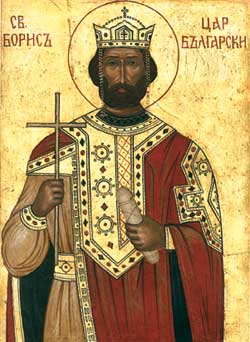
Bogoris, Saint Boris I (Mihail) the Baptizer, Boris-Michael
Bulgaria, Christianization
Cross, Icon of Judgment Day
About Boris I of Bulgaria
Boris I (also known as Bogoris) was the ruler of the First Bulgarian Empire from 852 to 889, and is venerated as Saint Boris I (Mihail) the Baptizer in the Orthodox Church. His reign was marked by transformative events that significantly shaped Bulgarian and, by extension, European history. The most prominent of these was the official Christianization of Bulgaria in 864, which led to the abolition of paganism and the integration of Bulgaria into the Christian community of nations.
Life and Historical Context
Boris I ascended to the throne during a period of complex geopolitical dynamics in Central Europe, characterized by rivalry between the Eastern Roman (Byzantine) Empire and the Carolingian West. His early reign involved military campaigns and diplomatic maneuvers, including conflicts with Eastern Francia and Serbia, and territorial disputes with the Byzantine Empire. A key turning point was his decision to convert to Christianity. While various theories exist regarding his motivations, including the influence of his sister or foreign clergy, historical analysis suggests a deliberate, practical, and political decision. The Byzantine Empire, under Emperor Michael III, declared war on Bulgaria during a period of famine, leading Boris to seek peace by agreeing to convert to Christianity according to Eastern rites, with Emperor Michael III acting as his godfather and Boris adopting the Christian name Michael.
Major Contributions and Reforms
The Christianization of Bulgaria under Boris I was a multifaceted undertaking. Beyond religious conversion, it aimed to unify the disparate Bulgar and Slavic populations within his realm. Boris I sought guidance on Christian living and the establishment of a church structure from both the Byzantine Patriarch Photios and Pope Nicholas I. His correspondence with the Pope, in particular, illuminated the complexities of religious and political administration. Ultimately, through the Fourth Council of Constantinople in 870, the Bulgarian Church was granted the status of an autocephalous archbishopric by the Patriarchate of Constantinople.
A crucial cultural development during Boris I's reign was his support for the disciples of Saints Cyril and Methodius. Following their expulsion from Great Moravia, Boris I welcomed Clement of Ohrid and Naum of Preslav into Bulgaria. He commissioned them to establish educational centers, which became instrumental in developing and disseminating the Glagolitic and later the Cyrillic alphabets. This initiative fostered the creation of a distinct Slavic Christian culture and literature, freeing the Bulgarians from dependence on Greek as the liturgical and written language. The introduction of Old Bulgarian as the official church language in 893 further solidified this cultural shift.
Later Years and Legacy
Boris I abdicated the throne in 889 and became a monk. However, his retirement was short-lived. When his eldest son and successor, Vladimir, attempted to restore paganism, Boris I emerged from monastic life to depose him and ensure the succession of his third son, Simeon I. He also played a role in aiding Simeon I in conflicts against the Magyars. Boris I resumed monastic life and died on May 2, 907. His legacy is profound, not only for establishing Christianity and fostering Slavic literacy but also for diplomatically securing Bulgaria's ecclesiastical independence and laying the groundwork for its Golden Age under Tsar Simeon I.
Source: Wikipedia ↗
Frequently Asked Questions
Who was Boris I of Bulgaria?
Boris I was the ruler (knyaz) of the First Bulgarian Empire from 852 to 889. He is venerated as a saint in the Orthodox Church, known for his role in the Christianization of Bulgaria.
Why is Boris I significant in Bulgarian history?
Boris I is significant for abolishing paganism and establishing Christianity in Bulgaria in 864. This decision had profound effects on Bulgarian society, culture, and its place within the Byzantine and European spheres.
What was Boris I's role in the development of Slavic literature?
After the disciples of Saints Cyril and Methodius were banished from Great Moravia, Boris I gave them refuge and assistance in Bulgaria. This support was crucial for saving the Glagolitic script and promoting the development of the Cyrillic script and Slavic literature.
How did Boris I secure an autocephalous Bulgarian Church?
Boris I skillfully navigated the political landscape between the Patriarchate of Constantinople and the Papacy. His diplomatic efforts led to the establishment of an autocephalous Bulgarian Church, addressing concerns about Byzantine interference.
What happened after Boris I abdicated?
After abdicating in 889, Boris I became a monk. He later emerged from retirement to depose his son, Vladimir, who attempted to restore paganism, and ensured the succession of his third son, Simeon I.
When is the feast day of Saint Boris I?
Saint Boris I's feast day is observed on May 2. He is also commemorated in the Synaxis of all venerable and holy Fathers of Bulgaria, a movable holiday on the second Sunday of Pentecost.
Related Saints
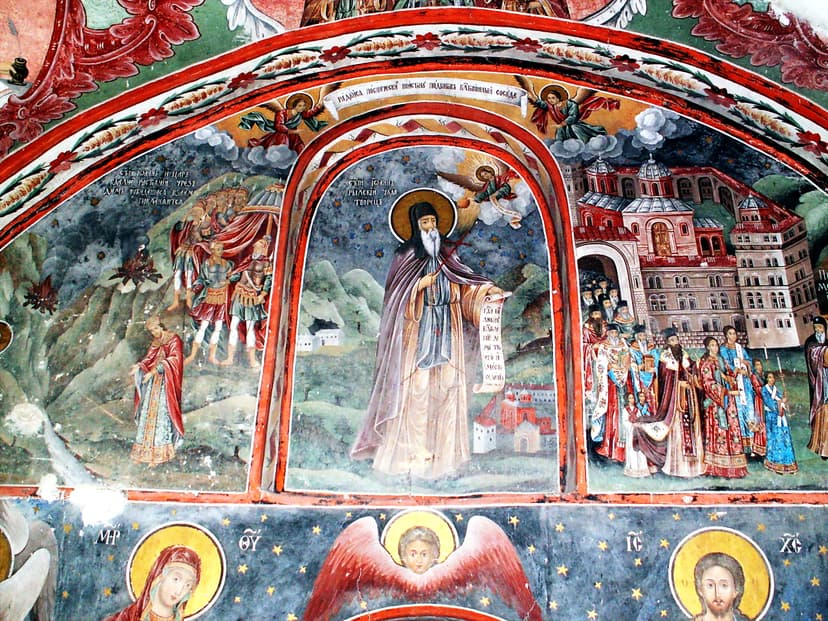
John of Rila
Saint John of Rila was the first Bulgarian hermit, revered for his ascetic life and miracles. He is honored as the patron saint of the Bulgarians and is one of the most important figures in the Bulgarian Orthodox Church. His legacy is tied to the founding of the Rila Monastery and his Testament, a moral message to his people.
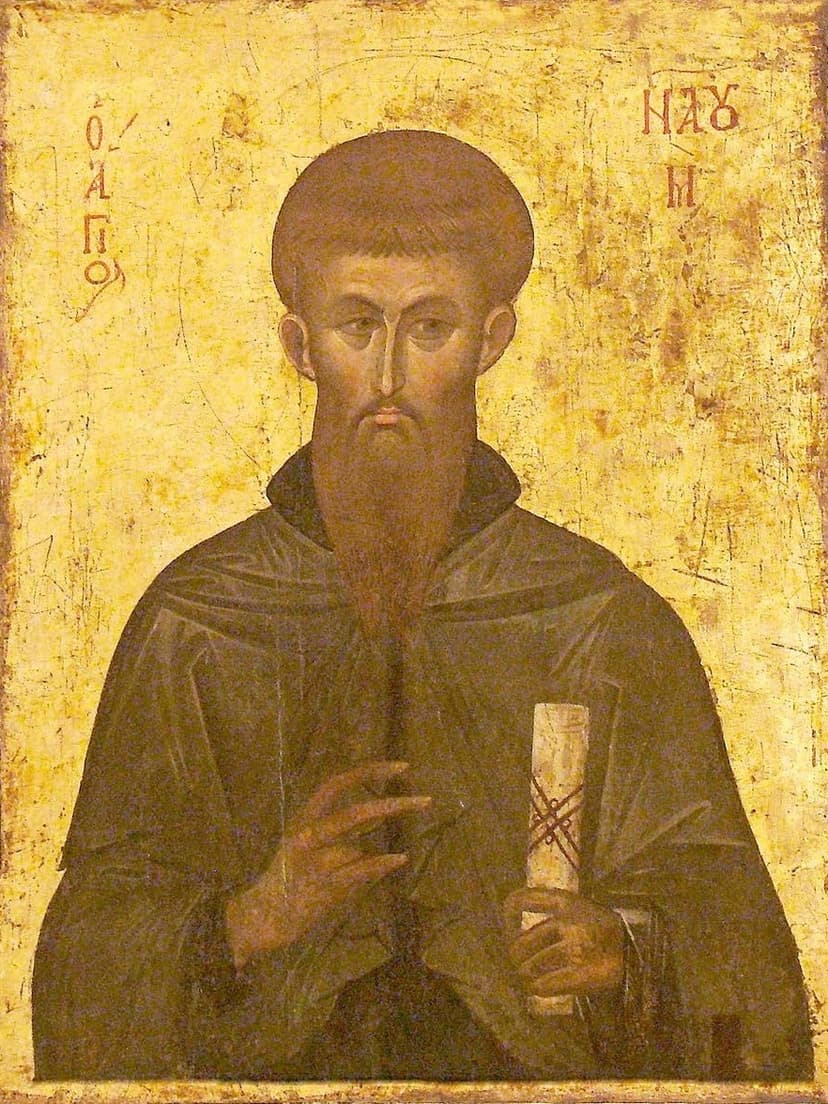
Nahum of Preslav
Saint Naum of Preslav was a medieval Bulgarian writer and missionary, revered as one of the Seven Apostles of the First Bulgarian Empire. He was a key disciple of Cyril and Methodius, instrumental in the development and dissemination of the Glagolitic and Cyrillic scripts, and a founder of important literary schools. Naum is chiefly remembered for his significant role in promoting Slavic literacy and contributing to the formation of a distinct Bulgarian identity.
Naum
Naum of Ohrid was a medieval Bulgarian writer and missionary, considered one of the Seven Apostles of the First Bulgarian Empire. He was a disciple of Cyril and Methodius and played a key role in the development of Glagolitic and Cyrillic scripts. Naum is particularly remembered for his work at the Ohrid Literary School and as one of the first saints declared by the Bulgarian Orthodox Church.