
Gabriel of Georgia
Saint Gabriel of Georgia, born Goderdzi Urgebadze, was a Georgian Orthodox monk venerated for his dedicated monastic life and piety. He is remembered for his asceticism, prophetic gifts, and particularly for his public protest against Soviet power by burning a portrait of Lenin. He was officially canonized by the Georgian Orthodox Church as Saint Gabriel, Confessor and Fool for Christ, and his grave in Mtskheta has become a significant pilgrimage site.
Key Facts
- ›He was born Goderdzi Urgebadze in Tiflis, Georgia, on August 26, 1929.
- ›During communist persecution, he collected and preserved religious icons.
- ›In 1965, he publicly burned a portrait of Lenin as a protest against Soviet power.
- ›He was subsequently committed to a psychiatric hospital for his actions and protests.
- ›He served as the abbot of the women’s Samtavro Monastery and its seminary from 1971.
- ›He was canonized by the Georgian Orthodox Church on December 20, 2012.
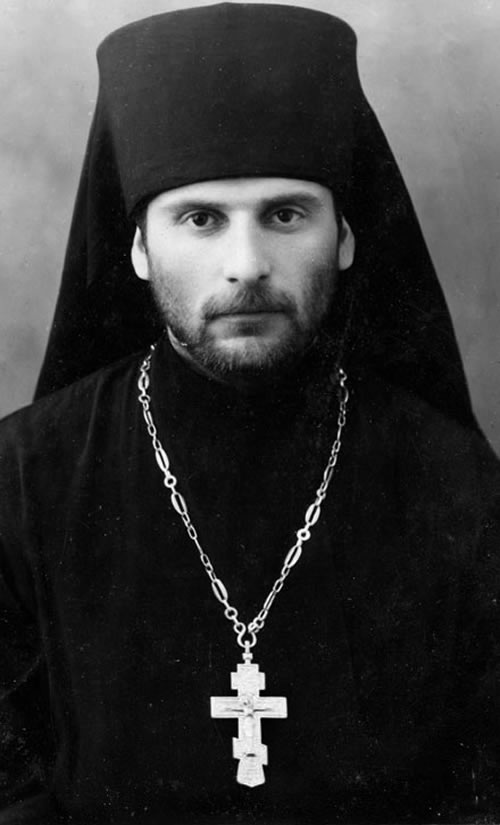
- Goderdzi Urgebadze
- Vasiko
- Holy Father Saint Gabriel, Confessor and Fool for Christ
About Gabriel of Georgia
Saint Gabriel of Georgia, born Goderdzi Urgebadze (August 26, 1929 – November 2, 1995), was a prominent Georgian Orthodox monk and hieromonk who gained renown for his devout monastic life, asceticism, and prophetic gifts. He was officially canonized by the Georgian Orthodox Church on December 20, 2012, with the title Holy Father Saint Gabriel, Confessor and Fool for Christ.
Early Life and Spiritual Formation
Goderdzi Urgebadze was born in Tiflis and baptized in infancy. His father died when he was young, and he later took on the name "Vasiko" in his memory. During his childhood, under communist rule, he actively sought out and preserved religious icons that were being hidden or discarded. Despite initial maternal opposition to his religious path, he undertook pilgrimages to various monasteries, which profoundly shaped his spiritual development. After serving in the Soviet Army, he dedicated himself more fully to spiritual pursuits, building a small prayer hut and later serving as a watchman and psalm-reader in churches with the blessing of Patriarch Melchizedek III.
Monastic Service and Public Witness
In 1955, Urgebadze was ordained a deacon and then a hieromonk, taking the monastic name Gabriel. He served in Sioni Cathedral and later at Betania Monastery until its closure by authorities. Returning to Tbilisi, he continued his ministry and constructed a house-church. A pivotal moment in his life occurred on May 1, 1965, when he publicly burned a portrait of Lenin during a May Day demonstration, proclaiming Christ as the true source of glory. This act of defiance led to his severe beating, arrest, and subsequent commitment to a psychiatric hospital. Despite prohibitions on liturgical service, he continued his spiritual life, adopting the practice of a "fool-for-Christ" with unconventional public behavior and preaching.
Later Years and Veneration
In 1971, Gabriel was appointed abbot of the women’s Samtavro Monastery and its seminary, where he lived in ascetic simplicity. He also made pilgrimages to abandoned churches and discovered a fragment of the Holy Cross of Svetitskhoveli. In his final years, he lived in a small hut and preached messages of love, repentance, and kindness. He died on November 2, 1995, and was buried without a coffin in the courtyard of Samtavro Monastery. Following his death, his grave became a significant pilgrimage site, with many miracles attributed to his intercession. His remains were later exhumed and reburied in a special crypt within the monastery, after being toured around major Georgian cathedrals, drawing large crowds of devotees.
Source: Wikipedia ↗
Frequently Asked Questions
Who was Gabriel of Georgia?
Gabriel of Georgia, born Goderdzi Urgebadze, was a Georgian Orthodox monk known for his piety, asceticism, and acts of spiritual defiance. He was officially canonized by the Georgian Orthodox Church in 2012.
Why is Saint Gabriel remembered for his protest?
He is famously remembered for setting fire to a large portrait of Lenin during a May Day demonstration in 1965, publicly declaring that glory should be given only to Christ. This act led to his arrest and mistreatment.
What was his monastic life like?
After military service, he devoted himself to spiritual life, becoming a deacon and then a hieromonk. He served in various cathedrals and monasteries, notably Betania Monastery and later Samtavro Monastery, where he became abbot.
Are there any miracles attributed to him?
Yes, many miracles are ascribed to Saint Gabriel, including powers of healing and clairvoyance. The oil from a lamp burning at his tomb is also considered miraculous, and his remains are believed to be incorrupt.
Where is he buried and is it a pilgrimage site?
He is buried in the courtyard of Samtavro Monastery in Mtskheta, Georgia. His grave has become an increasingly popular pilgrimage site, attracting many devotees.
What is the meaning of 'Fool for Christ'?
The title 'Fool for Christ' refers to a form of asceticism where individuals adopt unconventional public behavior and speech to express their devotion to God and to challenge societal norms, often appearing to act irrationally to the outside world.
Related Saints
Isidora
Saint Isidora was a 4th-century Christian nun and one of the earliest recorded "fools for Christ." She is remembered for embodying the Pauline ideal of worldly foolishness leading to spiritual wisdom, emphasizing that God's recognition of one's actions is paramount over human glory.
John of Moscow
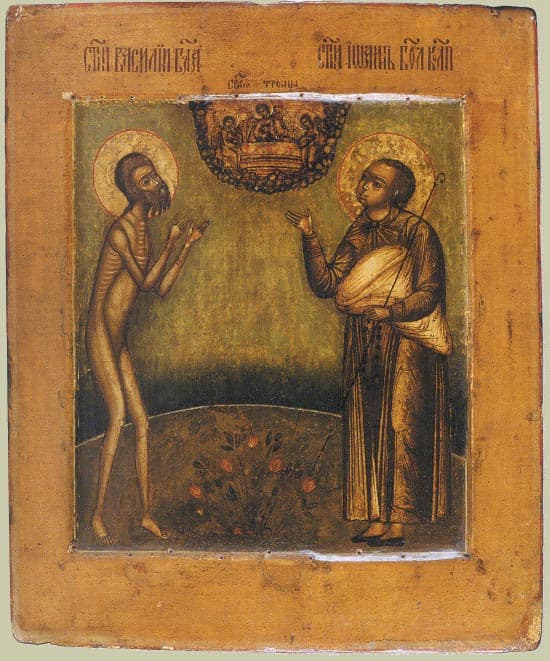
John of Moscow was a 16th-century Russian saint known for his holy foolishness for Christ. He is remembered as a wonderworker and seer in Moscow, who fearlessly spoke the truth to all, including the Czar, and foretold future misfortunes for Russia.
Xenia of Saint Petersburg
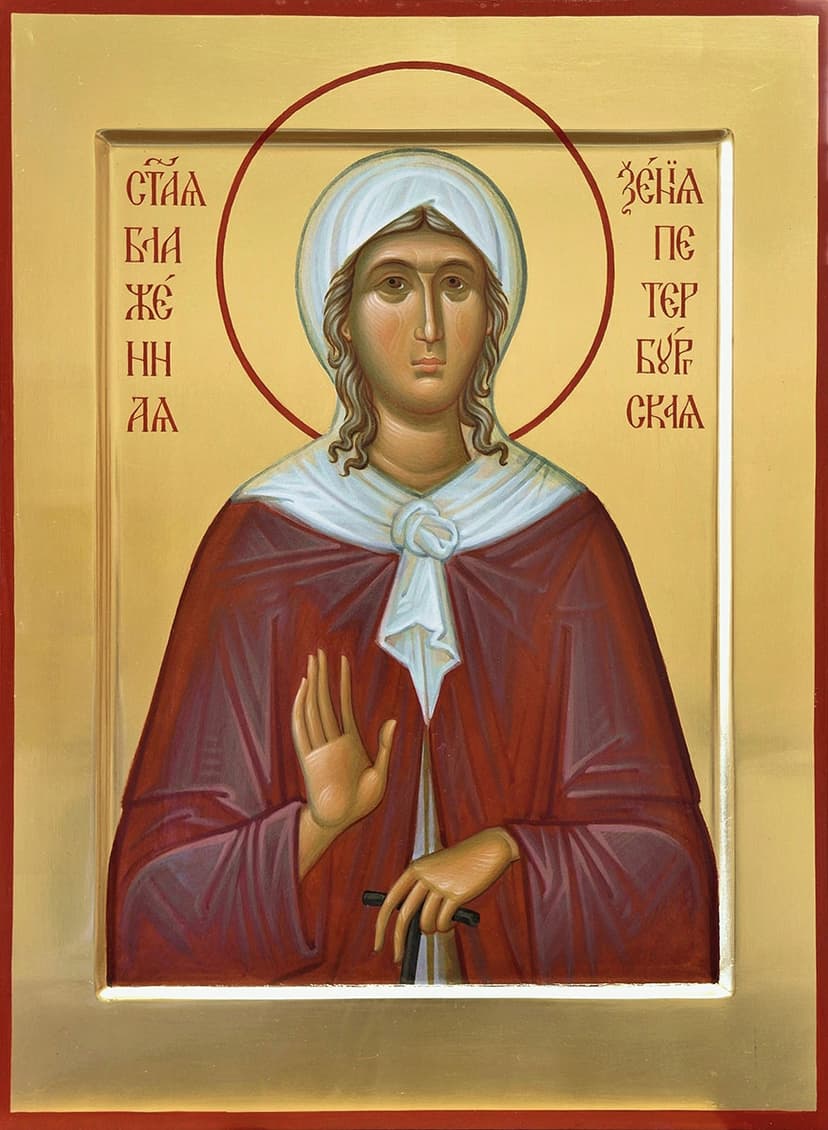
Xenia of Saint Petersburg is a patron saint of the city, venerated for her radical devotion after her husband's death. She became a "fool-for-Christ," renouncing her possessions and worldly status to live a life of prayer and service on the streets, traditionally wearing her late husband's uniform. She is remembered for her intercessions in various life matters, including employment, marriage, and the homeless.