
Cosmas I of Constantinople
January 2·11th century·Byzantine Empire
Cosmas I of Constantinople was the Ecumenical Patriarch of Constantinople from 1075 to 1081. Originally from Antioch and educated in Jerusalem, he is remembered for his role in crowning emperors and for his synodal condemnation of John Italus' heretical views. His tenure marked a period of increasing state dependence for the Church.
Key Facts
- ›He served as Ecumenical Patriarch of Constantinople from August 2, 1075, to may 8, 1081.
- ›Cosmas was originally from Antioch and spent much of his life in Jerusalem, earning the epithet 'the Jerusalemite'.
- ›He crowned Byzantine Emperors Nikephoros III Botaneiates and Alexios I Komnenos.
- ›Cosmas disapproved of Emperor Nikephoros III's marriage to the ex-wife of Michael VII Doukas.
- ›He successfully blocked Alexios I's attempt to repudiate his wife to marry Maria of Alania.
- ›In 1076-1077, he led the condemnation of heretical views held by scholar John Italus.
Cosmas the Jerusalemite
About Cosmas I of Constantinople
Cosmas I, also known as Cosmas the Jerusalemite, served as the Ecumenical Patriarch of Constantinople from August 2, 1075, to May 8, 1081. Originally from Antioch, Cosmas spent a considerable portion of his life in Jerusalem, where he received his education and resided, leading to his distinctive epithet.
Life and Ministry
Cosmas I's tenure as Patriarch was marked by significant involvement in imperial affairs. He performed the coronations of both Emperor Nikephoros III Botaneiates and Emperor Alexios I Komnenos. Historically, he is noted for his disapproval of Emperor Nikephoros III's marriage to the ex-wife of the previous emperor, Michael VII Doukas, though his actions were limited to degrading the priest who officiated the ceremony. Later, Cosmas I intervened to prevent Alexios I Komnenos from repudiating his wife, Irene Doukaina, to marry Maria of Alania, a move that ultimately contributed to his own resignation or removal from the patriarchal throne.
His most consequential synodal action was the condemnation in 1076–1077 of certain heretical doctrines espoused by John Italus, a scholar associated with the Doukas family. Some historical accounts, such as those by John Skylitzes, portray Cosmas I critically, suggesting he was chosen for his lack of perceived greatness and wisdom, rather than for distinguished merit.
Legacy
Cosmas I is venerated as a saint in the Orthodox Church, with his feast day observed on January 2nd. His patriarchate is often viewed as a transitional period, signaling an increased entanglement of the Church with state interests, a departure from the greater independence the Church had enjoyed in the preceding century. His actions concerning imperial marriages and his synodal condemnation of John Italus are key events from his time as Patriarch.
Source: Wikipedia ↗
Frequently Asked Questions
When did Cosmas I serve as Patriarch of Constantinople?
Cosmas I served as Ecumenical Patriarch of Constantinople from August 2, 1075, to May 8, 1081.
What was Cosmas I's background before becoming Patriarch?
Originally from Antioch, Cosmas spent a significant part of his life in Jerusalem, where he was educated and resided, which earned him the epithet 'the Jerusalemite'.
What significant events occurred during Cosmas I's patriarchate?
During his tenure, Cosmas I crowned Emperors Nikephoros III Botaneiates and Alexios I Komnenos. He also led the synodal condemnation of heretical views held by John Italus.
Why did Cosmas I's tenure as Patriarch end?
Cosmas I resigned or was forced out after successfully interfering with Emperor Alexios I's plan to repudiate his wife for Maria of Alania. This was partly due to pressure from Alexios I's mother, Anna Dalassene.
What is the historical significance of Cosmas I's patriarchate?
His reign is associated with a period where the Church became increasingly dependent on and subservient to the state, reversing earlier trends of greater ecclesiastical autonomy.
Related Saints
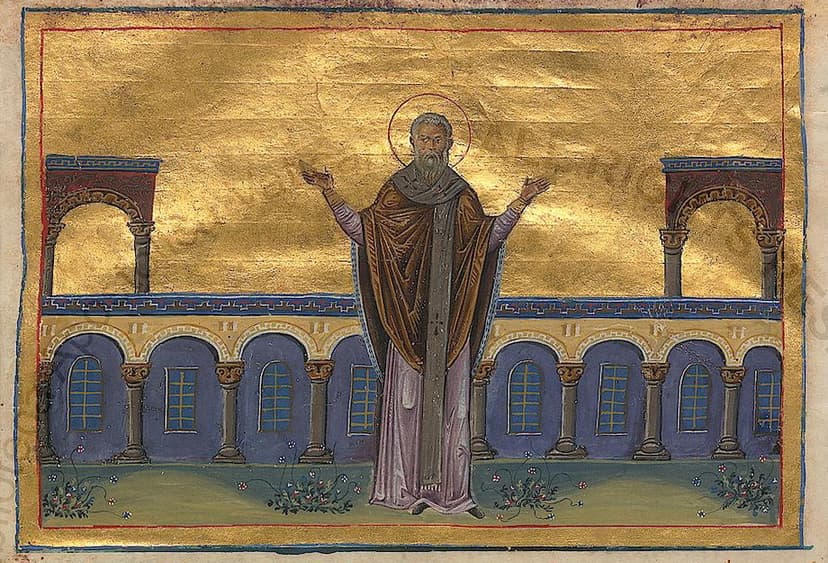
John IV of Constantinople
John IV of Constantinople, also known as John the Faster, served as Patriarch of Constantinople from 582 to 595. He was the first to assume the title Ecumenical Patriarch and is remembered for his ascetic life and charitable works. The Eastern Orthodox Church venerates him as a saint with a feast day on September 2.
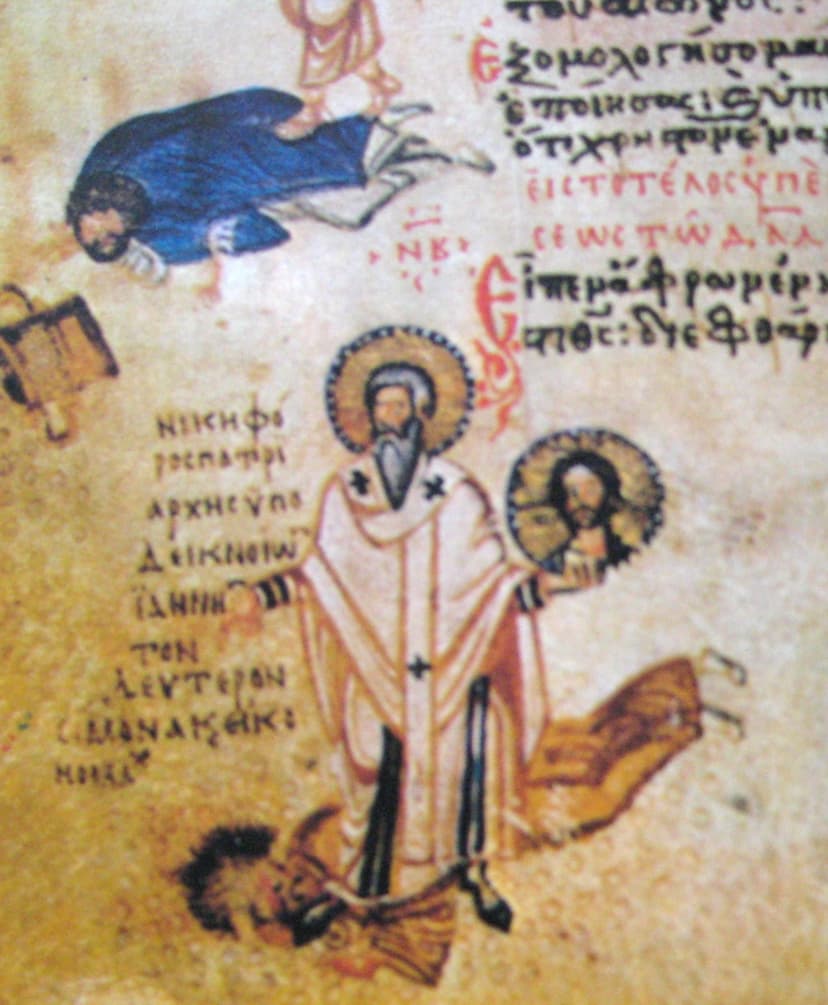
Nikephoros I of Constantinople
Nikephoros I was an Ecumenical Patriarch of Constantinople and a Byzantine writer known for his staunch defense of iconodules during the period of Iconoclasm. He played a significant role in the synod of 787 and later engaged in literary polemics against the iconoclastic synod of 815. He is revered as a confessor and remembered for his historical writings and his efforts to delineate the accepted canon of the New Testament.
Callinicus I of Constantinople
Callinicus I served as the Ecumenical Patriarch of Constantinople from 693 to 705. He is remembered for his role in deposing Emperor Justinian II and later being arrested and blinded upon Justinian II's return to power. He is venerated as a saint in the Eastern Orthodox Church.