
Constantine the Younger
September 3·7th century·Byzantine Empire
Constantine IV, known as "the Younger," was the Byzantine emperor from 668 to 685. He is primarily remembered for successfully defending Constantinople against the first major Arab siege and for convening the Sixth Ecumenical Council, which ended the Monothelitism controversy. His reign marked a period of stabilization for the Byzantine Empire after years of conflict.
Key Facts
- ›He was the eldest son of Emperor Constans II and Fausta.
- ›Constantine IV became emperor in September 668 following his father's assassination in Sicily.
- ›His reign saw the first significant check to Arab expansion, particularly the successful defense of Constantinople.
- ›He convened the Sixth Ecumenical Council in 680, which resolved the Monothelitism controversy.
- ›Constantine IV died of dysentery on July 10, 685.
- ›He was venerated as a saint in the Eastern Orthodox Church.
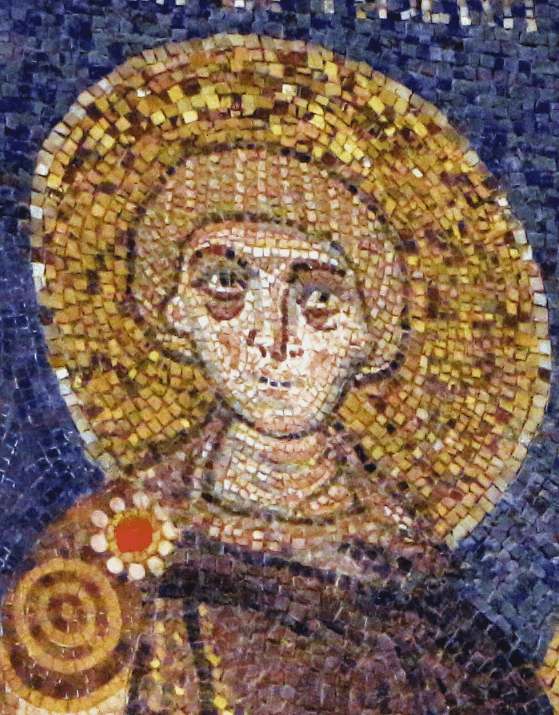
Constantine the Younger, Constantine Pogonatos (often incorrectly)
About Constantine the Younger
Constantine IV
Constantine IV (c. 650 – 10 July 685), also known as Constantine the Younger, was the Byzantine emperor from 668 to 685. His reign is notable for halting the momentum of Arab expansion and for resolving a significant theological dispute within the Christian church.
Early Life and Accession
The eldest son of Emperor Constans II and Fausta, Constantine IV was named co-emperor in 654. He ascended to the throne in September 668 following the assassination of his father in Sicily. His immediate concern was suppressing the revolt in Sicily that had led to his father's death.
Defending the Empire
Constantine IV's reign was marked by the significant challenge of the First Arab Siege of Constantinople, which modern scholarship dates to 667–669. Despite the weakening of Constantinople's defenses due to his father's relocation of the imperial court to Syracuse, Constantine successfully defended the capital against the Arab fleet. This defense is considered a critical turning point that checked the advance of the Umayyad Caliphate into Europe.
Religious and Political Stability
Beyond military defense, Constantine IV played a crucial role in religious affairs. In 680, he convened the Sixth Ecumenical Council (also known as the Third Council of Constantinople). This council reaffirmed Orthodox doctrines and definitively ended the Monothelitism controversy, a theological debate concerning the nature of Christ's will. This resolution was particularly convenient for the Empire, as many Monothelites were under the control of the Caliphate. His reign also saw the temporary stabilization of the Byzantine Empire after a period of war and civil strife.
Later Reign and Family
Later in his reign, Constantine IV faced challenges from the Lombards in the west and the Bulgars under Khan Asparukh, who crossed the Danube. An expedition against the Bulgars led to a defeat for the Byzantine forces and forced Constantine to acknowledge the Bulgar state and pay tribute. In an effort to secure the succession, he had his brothers, who had been crowned co-emperors, mutilated to make them ineligible for the throne. He died of dysentery in 685, succeeded by his son, Justinian II.
Constantine IV is venerated as a saint in the Eastern Orthodox Church, with his feast day observed on September 3.
Source: Wikipedia ↗
Frequently Asked Questions
When did Constantine IV reign as Byzantine emperor?
Constantine IV reigned as Byzantine emperor from 668 to 685.
What was Constantine IV's greatest military achievement?
His most significant military achievement was the successful defense of Constantinople against the first major Arab siege, which occurred between 667 and 669. This event marked a crucial check on Arab expansion into the Byzantine Empire.
Why is Constantine IV venerated as a saint?
Constantine IV is venerated as a saint in the Eastern Orthodox Church primarily for convening the Sixth Ecumenical Council (Third Council of Constantinople) in 680. This council resolved the Monothelitism controversy within the Byzantine Empire.
What was the Monothelitism controversy?
The Monothelitism controversy was a theological dispute concerning the nature of Christ's will. Monothelitism proposed that Christ had only one, divine will, a doctrine that was ultimately condemned as heresy by the Sixth Ecumenical Council convened by Constantine IV.
What challenges did Constantine IV face during his reign?
Constantine IV faced significant challenges including the major Arab siege of Constantinople, military revolts, and incursions by the Bulgars. He also had to manage internal religious disputes and economic crises.
Related Saints
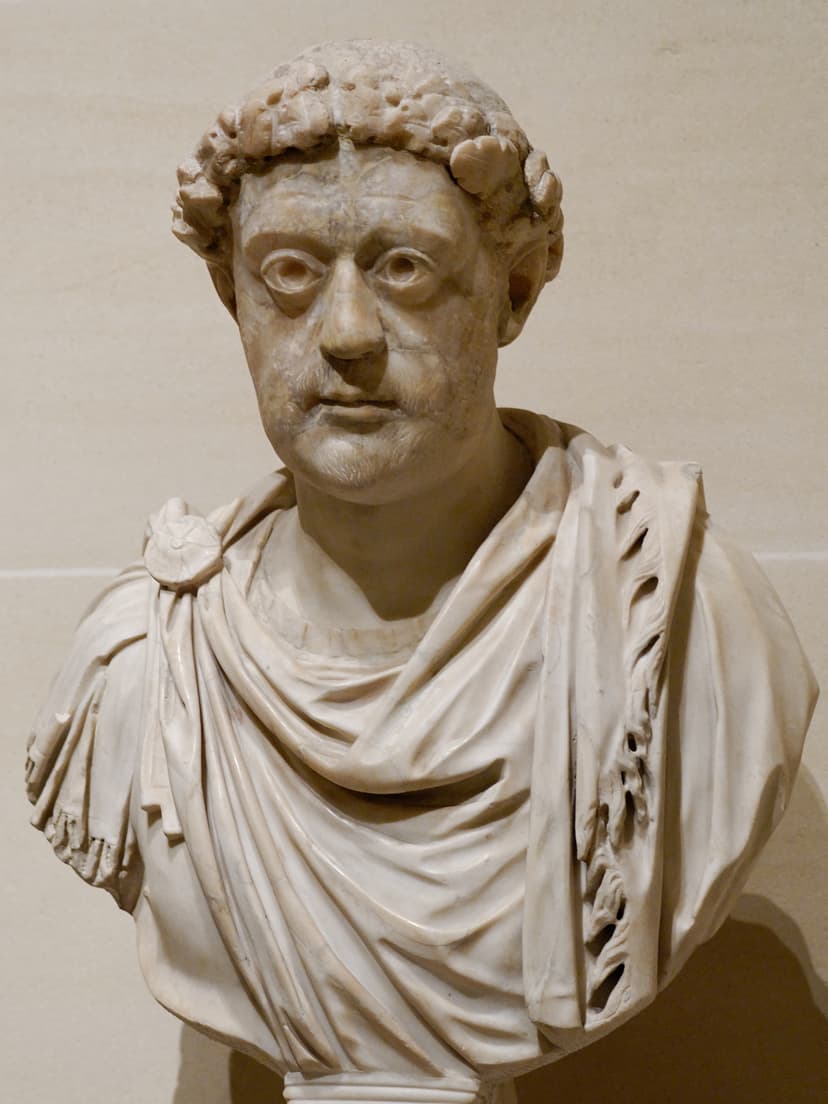
Leo I the Thracian
Leo I the Thracian was the Eastern Roman emperor from 457 to 474, known for his military and political ambitions aimed at aiding the Western Roman Empire. He was the first Eastern Emperor to legislate in Koine Greek and is commemorated as a saint in the Eastern Orthodox Church.
Symeon the New Theologian
Symeon the New Theologian was an Eastern Orthodox monk and poet who was one of only three saints to receive the title "Theologian" from the Eastern Orthodox Church. This title recognized his personal experience of the vision of God, rather than academic theological study. He is chiefly remembered for teaching that humans could and should experience theoria, the direct experience of God, and for freely sharing his own mystical experiences.
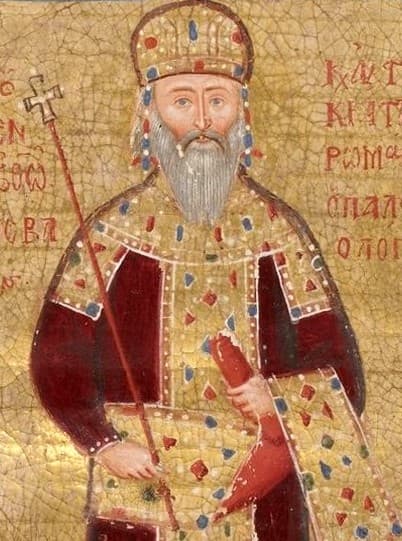
Manuel II Palaiologos
Manuel II Palaiologos was the Byzantine emperor from 1391 to 1425, a period marked by significant Ottoman pressure. He is remembered for his efforts to secure Western European aid against the Ottomans, including personal visits to various European courts, and for his surviving literary works that offer insight into his life and the late Byzantine Empire. Shortly before his death, he became a monk, taking the name Matthaios.