
Anthony of Siya
Anthony of Siya was a Russian Orthodox monk, born a peasant in 1478, who founded the Antonievo-Siysky Monastery in the Russian North. He is remembered as the last significant monastic saint, advocating for monastic control of peasant villages and dying in 1556.
Key Facts
- ›Anthony was born a peasant in 1478.
- ›He founded the Antonievo-Siysky Monastery in 1520.
- ›He advocated for monastic control of peasant villages.
- ›His monastery was under the ecclesiastical control of the archbishop of Novgorod.
- ›He died in 1556.
- ›He was recognized as a saint of national importance in 1610.
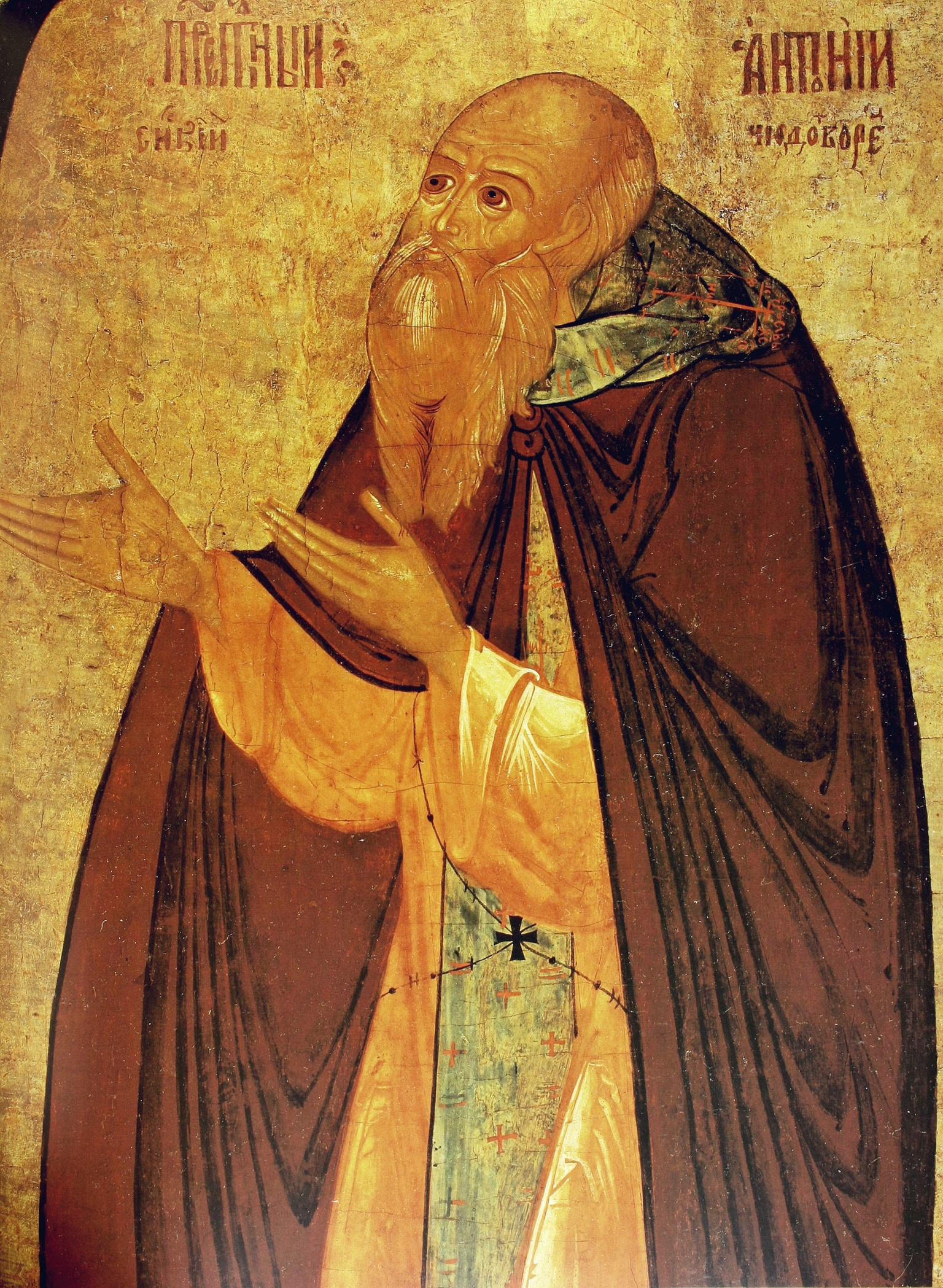
Antony Siysky
About Anthony of Siya
Anthony of Siya, also known as Antony Siysky, was a Russian Orthodox monk born in 1478. He is recognized as the last significant monastic saint in Russian history. His life was shaped by his peasant origins, a period as a married man, and later his entry into monasticism after his wife's death.
Life and Historical Context
Born a peasant, Anthony married in his youth and lived a typical rural life until his wife passed away. Following her death, he entered a monastery in Kargopol, though he did not remain there for long. He subsequently became a wandering monk, traveling along the shores of the Arctic Ocean. In 1520, Anthony established the Antonievo-Siysky Monastery on the Siya River, a tributary of the Northern Dvina, in what is now the Arkhangelsk Oblast of the Russian North. He secured permission from Vasily III to erect monastic buildings on state-owned land and was an advocate for monastic communities to control peasant villages. The monastery operated under the ecclesiastical authority of the archbishop of Novgorod within the broader Russian Church. Anthony died in 1556.
Legacy
Anthony of Siya's influence extended beyond his lifetime, leading to his veneration as a saint. Vasily III's grandson authored a biography of Anthony, and the monk Jonah wrote a vita (life) of the saint in 1578. Anthony was officially recognized as a saint of national importance in 1610. His hagiography includes accounts such as the "Life of and Miracles of Antony Siysky," which details an incident involving a priest and a supernatural phenomenon.
Role and Significance
Anthony is primarily remembered as a founder of a significant monastery and a proponent of monastic influence. His role as a wandering monk and his advocacy for monastic control over villages highlight his dedication to the spiritual and material well-being of monastic institutions. He is considered the last major monastic saint, marking a particular era in Russian Orthodox monastic tradition.
Source: Wikipedia ↗
Frequently Asked Questions
When was Anthony of Siya born?
Anthony of Siya was born in 1478 as a peasant.
What significant monastery did Anthony of Siya found?
Anthony of Siya founded the Antonievo-Siysky Monastery on the Siya River in 1520. He received permission from Vasily III to build monastic structures on state land.
What was Anthony of Siya's stance on monastic land ownership?
Anthony of Siya was a vocal proponent of monastic control over peasant villages. His monastery was ecclesiastically overseen by the archbishop of Novgorod within the Russian Church.
When did Anthony of Siya die and when was he recognized as a saint?
Anthony of Siya died in 1556. He was recognized as a saint of national importance in 1610.
Who wrote about the life of Anthony of Siya?
Vasily III's grandson wrote a biography of Anthony, and the monk Jonah also authored a vita (life) of Anthony in 1578. The Life of and Miracles of Antony Siysky also recounts an event involving a priest.
Related Saints
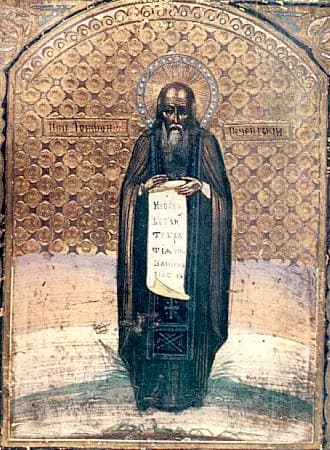
Tryphon of Pechenga
Tryphon of Pechenga was a 16th-century Russian monk and ascetic who became known as the "Enlightener of the Sami." He is chiefly remembered for founding the Pechenga Monastery and for his missionary work among the Sámi people of the Kola Peninsula and Lapland.
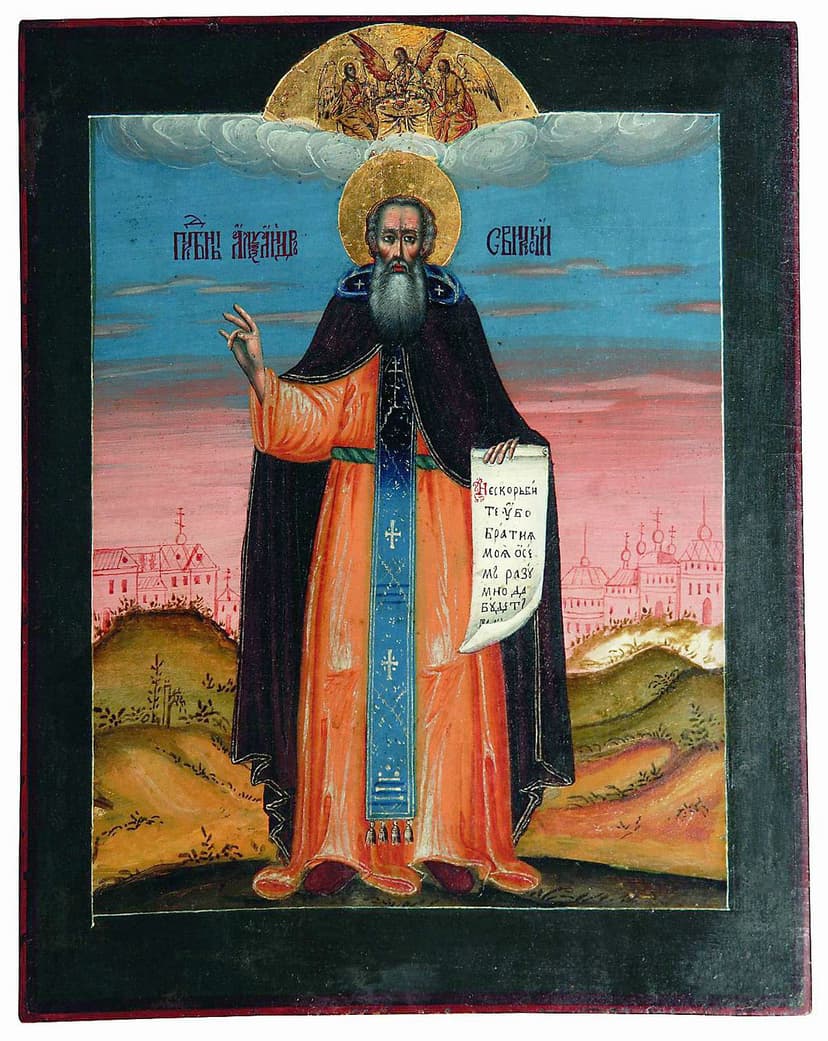
Alexander of Svir
Alexander of Svir was a Russian monk and hegumen known for his righteous life and contemplative miracles, including visions of the Trinity and the Virgin Mary. He was canonized by the Russian Orthodox Church in 1547 and is venerated for his sanctity and the incorruptibility of his relics. His feast days are celebrated on April 17 and August 30.
Joseph Volotsky
Joseph Volotsky was a prominent Russian theologian and an early proponent of tsarist autocracy. He is chiefly remembered for leading the "possessors" party in defense of monastic landownership against the "non-possessors" and for his staunch opposition to heresy. The Russian Orthodox Church considers him a saint, celebrating his memory on September 9 and October 18.