
Anna of Kashin
June 12·14th century·Russia
Anna of Kashin was a Russian princess consort of Mikhail of Tver, known for her enduring faith amidst immense personal tragedy and for her complex canonization history. She is venerated as a patroness of Kashin and Tver, remembered for her humility and the miracles attributed to her relics.
Key Facts
- ›She was born around 1280 and died on October 2, 1368.
- ›Anna was the princess consort of Mikhail of Tver and a descendant of the Rostov princes.
- ›She endured the deaths of most of her relatives, including her husband and sons, due to political strife and violence.
- ›Anna took monastic vows, first as Evfrosiniya and later as Anna.
- ›She was canonized by the Russian Orthodox Church in 1650, decanonized in 1677, and her sainthood was officially restored in 1908.
- ›Her relics were believed to work miracles, and her hand was traditionally depicted making the sign of the cross with two fingers, a practice of Old Believers.
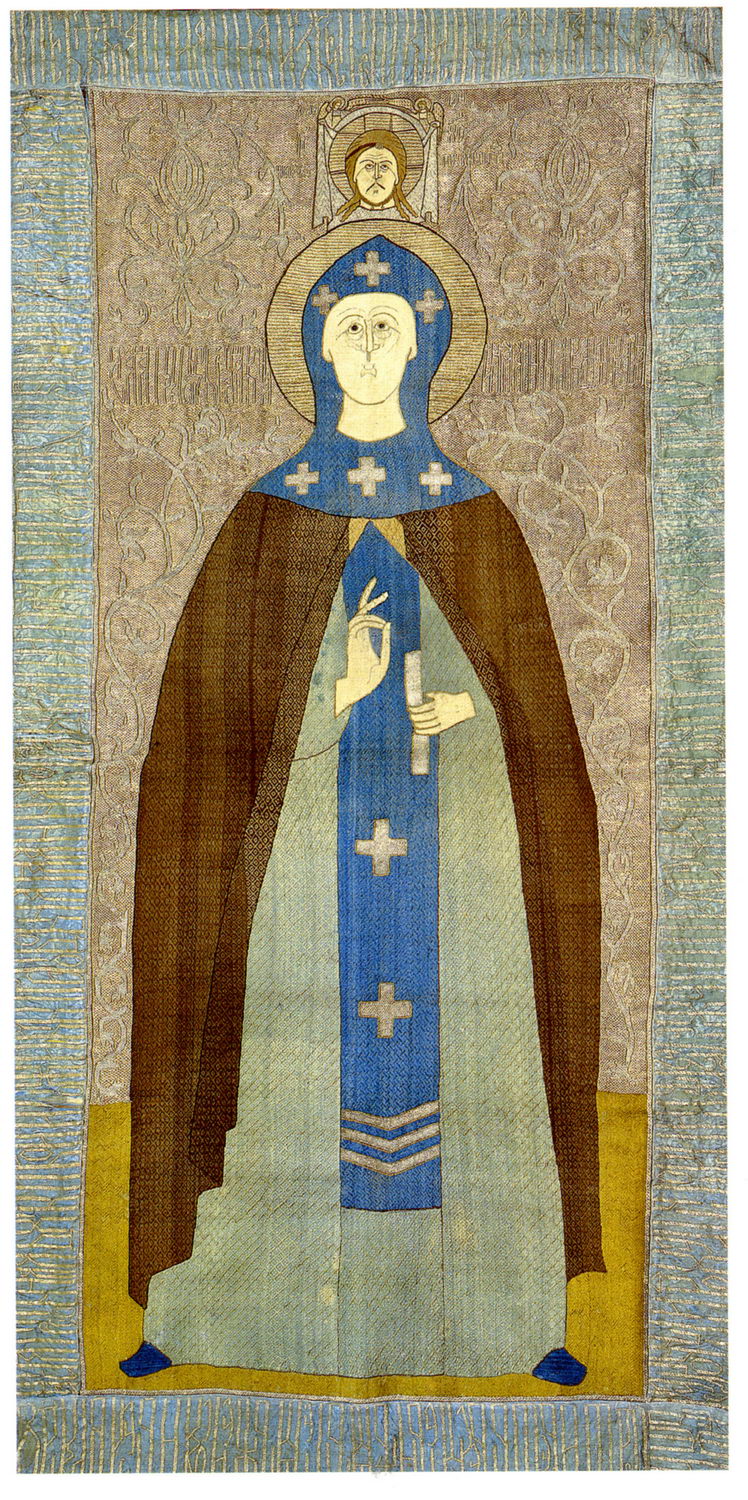
Anna Kashinskaya, Right-Believing Princess Anna, Evfrosiniya (in monastic vows)
Kashin, Tver
Sign of the Cross With Two Fingers
About Anna of Kashin
Anna of Kashin (c. 1280 – October 2, 1368) was the princess consort of Mikhail of Tver and is venerated as a saint in the Russian Orthodox Church. She is recognized as a patroness of the cities of Kashin and Tver.
Life and Trials
Born into a devout Christian family, Anna was raised with virtues of humility and obedience. She married Prince Mikhail of Tver in 1294. Her life was marked by profound personal tragedy; she experienced the deaths of her first-born daughter in infancy and later witnessed the brutal torture and death of her husband in 1318. Her suffering continued with the deaths of her sons, Dmitry in 1326 and Alexander and his son Feodor in 1339, largely due to political conflicts and the actions of the Golden Horde. After her husband's death, Anna took monastic vows, adopting the name Evfrosiniya, and later, at her youngest son's request, moved to Kashin, where she accepted the schema with the name Anna. She died peacefully of old age in 1368.
Canonization and Veneration
Anna's veneration began centuries after her death, spurred by reports of miracles attributed to her relics during the siege of Kashin in 1611. She was officially canonized by the Russian Orthodox Church in 1650. However, her veneration became complicated during the 17th-century schism of the Russian Church. The Old Believers held her in high esteem, believing her incorrupt body, displayed with a two-fingered sign of the cross, vindicated their practices. This led to her decanonization in 1677. Her sainthood was formally restored in 1908 by Emperor Nicholas II, with widespread celebrations held in Kashin the following year.
Legacy
Anna of Kashin's enduring legacy is tied to her personal resilience in the face of immense loss and her complex journey through church history. She remains a significant spiritual figure, revered for her faith and the miracles associated with her relics, and continues to be a beloved patroness for her associated cities.
Source: Wikipedia ↗
Frequently Asked Questions
Who was Anna of Kashin?
Anna of Kashin was the princess consort of Mikhail of Tver and a Russian Orthodox saint. She is venerated as a patroness of Kashin and Tver.
Why is Anna of Kashin remembered?
She is remembered for her dramatic life, marked by the loss of almost all her relatives, and for her complicated posthumous veneration history. Miracles were attributed to her relics.
What is the story behind Anna of Kashin's canonization and decanonization?
Anna was first canonized in 1650, but was decanonized in 1677 due to her veneration among the Old Believers. Her sainthood was officially restored in 1908.
Why were the Old Believers particularly devoted to Anna of Kashin?
The Old Believers venerated her highly because her incorrupt body was said to show her hand making the sign of the cross with two fingers, a practice they used, which was contrary to the official church policy at the time.
When did Anna of Kashin live and die?
Anna of Kashin lived from approximately 1280 until her death on October 2, 1368. She died of old age.
Related Saints
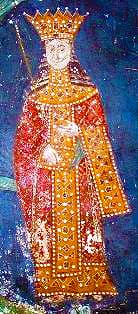
Helena of Dečani
Ana-Neda was the Empress consort of Bulgaria, married to Michael Asen III. She was the daughter of Serbian King Stefan Uroš II Milutin and Princess Elizabeth Arpad, linking her to prominent Balkan and European royal families. Ana-Neda is remembered for her brief reign as Empress and her potential role as regent for her son, Ivan Stephen, though this is debated by historians.
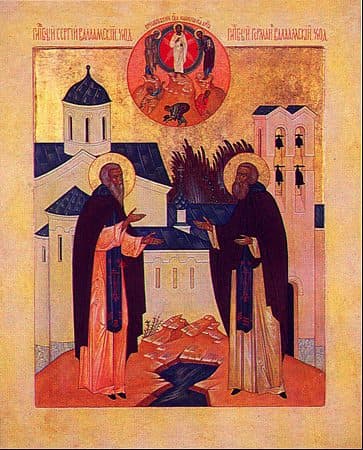
Sergius of Valaam
Sergius of Valaam was a Greek monk credited with bringing Orthodox Christianity to the Karelians and Finns. Church traditions vary widely on his life, placing him from the 10th to the 14th century. He is chiefly remembered as a founder of the Valaam Monastery and a missionary figure.
Elizabeth of Portugal
Elizabeth of Portugal was a Queen of Portugal and a member of the royal house of Aragon. She is venerated as a saint in the Catholic Church for her piety, charitable works, and role as a peacemaker, particularly between her husband and son.