
Alypius of the Caves
Alypius of the Caves was an Eastern Orthodox saint, monk, and renowned icon painter from the Kiev Pechersk Lavra. Considered the first icon painter of Kievan Rus, he was a disciple of Greek icon painters from Constantinople and is credited with creating icons with divine assistance. He is chiefly remembered for his icon painting, including the surviving Sven Icon of the Theotokos, and for the miraculous preservation of his hand, found formed in the Sign of the Cross after his death.
Key Facts
- ›Alypius was an Eastern Orthodox saint, monk, and icon painter at the Kiev Pechersk Lavra.
- ›He was a disciple of Greek icon painters from Constantinople.
- ›Alypius is considered the first icon painter of Kievan Rus.
- ›He is believed to have participated in the mosaic painting of the Dormition Cathedral of the Lavra.
- ›One surviving icon attributed to him is the Sven Icon of the Theotokos.
- ›His relics are preserved in the Kiev Pechersk Lavra, with his fingers found in the Sign of the Cross after his death.
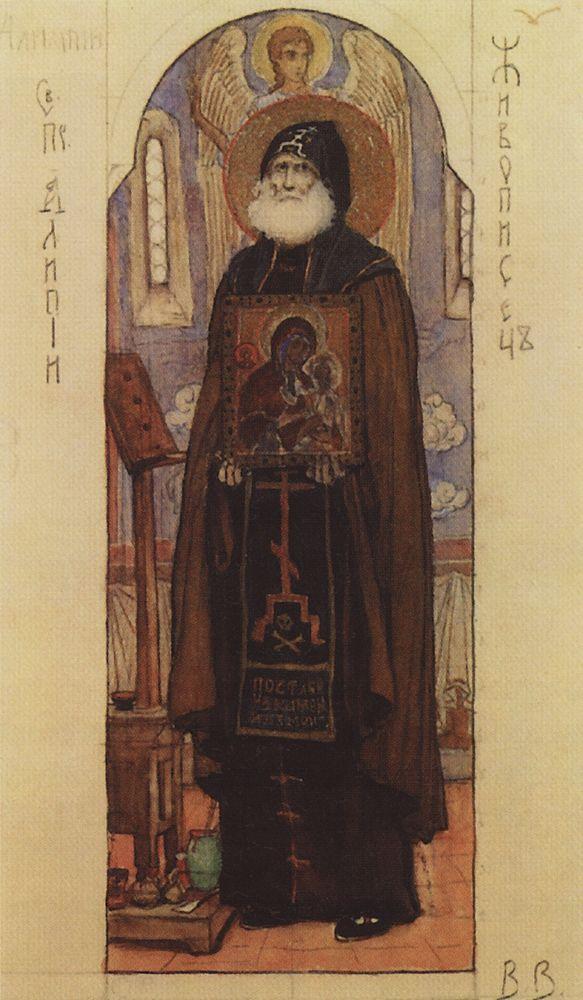
Venerable Alypius, Alipy of the Caves
Icon Painters
Icon, Sign of the Cross
About Alypius of the Caves
Alypius of the Caves (died c. 1114) was a venerated Eastern Orthodox saint, monk, and a pivotal figure in the development of icon painting in Kievan Rus. He was associated with the prominent cave monastery of Kiev Pechersk Lavra, where he served as a monk and artist. His life and work are significant for establishing a distinct tradition of icon painting within the region, influenced by Byzantine masters.
Life and Artistic Contributions
According to historical sources, Alypius was a disciple of Greek icon painters who hailed from Constantinople. He is widely regarded as the first significant icon painter of Kievan Rus, laying the groundwork for future generations of artists. Medieval accounts suggest that Alypius created his icons through divine inspiration and assistance, often attributing miraculous qualities to his work. He is also believed to have contributed to the creation of mosaic art in the Dormition Cathedral of the Lavra and possibly participated in the mural painting of St. Michael's Cathedral in Kyiv.
One of the most notable surviving icons attributed to Alypius is the Sven Icon of the Theotokos (Mother of God). This icon is celebrated with feast days on May 3rd and August 17th. The saint's artistic endeavors helped to shape the visual language of Orthodox Christianity in Eastern Europe.
Veneration and Legacy
Alypius of the Caves died around 1114, and his feast day is celebrated on August 17th in the Eastern Orthodox Church. A remarkable aspect of his veneration is the tradition that upon the discovery of his relics, the fingers of his right hand were found to be naturally positioned in the Orthodox Sign of the Cross. This phenomenon is often cited as evidence of his saintly life and devotion.
His relics are preserved within the Kiev Pechersk Lavra, drawing pilgrims and the faithful. Alypius is also commemorated on September 28th (October 11th) as part of the "Synaxis of the Holy Fathers of Kiev whose relics lie in the Near Caves of Saint Anthony." He is honored as a confessor and is particularly venerated by icon painters, who see him as a patron and an exemplar of their sacred craft.
Source: Wikipedia ↗
Frequently Asked Questions
Who was Alypius of the Caves?
Alypius of the Caves was an Eastern Orthodox saint, monk, and a celebrated icon painter from the Kiev Pechersk Lavra. He is recognized as the first significant icon painter of Kievan Rus, trained by Greek masters from Constantinople.
What is Alypius of the Caves most famous for?
He is chiefly remembered as a pioneering icon painter, credited with creating sacred art with divine assistance. The Sven Icon of the Theotokos is one of his surviving works, and his relics are venerated for the miraculous state of his hand after death.
When did Alypius of the Caves live and die?
Alypius lived and worked in the Kiev Pechersk Lavra, and historical accounts place his death around the year 1114. His feast day is observed on August 17th in the Eastern Orthodox Church.
Where are the relics of Alypius of the Caves kept?
The relics of Saint Alypius are preserved in the Kiev Pechersk Lavra, the cave monastery where he lived and worked. His relics are a significant site of veneration for Orthodox Christians.
What is significant about Alypius's hand?
According to tradition, when Alypius's body was examined after his death, the fingers of his right hand were found to be still formed in the Orthodox manner of making the Sign of the Cross. This was seen as a miraculous sign of his piety and devotion.
Related Saints
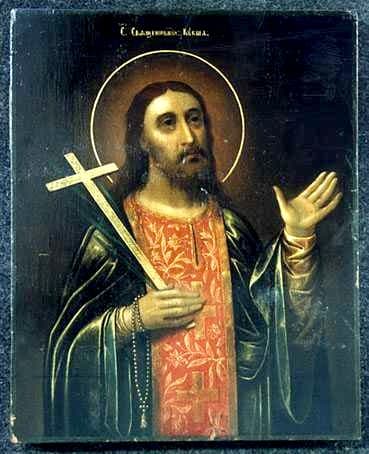
Kuksha of the Kiev Caves
Kuksha of the Kiev Caves was a monk and missionary from the Kiev Pechersk Lavra who is venerated as a saint in the Russian Orthodox Church. He is remembered for his efforts to spread Christianity among the Vyatichi people and for his martyrdom, for which he is honored as a confessor and martyr.
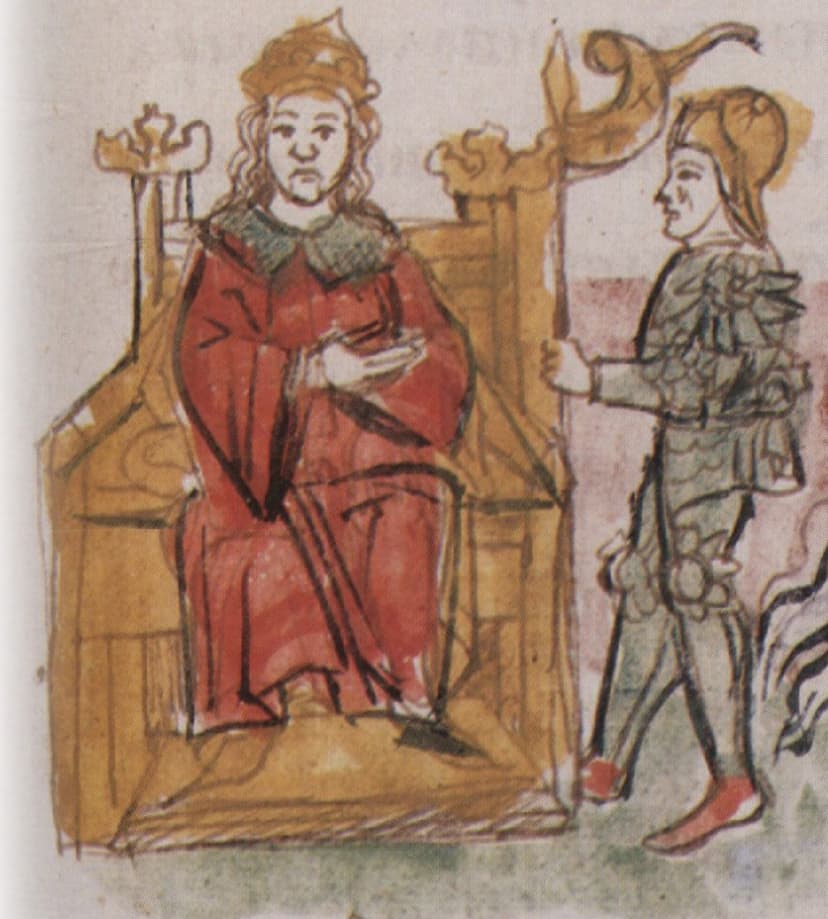
Mstislav I of Kiev
Mstislav I of Kiev, also known as Mstislav the Great, was the Grand Prince of Kiev from 1125 until his death in 1132. He is remembered as the last ruler of a unified Kievan Rus', a state that began to disintegrate into rival principalities after his death. He was a significant builder of churches and a warrior who engaged in frequent campaigns.
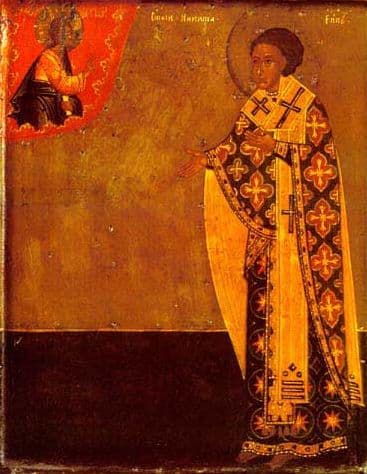
Nicetas of Novgorod
Nicetas of Novgorod was a monk of the Kiev Pechersk Lavra who embraced a life of solitude as a hermit. He is remembered for his spiritual struggles with demonic delusion, his subsequent repentance and gift of miracle-working, and his service as Bishop of Novgorod. His intercessions are credited with ending a drought and extinguishing a fire.