
Velliangiri
The Velliangiri Mountains, also known as the "Sapthagiri" or "Seven Mountains," are a sacred range in Tamil Nadu, India, revered on par with Mount Kailash. These mountains are considered a powerful spiritual site where Lord Shiva is worshipped as Swayambhu, the self-created being, bestowing grace upon devotees.
Key Facts
- ›Part of the Nilgiri Biosphere Reserve in the Western Ghats.
- ›Revered as a spiritual site comparable to Mount Kailash.
- ›Features seven hills with altitudes ranging from 520 M to 1840 M.
- ›Shiva is worshipped at the summit as Swayambhu (self-created).
- ›The Noyyal River originates from these hills, supporting significant agricultural land.
- ›The Velliangiri watershed feeds the Siruvani dam, a vital water source for Coimbatore.

Sapthagiri, Seven Mountains, Saptagiri, Ezhumalai, Rajathagiri, Dakshin Kailash, Bhoolok Kailash
- Considered A Sacred Mountain On Par With Mount Kailash.
- Associated With Legends of Lord Shiva's Cosmic Dance .
- Believed To Be A Place Where Shiva Appeared Before Sages Patanjali and Vyaghrapada.
- A Legend States That Parts of Mount Kailash Fell Here Due To A Dispute Between Vayu Bhaghvan and Adiseshan.
- the Mountains Are Rich In Natural Resources, Including Rare Herbs.
- Trekking To the Summit
- Worshipping Lord Shiva As Swayambhu
- Observing Rituals During the Pilgrimage Season
Shiva, Vishnu, Patanjali, Vyaghrapada, Vayu Bhaghvan, Adiseshan, Umadevi
- Entry Restricted By the Forest Department Outside the Trekking Season .
- Entry May Be Granted On New Moon and Full Moon Days Upon Prior Request.
- Plastic Usage Is Filtered By Forest Check Posts To Protect Wildlife and the Environment.
About Velliangiri
Velliangiri Mountains
The Velliangiri Mountains, a significant part of the Western Ghats and the Nilgiri Biosphere Reserve in Tamil Nadu, India, are a revered spiritual destination. Known by several names including "Sapthagiri" or "Seven Mountains," "Rajathagiri," "Dakshin Kailash," and "Bhoolok Kailash," these hills are held in esteem comparable to Mount Kailash. The range comprises seven distinct hills, with altitudes spanning from 520 meters to 1840 meters.
Geography and Ecology
The Velliangiri range forms a major elevation within the Western Ghats. Its geography is defined by the plains of Coimbatore to the east, extending towards Palakad district in Kerala to the west, the Nilgiri mountains to the north, and the Siruvani hills to the south. The region experiences variable rainfall, ranging from 500 mm to 7000 mm annually, with temperatures fluctuating between 0 °C in winter and 41 °C in summer. Several seasonal rivers, such as Neelivaikal and Mayar, flow through the landscape. Notably, the Noyyal River originates from the Velliangiri hills, serving as a crucial tributary to the Cauvery River and irrigating approximately 100,000 hectares of agricultural land. The watershed of the Velliangiri hills is integral to the Siruvani dam, which supplies drinking water to over 1.5 million people in Coimbatore.
The vegetation cover is diverse, transitioning from dry deciduous forests at the foothills to evergreen forests on the middle slopes and shola forests at higher elevations. The hills are also known for their abundance of rare herbs.
Religious and Spiritual Significance
The Velliangiri Mountains are a prominent pilgrimage site in Hinduism, particularly within Shaivism. At the summit, Lord Shiva is worshipped as Swayambhu, signifying his self-created and self-manifested nature. According to ancient texts like the Kachiappar Perur Purana, Lord Shiva performed his cosmic dance, the Aananda Thaandava, here at the request of Vishnu. Legends also state that Shiva revealed himself to the sages Patanjali and Vyaghrapada on these hills. Another tradition posits that eight parts of Mount Kailash fell onto the earth during a dispute between Vayu Bhaghvan and Adiseshan, with one of these parts landing in Velliangiri.
The Shiva temple atop the mountains is dedicated to Lord Panchalingesa and his consort Manonmani amman (Parvathi). Devotees often visit between February and May to seek blessings.
Access and Pilgrimage
Pilgrimage to Velliangiri is popular during the trekking season, which runs from mid-February to mid-May. Access to the mountains is managed by the forest department, with entry restricted during other months. However, special permissions may be granted on new moon and full moon days upon prior request. The journey involves trekking, and visitors are advised to be cautious of wildlife. Efforts are made by the forest department to maintain the environment, with filters at base camps to prevent plastic pollution, and pilgrims are encouraged to carry back any waste they find.
Coimbatore, a major city with international and domestic flight connections, serves as the primary gateway for travelers. Buses operate regularly between Coimbatore and Poondi, the base village for the trek, with special services during festive periods like Maha Shivrathri.
Source: Wikipedia ↗
Frequently Asked Questions
What is the religious significance of the Velliangiri Mountains?
The Velliangiri Mountains are considered highly sacred, revered on par with Mount Kailash. Lord Shiva is worshipped here as Swayambhu, the self-created deity. Legends associate the mountains with Shiva's cosmic dance and divine manifestations.
What are the different names for the Velliangiri Mountains?
They are known as the "Sapthagiri" or "Seven Mountains" (Saptagiri, Ezhumalai) and are also referred to as Rajathagiri, Velliangiri, Dakshin Kailash, or Bhoolok Kailash.
When is the best time to trek in the Velliangiri Mountains?
The suitable season for trekking is between mid-February and mid-May, corresponding to the Tamil months of Maasi, Panguni, and Chitirai. Entry is restricted by the forest department outside these months.
What kind of vegetation is found in the Velliangiri Mountains?
The vegetation varies with altitude, featuring dry deciduous forests in the foothills, evergreen forests on the second and third mounts, and shola forests in the upper belts.
What are the geographical boundaries of the Velliangiri hills?
The hills are bordered by the plains of Coimbatore district to the east, Palakad district of Kerala to the west, the Nilgiri mountains to the north, and the Siruvani hills to the south.
Related Sacred Mountains
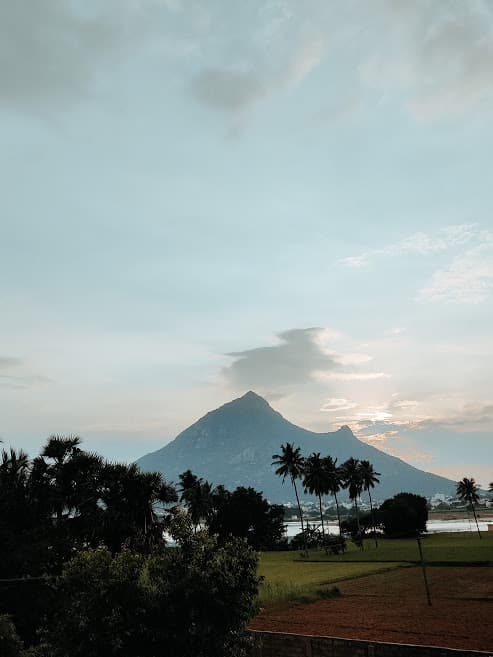
Arunachala
Arunachala is a sacred hill and one of the five main Shaiva holy places in South India, located in Tamil Nadu. It is revered as a manifestation of Lord Shiva and is the site of the Arunachalesvara Temple. The hill holds immense spiritual significance, particularly for devotees of Ramana Maharshi, and is a focal point for annual religious festivals and pilgrimage.
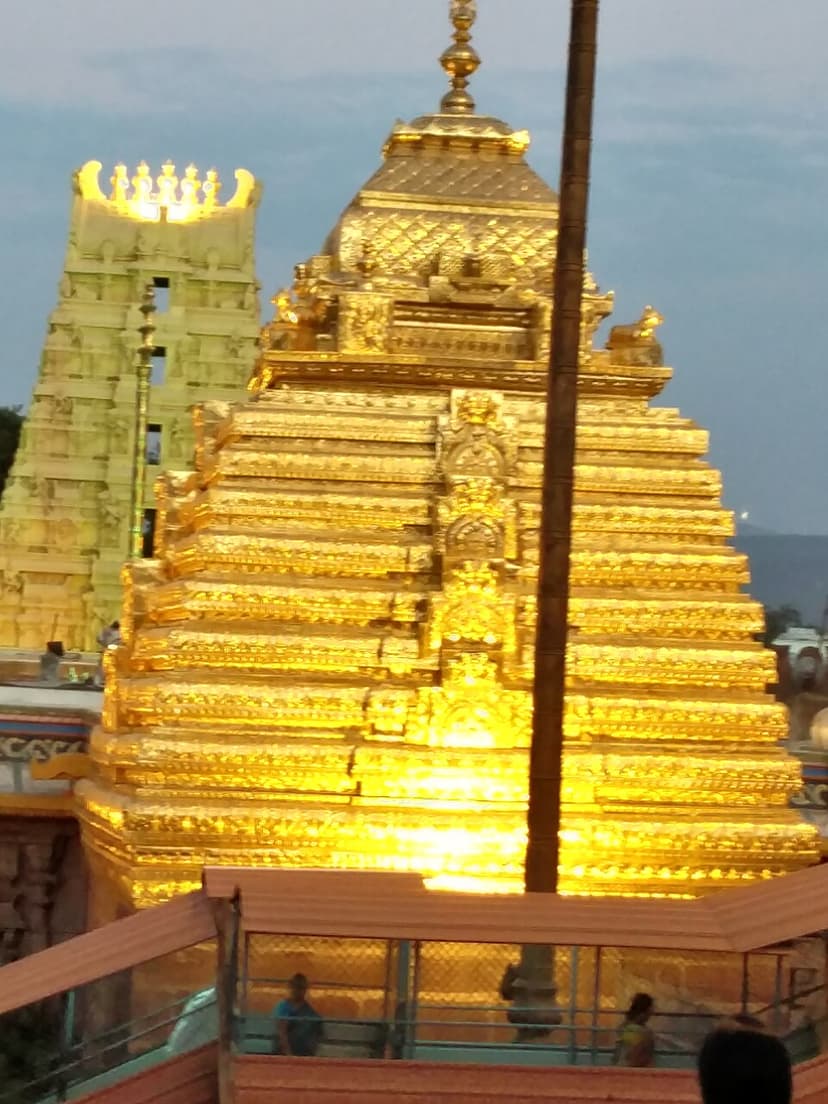
Srisailam
Srisailam is a significant pilgrimage town in Andhra Pradesh, India, renowned for the Mallikarjuna Jyotirlinga Temple, a sacred site for Shaivism and Shaktism. It is recognized as both a Jyotirlinga and a Shakta Pitha, drawing devotees from across the country. The town is also a base for exploring the expansive Nagarjunsagar-Srisailam Tiger Reserve within the Nallamala Forest.
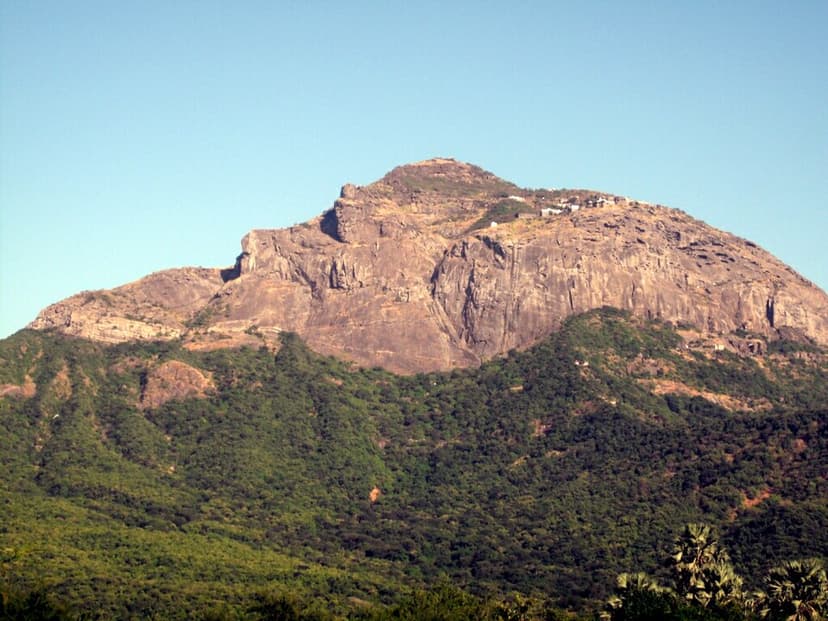
Girnar Parvat
Girnar Parvat, also known as Mount Girnar, is an ancient and sacred hill located in Junagadh, Gujarat, India. It is a pivotal pilgrimage site for Jains, recognized as a Mahatirth where the 22nd Tirthankara, Lord Neminath, attained enlightenment and nirvana. The mountain also holds historical significance with ancient rock edicts and is a complex igneous plutonic formation.