
Seshachalam Hills
The Seshachalam Hills are a significant mountain range in Andhra Pradesh, India, known for their religious importance and geological history. These hills are a prominent part of the Eastern Ghats and are predominantly located in the Tirupati district, forming a sacred landscape for Hindu pilgrims, particularly around the renowned pilgrimage town of Tirumala.
Key Facts
- ›Formed during the Precambrian supereon, with geological periods ranging from 3.8 billion to 539 million years ago.
- ›Contain minerals such as sandstone, shale, and limestone.
- ›The seven peaks are believed to represent the seven hoods of Shesha, the serpent deity in Hindu mythology.
- ›Home to the Tirumala pilgrimage town, a major Hindu spiritual center.
- ›Designated as a Biosphere Reserve in 2010.
- ›Rich in red sandalwood, a valuable resource used in traditional practices.
- Represent the Seven Hoods of Shesha, the Serpent King In Hindu Mythology.
- Location of Tirumala, A Major Hindu Pilgrimage Destination.
- Featured In Popular Culture, Such As the Film 'Pushpa: the Rise', Which Depicted Illegal Logging In the Region.
Pilgrimage To Tirumala
About Seshachalam Hills
The Seshachalam Hills constitute a significant mountain range within the Eastern Ghats of Andhra Pradesh, India, primarily located in the Tirupati district of the Rayalaseema region. These ranges are a landscape of considerable religious importance, most notably hosting Tirumala, a preeminent Hindu pilgrimage town.
Geology and Geography
Geologically, the Seshachalam Hills were formed during the Precambrian supereon, a period stretching from roughly 3.8 billion to 539 million years ago. The strata are composed of sandstone and shale interbedded with limestone. The topography is characterized by gorges and gaps resulting from faulting and stream erosion, creating a discontinuous pattern. The hills extend approximately 80 km in length, with widths varying between 32 and 40 km. Altitudes within the range vary from 168 meters to a peak of 1187 meters above sea level, with many summits exceeding 900 meters.
Spiritual and Ecological Significance
The spiritual significance of the Seshachalam Hills is deeply rooted in Hindu mythology. The range features seven distinct peaks: Anjanadri, Garudadri, Narayanadri, Neeladri, Seshadri, Venkatadri, and Vrishabhadri. These are believed to symbolize the seven hoods of Shesha, the cosmic serpent and mount of Lord Vishnu. The presence of the Sri Venkateswara National Park within these ranges underscores their ecological importance, and they are also noted for their substantial reserves of red sandalwood, a material valued for its use in medicines, soaps, and religious rituals. In recognition of its biodiversity, the Seshachalam Hills were designated as a Biosphere Reserve in 2010.
Cultural Context
The Seshachalam Hills have also appeared in contemporary cultural narratives, such as the 2021 Indian film "Pushpa: The Rise," which explored themes of illegal logging within the region. The famous Natural Arch, Tirumala Hills, a geological formation dating back to the Middle and Upper Proterozoic Eon, is also part of this mountain system.
Source: Wikipedia ↗
Frequently Asked Questions
What is the geological formation of the Seshachalam Hills?
The Seshachalam Hills were formed during the Precambrian supereon, a vast geological era spanning from approximately 3.8 billion to 539 million years ago. The rock composition includes sandstone, shale, and limestone.
What is the religious significance of the Seshachalam Hills?
These hills are highly sacred in Hinduism, particularly due to the presence of Tirumala, a major pilgrimage town. The seven prominent peaks are mythologically linked to the seven hoods of the serpent deity Shesha, symbolizing divine protection.
Are there any protected areas within the Seshachalam Hills?
Yes, the Seshachalam Hills were designated as a Biosphere Reserve in 2010. This designation aims to protect its rich biodiversity and natural resources.
What valuable natural resources are found in the Seshachalam Hills?
The ranges are notable for their significant reserves of red sandalwood. This precious wood is traditionally used in medicines, soaps, and religious rituals.
What is the highest point in the Seshachalam Hills?
The highest identified summit in the Seshachalam hill ranges is Tellaralla penta, reaching an altitude of 1187 meters above sea level. Many other peaks within the range exceed 900 meters.
Related Sacred Mountains
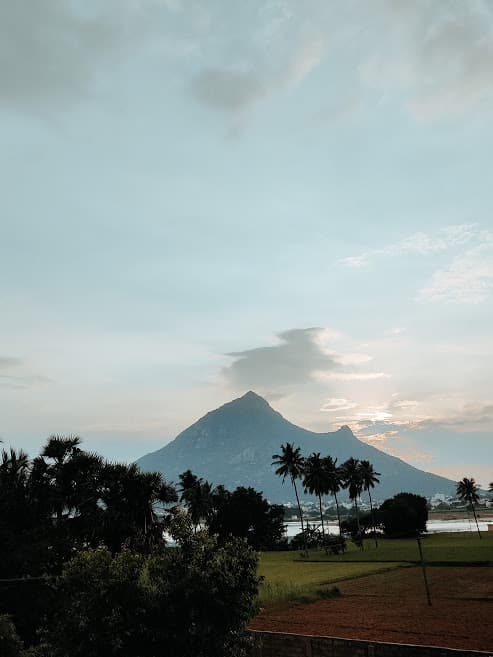
Arunachala
Arunachala is a sacred hill and one of the five main Shaiva holy places in South India, located in Tamil Nadu. It is revered as a manifestation of Lord Shiva and is the site of the Arunachalesvara Temple. The hill holds immense spiritual significance, particularly for devotees of Ramana Maharshi, and is a focal point for annual religious festivals and pilgrimage.
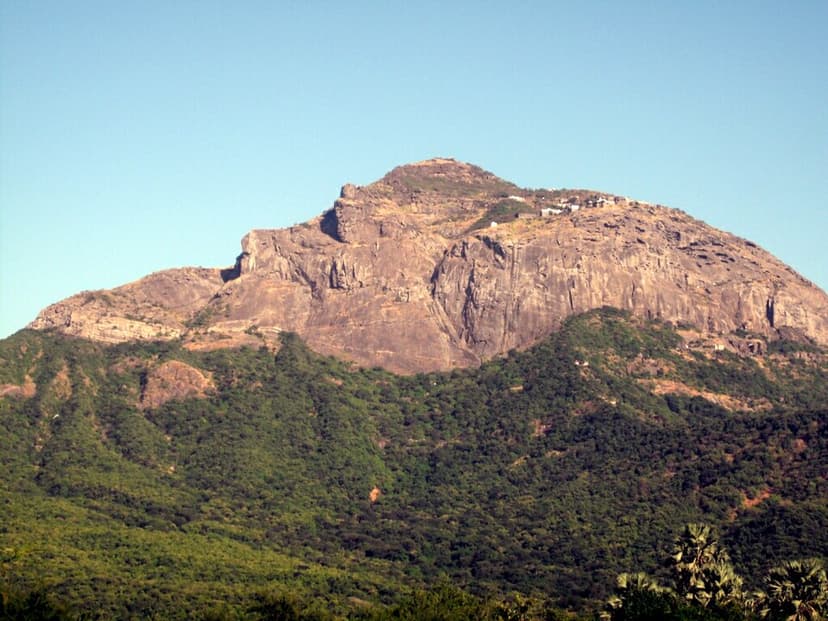
Girnar Parvat
Girnar Parvat, also known as Mount Girnar, is an ancient and sacred hill located in Junagadh, Gujarat, India. It is a pivotal pilgrimage site for Jains, recognized as a Mahatirth where the 22nd Tirthankara, Lord Neminath, attained enlightenment and nirvana. The mountain also holds historical significance with ancient rock edicts and is a complex igneous plutonic formation.

Nanda Devi
Nanda Devi, meaning "Bliss-Giving Goddess," is the second-highest mountain in India and is considered the patron goddess of the Garhwal and Kumaon Himalayas. Its sacred status is further elevated by its formidable natural defenses, forming a ring of high peaks around its sanctuary. Due to its religious significance and fragile ecosystem, the peak and its surrounding sanctuary are off-limits to locals and climbers, though the Nanda Devi National Park has been recognized as a UNESCO World Heritage Site.