
Nanda Devi
Nanda Devi, meaning "Bliss-Giving Goddess," is the second-highest mountain in India and is considered the patron goddess of the Garhwal and Kumaon Himalayas. Its sacred status is further elevated by its formidable natural defenses, forming a ring of high peaks around its sanctuary. Due to its religious significance and fragile ecosystem, the peak and its surrounding sanctuary are off-limits to locals and climbers, though the Nanda Devi National Park has been recognized as a UNESCO World Heritage Site.
Key Facts
- ›Nanda Devi is the second-highest mountain in India and the highest located entirely within the country.
- ›It was once considered the highest mountain in the world before computations in 1808 proved otherwise.
- ›The mountain's name translates to "Bliss-Giving Goddess" and it is revered as a patron deity.
- ›The Nanda Devi Sanctuary, a ring of high mountains surrounding the peak, was declared off-limits to protect its ecosystem.
- ›The Nanda Devi National Park, encompassing the sanctuary, was designated a UNESCO World Heritage Site in 1988.
- ›The mountain is known for its steep rise above the local terrain, making it one of the steepest peaks globally at its scale.

Sunanda Devi
- Patron Goddess of the Garhwal and Kumaon Himalayas
- Daughter of the Himalaya In Indian Folklore
- Sacred Feminine Divine
- Off-Limits To Locals and Climbers Since 1983
- Sanctuary Closed Periodically Due To Environmental Concerns
- Limited Eco-Tourism Allowed In the Core Zone Between May and October
About Nanda Devi
Nanda Devi: The Bliss-Giving Goddess of the Himalayas
Nanda Devi, whose name translates to "Bliss-Giving Goddess," is a paramount sacred mountain in India, holding the distinction of being the second-highest peak in the country and the highest situated entirely within its borders. Its spiritual significance is deeply ingrained in the cultural fabric of northern India, where it is venerated as the patron goddess of the Garhwal and Kumaon Himalayas. The mountain's imposing presence is further amplified by the Nanda Devi Sanctuary, a natural fortress formed by a ring of formidable peaks, which enhances its sacred status in local folklore as the "daughter of the Himalaya."
Description and Sacred Environs
The mountain is a majestic two-peaked massif, with the main summit being the higher of the two. The Nanda Devi Sanctuary, nestled within this ring of high mountains, is a testament to its formidable natural defenses. These include twelve peaks exceeding 6,400 meters, which collectively guard the sanctuary. This almost insurmountable natural barrier has contributed to the mountain's revered status. In recognition of its profound religious importance and the need to preserve its delicate ecosystem, the Indian government declared the peak and its surrounding sanctuary off-limits to both local communities and climbing expeditions in 1983. The Nanda Devi National Park, which encompasses this sanctuary, was further honored by its designation as a UNESCO World Heritage Site in 1988, acknowledging its outstanding natural and cultural importance.
Exploration and Climbing History
The pursuit of reaching the Nanda Devi peak and its sanctuary was a decades-long endeavor, marked by arduous exploration. The primary obstacle to entry was the Rishi Gorge, a deep and challenging canyon. The first recorded attempt to explore the sanctuary dates back to 1883. The British explorers Eric Shipton and H. W. Tilman, along with their Sherpa companions, successfully navigated through the Rishi Gorge in 1934, opening a passage into the sanctuary. In 1936, a British-American expedition achieved the first ascent of Nanda Devi, making it the highest peak climbed by humans at that time. This ascent was notable for its challenging terrain and lightweight mountaineering ethic. The mountain has since seen subsequent ascents, including by Indian expeditions, though access has been carefully managed due to conservation efforts. A notable incident involved a CIA mission in the late 1960s to place a listening device on the summit, which led to temporary closures of the sanctuary.
Conservation and Recent Developments
Following the sanctuary's reopening to climbers and trekkers in 1974, the fragile ecosystem faced pressures from human activity. This led to its closure again in 1983. Nanda Devi now forms the core of the Nanda Devi Biosphere Reserve. While the sanctuary remains off-limits for climbing, limited eco-tourism activities have been permitted in the core zone since 2003, with a maximum of 500 trekkers allowed entry between May and October. An interpretive center on the bio-cultural diversity of the park is also under development. Despite these conservation efforts, the mountain has also witnessed tragic events, including an avalanche in June 2019 that claimed the lives of eight climbers. In February 2021, a portion of the Nanda Devi glacier broke away, causing significant flooding in downstream rivers and impacting hydropower projects.
Source: Wikipedia ↗
Frequently Asked Questions
What is the meaning of Nanda Devi?
Nanda Devi translates to "Bliss-Giving Goddess." It is revered as the patron goddess of the Garhwal and Kumaon Himalayas.
Why is Nanda Devi considered sacred?
Nanda Devi is considered sacred as the patron goddess of the region. Its formidable natural defenses, forming a protective ring of high peaks around its sanctuary, further elevate its spiritual status in Indian folklore.
Is Nanda Devi accessible to climbers and the public?
The peak and the Nanda Devi Sanctuary are currently off-limits to both locals and climbers. This restriction was imposed in 1983 to protect its fragile ecosystem and acknowledge its religious significance.
What is the Nanda Devi Sanctuary?
The Nanda Devi Sanctuary is the interior of an almost insurmountable ring of high mountains surrounding the main peak. It is protected as the Nanda Devi National Park.
What is the geological significance of Nanda Devi?
Nanda Devi is notable for its steep rise above the local terrain, with a significant elevation gain over a short distance. This makes it one of the steepest peaks in the world at its scale, comparable to K2.
When was Nanda Devi National Park declared a UNESCO World Heritage Site?
The Nanda Devi National Park was declared a UNESCO World Heritage Site in 1988, recognizing its outstanding cultural or natural importance.
Related Sacred Mountains
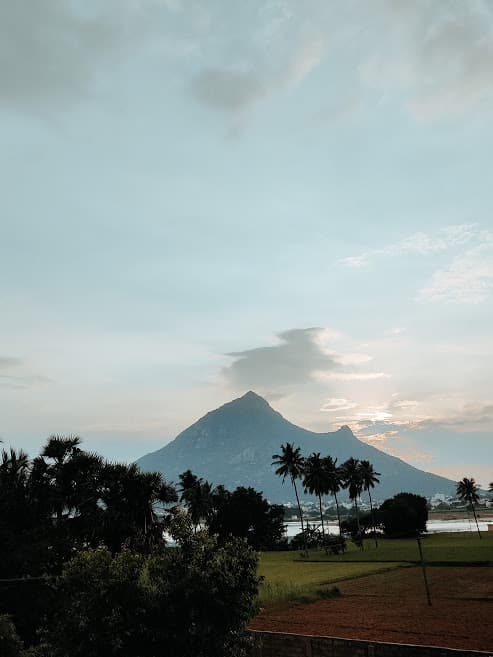
Arunachala
Arunachala is a sacred hill and one of the five main Shaiva holy places in South India, located in Tamil Nadu. It is revered as a manifestation of Lord Shiva and is the site of the Arunachalesvara Temple. The hill holds immense spiritual significance, particularly for devotees of Ramana Maharshi, and is a focal point for annual religious festivals and pilgrimage.
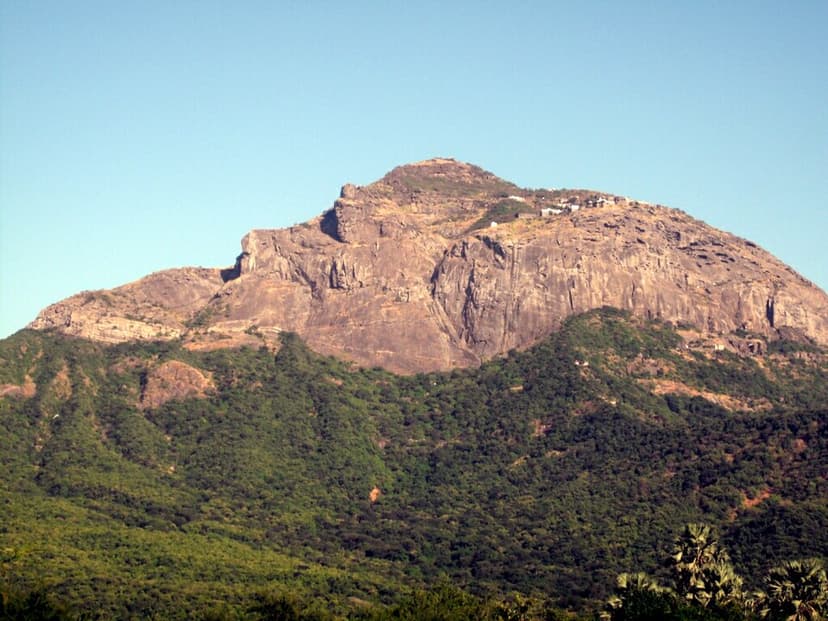
Girnar Parvat
Girnar Parvat, also known as Mount Girnar, is an ancient and sacred hill located in Junagadh, Gujarat, India. It is a pivotal pilgrimage site for Jains, recognized as a Mahatirth where the 22nd Tirthankara, Lord Neminath, attained enlightenment and nirvana. The mountain also holds historical significance with ancient rock edicts and is a complex igneous plutonic formation.
Seshachalam Hills
The Seshachalam Hills are a significant mountain range in Andhra Pradesh, India, known for their religious importance and geological history. These hills are a prominent part of the Eastern Ghats and are predominantly located in the Tirupati district, forming a sacred landscape for Hindu pilgrims, particularly around the renowned pilgrimage town of Tirumala.