
Mount Taranaki
New Zealand·Oceania
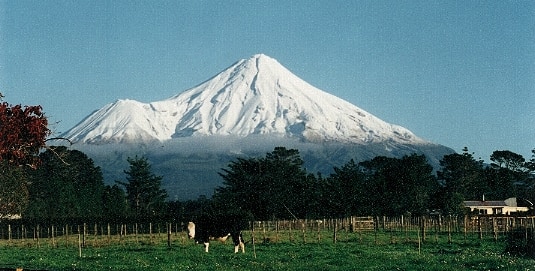
Mount Taranaki, also known as Taranaki Maunga, is a dormant stratovolcano in New Zealand's North Island, revered in Māori mythology and historically significant. It is a prominent natural landmark, recognized for its striking conical shape and its role in local iwi history and culture. The mountain is a popular destination for recreation and pilgrimage, though its unpredictable weather poses significant risks.
Key Facts
- ›Mount Taranaki is a dormant stratovolcano located on the west coast of New Zealand's North Island.
- ›It is the second highest mountain in the North Island, standing at 2,518 meters (8,261 ft).
- ›The mountain has a rich geological history, with its activity commencing approximately 200,000 years ago.
- ›In Māori mythology, Taranaki is said to have fled to its current location after a battle with other volcanoes.
- ›Historically, the mountain was tapu in Māori culture and was not climbed by them during the period of European settlement.
- ›It has been the site of significant volcanic events, including cone collapses and lahars, posing ongoing hazards to the region.
Taranaki Maunga, Mount Egmont, Pic Mascarin, Pukehaupapa, Pukeonaki
MāOri Spiritual Beliefs
- Central Figure In MāOri Mythology, Representing A Mountain That Fled After A Battle.
- Has Been Tapu In MāOri Culture.
- Its Name Taranaki Is Derived From the Ancestor of the Taranaki Iwi.
- Served As A Backdrop For the 2003 Film the Last Samurai Due To Its Resemblance To Mount Fuji.
Rua Taranaki, Tongariro, Pihanga, Fanny Fantham
- Weather Can Change Rapidly, Making Access Dangerous.
- Historically Tapu In MāOri Culture.
About Mount Taranaki
Mount Taranaki, also known by its Māori name Taranaki Maunga, is a prominent dormant stratovolcano situated on the west coast of New Zealand's North Island, in the Taranaki region. Standing at 2,518 meters (8,261 ft), it is the second-highest peak in the North Island and is characterized by its striking, near-perfect conical shape, often compared to Mount Fuji. The mountain has a rich history, intertwined with Māori mythology, European exploration, and geological significance.
Name and History
The name "Taranaki" originates from the Māori language, linked to Rua Taranaki, an ancestor of the local iwi (tribe). Alternate Māori names include Pukehaupapa ('ice mountain') and Pukeonaki ('hill of Naki'). European explorers also named the mountain; Captain Cook named it Mount Egmont in 1770, while Marc-Joseph Marion du Fresne called it Pic Mascarin in 1772. The name "Mount Egmont" was officially used on maps until 1986, when it became "Mount Taranaki or Mount Egmont." Following a Treaty of Waitangi settlement and legislation passed in 2025, the mountain is officially recognized as Taranaki Maunga and has been granted legal personhood.
Historically, Mount Taranaki was considered tapu (sacred) in Māori culture, and it was not climbed by Māori during the period of European settlement. The first recorded European ascent was in 1839 by James Heberley and Ernst Dieffenbach. In 1865, the mountain was confiscated from Māori by the New Zealand Government but was returned to the people of Taranaki in 1978.
Geology and Hazards
Geologically, Mount Taranaki is a relatively young volcano, with activity commencing approximately 200,000 years ago. It is part of the Taranaki Volcanic Lineament and sits on the remains of older volcanic complexes. The mountain has a history of significant volcanic events, including cone collapses and lahars, which pose ongoing hazards to the surrounding region. Scientists warn that a large eruption is potentially "overdue," with probabilities of an eruption occurring in the next 50 years estimated between 33% and 42%.
Cultural and Recreational Significance
In Māori mythology, Taranaki is a central figure, said to have fled to its current location after a great battle with other volcanoes. Its presence is deeply woven into the cultural identity of the Taranaki iwi. The mountain's resemblance to Mount Fuji led to it being used as a backdrop in the 2003 film "The Last Samurai."
Mount Taranaki is also a popular destination for recreation, including hiking and climbing. The Egmont National Park, established in 1900 and later renamed Te Papa-Kura-o-Taranaki, surrounds the peak. Despite its appeal, the mountain is known for its rapidly changing weather, which has led to numerous fatalities over the years, making it one of the more dangerous mountains in New Zealand for climbers and trampers.
Source: Wikipedia ↗
Frequently Asked Questions
What are the different names for Mount Taranaki?
Mount Taranaki is also known by its Māori name, Taranaki Maunga, and historically as Mount Egmont. It was also referred to as Pic Mascarin by French explorer Marion du Fresne and by iwi as Pukehaupapa and Pukeonaki in ancient times.
What is the geological significance of Mount Taranaki?
Mount Taranaki is a dormant stratovolcano that began its activity around 200,000 years ago. It is part of the Taranaki Volcanic Lineament and has a history of significant volcanic events, including cone collapses and lahars.
What is the Māori mythological significance of Mount Taranaki?
According to Māori mythology, Taranaki was once in the center of the North Island but fled west after a battle with other volcanoes, becoming petrified in its current location. Its cloudy shrouds are said to be tears for a lost love.
When was Mount Taranaki first climbed by Europeans?
The mountain was first climbed by Europeans in 1839 by James Heberley, a whaler, and Ernst Dieffenbach, a Swiss-trained doctor and naturalist.
What are the dangers associated with climbing Mount Taranaki?
The weather on Mount Taranaki can change rapidly, leading to unexpected dangers for climbers and trampers. Since records began in 1891, 84 people have died on the mountain, many due to sudden weather changes.
Has Mount Taranaki been officially recognized as a legal personality?
Yes, in 2017, a record of understanding was signed to make the mountain a legal personality. This was further recognized in legislation passed in 2025, granting it legal personhood under the name Taranaki Maunga.
Related Sacred Mountains

Cyclops Mountains
The Cyclops Mountains, also known as Dafonsoro or Dobonsolo, are a mountain range in the Indonesian province of Papua, west of Jayapura and north of Lake Sentani. Parts of the range have long been considered sacred by local Papuan people and are recognized for their rich biodiversity, including numerous endemic species.
Aconcagua
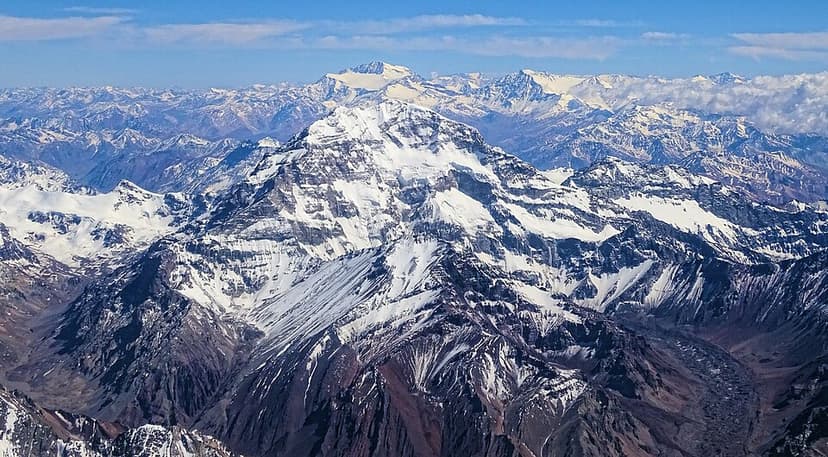
Aconcagua is the highest mountain in the Americas, located in Mendoza Province, Argentina. It is also the highest peak outside of Asia and the second-most topographically prominent peak globally. Formed by tectonic activity, it was once an active stratovolcano and is now a significant challenge for mountaineers due to its extreme altitude, despite its technically straightforward normal route.
Adam's Peak
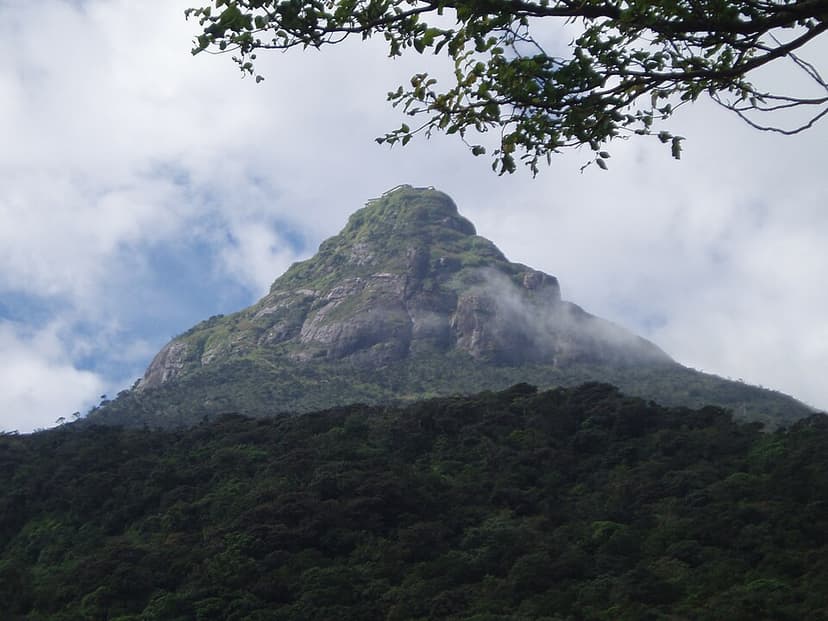
Adam's Peak, also known as Sri Pada, is a 2,243-meter-tall conical mountain in central Sri Lanka famed for a sacred footprint-shaped rock formation near its summit. This "sacred footprint" is revered by Buddhists as the Buddha's, by Hindus as Shiva's or Hanuman's, and by some Islamic and Christian traditions as Adam's or St. Thomas the Apostle's, making it a significant pilgrimage site for multiple faiths.