
Gangkhar Puensum
Bhutan·Asia
Gangkhar Puensum is the highest mountain in Bhutan and the world's highest unclimbed peak, standing at 7,570 meters. Its name translates to "White Peak of the Three Spiritual Brothers" in Dzongkha, reflecting its spiritual significance. Climbing Gangkhar Puensum is prohibited due to local spiritual beliefs and Bhutan's ban on mountaineering above 6,000 meters.
Key Facts
- ›Highest mountain in Bhutan and the highest unclimbed mountain globally.
- ›Elevation of 7,570 meters (24,836 ft) and a prominence of 2,995 meters (9,826 ft).
- ›Located on the border between Bhutan and Tibet.
- ›Bhutan banned climbing peaks over 6,000 meters in 1994 out of respect for spiritual beliefs.
- ›All mountaineering has been banned in Bhutan since 2003.
- ›Historical mapping inaccuracies led to early expeditions being unable to locate the mountain.

Kangkar Punsum, Gangkar Punsum, Gankar Punzum
BöN, Buddhism
- Its Name, "White Peak of the Three Spiritual Brothers," Suggests Deep Spiritual Meaning.
- the Ban On Climbing Is A Direct Result of Respecting Local Spiritual Beliefs.
- Climbing of Peaks Over 6,000 Meters Banned Since 1994.
- All Mountaineering Banned Since 2003.
About Gangkhar Puensum
Gangkhar Puensum is recognized as the highest mountain in Bhutan and holds the distinction of being the world's highest unclimbed mountain. Its official elevation is 7,570 meters (24,836 feet), with a prominence of 2,995 meters (9,826 feet). The name "Gangkhar Puensum" translates from the Dzongkha language to "White Peak of the Three Spiritual Brothers," indicating its profound spiritual significance to the local populace.
History and Climbing Status
The mountain's elevation was first measured in 1922, but early maps of the region were notoriously inaccurate, leading to confusion regarding its location and height. This inaccuracy meant that the first expedition attempting to summit the peak was unable to find it. The 1986 British expedition recorded its height as 7,550 meters and believed it to be entirely within Bhutan, distinct from the nearby Kula Kangri. However, subsequent reports and mapping, particularly from a Japanese expedition in 1999 that climbed a subsidiary peak, suggest the Bhutan–China border may cross Gangkhar Puensum's summit.
Bhutan opened its mountains to mountaineering in 1983, but this era was short-lived for high peaks. Following failed summit attempts in 1985 and 1986, Bhutan enacted a ban on climbing peaks over 6,000 meters (20,000 feet) in 1994, citing respect for local spiritual beliefs. This prohibition was extended to all mountaineering in 2003, effectively sealing Gangkhar Puensum from any further summit attempts and solidifying its status as an unconquered giant.
Source: Wikipedia ↗
Frequently Asked Questions
What is the elevation of Gangkhar Puensum?
Gangkhar Puensum stands at an elevation of 7,570 meters (24,836 feet) above sea level. This makes it the highest peak in Bhutan and the highest unclimbed mountain in the world.
Why is Gangkhar Puensum unclimbed?
Gangkhar Puensum remains unclimbed primarily due to Bhutan's government ban on mountaineering. This ban was enacted in 1994 for peaks over 6,000 meters out of respect for local spiritual beliefs, and all mountaineering has been forbidden since 2003.
Where is Gangkhar Puensum located?
Gangkhar Puensum is situated on the border between Bhutan and Tibet. Its exact location and height were historically subject to inaccurate mapping.
What does the name Gangkhar Puensum mean?
In the Dzongkha language, Gangkhar Puensum translates to "White Peak of the Three Spiritual Brothers." This name likely reflects its perceived spiritual importance.
Have there been any attempts to climb Gangkhar Puensum?
Yes, there were attempts to climb Gangkhar Puensum after Bhutan opened for mountaineering in 1983. Four expeditions in 1985 and 1986 resulted in failed summit attempts. Later, a Japanese expedition secured permission from China in 1998, but it was withdrawn due to political issues with Bhutan.
Related Sacred Mountains
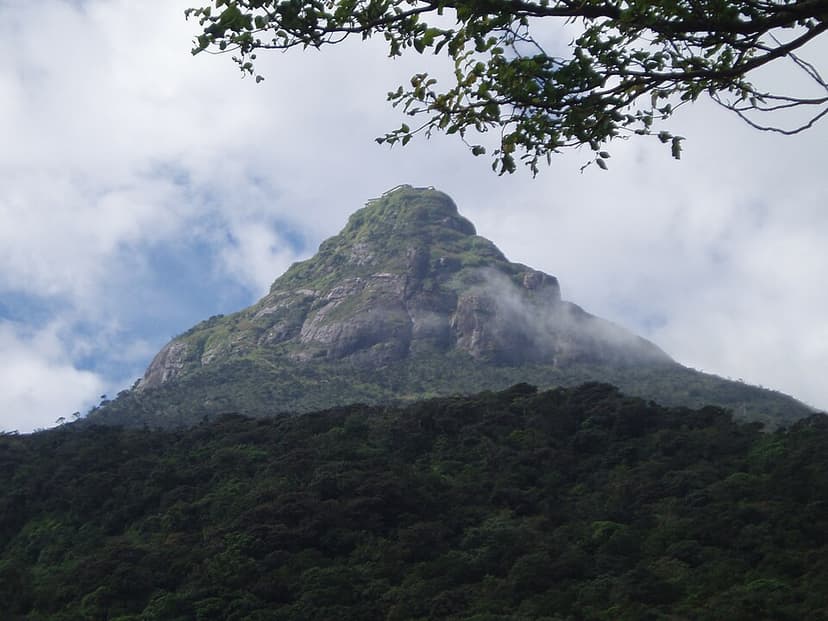
Adam's Peak
Adam's Peak, also known as Sri Pada, is a 2,243-meter-tall conical mountain in central Sri Lanka famed for a sacred footprint-shaped rock formation near its summit. This "sacred footprint" is revered by Buddhists as the Buddha's, by Hindus as Shiva's or Hanuman's, and by some Islamic and Christian traditions as Adam's or St. Thomas the Apostle's, making it a significant pilgrimage site for multiple faiths.
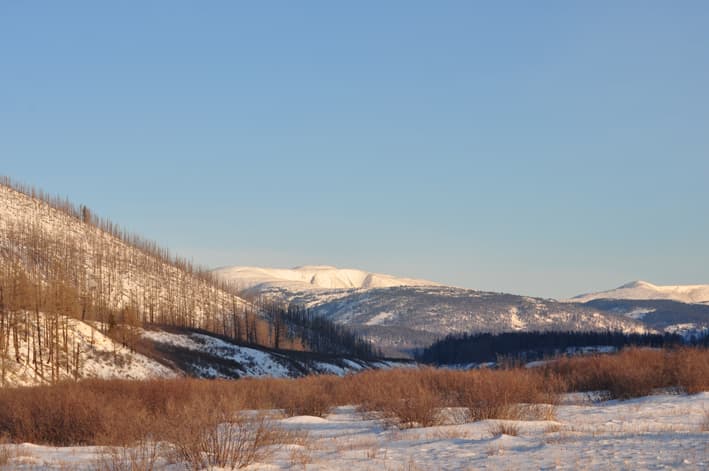
Burkhan Khaldun
Burkhan Khaldun is a sacred mountain in Mongolia's Khentii Province, revered as the birthplace and potential tomb of Genghis Khan. It holds immense spiritual significance, considered the most sacred mountain in the country, and is integral to Mongolian national identity and nomadic traditions. The mountain is also recognized for its unique biodiversity and complex ecosystem.
Emei Shan
Mount Emei, standing at 3,099 meters, is the highest of China's Four Sacred Buddhist Mountains and is revered as the bodhimaṇḍa of the Bodhisattva Samantabhadra. Its steep terrain features numerous Buddhist monasteries adapted to the landscape, and it is a significant pilgrimage site, rich in biodiversity with endemic plant and animal species.