
Áhkká
Sweden·Europe
Áhkká is a significant massif in northern Sweden's Stora Sjöfallet National Park, known for its impressive vertical drop and its status as a holy mountain in Sámi tradition. The "Queen of Lapland" features twelve peaks, ten glaciers, and a highest summit of 2,011 meters, making it the tenth-highest peak in Sweden and offering the country's greatest vertical drop.
Key Facts
- ›Áhkká is a massif comprising twelve individual peaks and ten glaciers.
- ›Its highest summit, Stortoppen, reaches an elevation of 2,011 meters (6,598 feet).
- ›The mountain boasts the highest vertical drop in Sweden, measuring 1,563 meters (5,128 feet) from its summit to the lake Akkajaure.
- ›This vertical drop can increase to a maximum of 1,593 meters (5,226 feet) due to hydroelectric regulation of the lake's water level.
- ›Áhkká is considered a holy mountain in SáMI tradition.
- ›It is nicknamed the "Queen of Lapland" due to its impressive appearance and large level differences.

Queen of Lapland
SáMi Tradition
Considered A Holy Mountain In SáMi Tradition., Nicknamed the "Queen of Lapland".
About Áhkká
Áhkká is a significant massif located in the southwestern section of Stora Sjöfallet National Park in northern Sweden. Its name, derived from Lule Sami, translates to 'wife'. This impressive mountain is characterized by its twelve distinct peaks and ten glaciers, with its highest summit, Stortoppen, reaching an elevation of 2,011 meters (6,598 feet), making it the tenth-highest peak in Sweden.
Geological Features and Significance
What sets Áhkká apart is its extraordinary vertical drop. From the crest of its highest summit down to the lake Akkajaure in the valley below, there is a remarkable drop of 1,563 meters (5,128 feet). This is the greatest vertical drop found anywhere in Sweden. The lake's water level is regulated by a hydroelectric power station, and when its surface is at its lowest point, the mountain's vertical drop can extend to a maximum of 1,593 meters (5,226 feet). This dramatic elevation change, combined with the massif's cohesive structure and relative isolation, contributes to its imposing appearance, earning it the esteemed nickname "Queen of Lapland."
Spiritual and Cultural Importance
In the traditions of the Sámi people, Áhkká holds sacred status as a holy mountain. This spiritual significance, coupled with its breathtaking natural grandeur, often inspires hikers to approach it with a profound sense of awe and mystique.
Source: Wikipedia ↗
Frequently Asked Questions
What is the highest point of Áhkká?
The highest peak of the Áhkká massif is called Stortoppen, which stands at 2,011 meters (6,598 feet) above sea level. This makes it the tenth-highest mountain in all of Sweden.
What is the most striking geological feature of Áhkká?
Áhkká is most notable for its immense vertical drop. From its highest summit down to the lake Akkajaure, the drop is 1,563 meters (5,128 feet), the largest such drop found in Sweden. This can increase further depending on the lake's water level.
What is the cultural or spiritual significance of Áhkká?
In the Sámi tradition, Áhkká is revered as a holy mountain. It is also known by the nickname "Queen of Lapland" and is regarded by some hikers with a sense of awe and mystique.
Where is Áhkká located?
Áhkká is situated in the southwestern part of Stora Sjöfallet National Park, in the northern region of Sweden.
Related Sacred Mountains
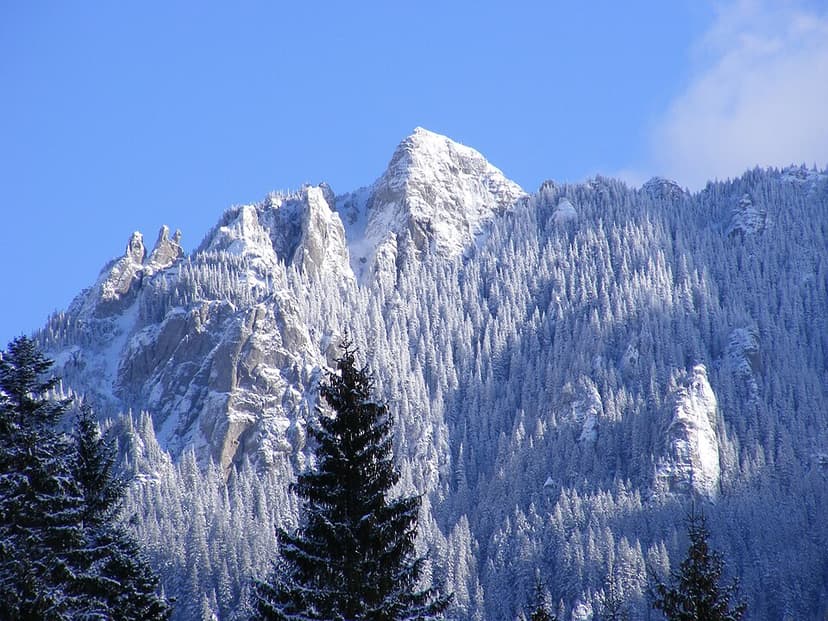
Ceahlău Massif
The Ceahlău Massif is a prominent mountain in Romania, recognized as one of the country's most famous peaks. It lies within the Eastern Carpathians and is a popular destination for hiking, offering a diverse range of flora and fauna within Ceahlău National Park.
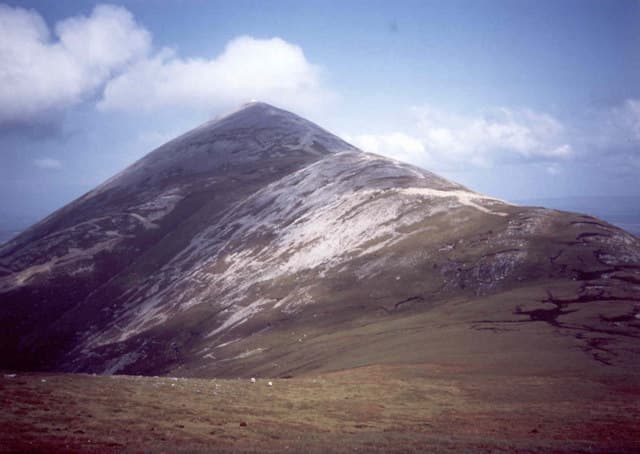
Croagh Patrick
Croagh Patrick, also known as 'the Reek,' is a pyramid-shaped mountain in County Mayo, Ireland, standing 764 meters tall. It is a significant site of pilgrimage, deeply associated with Saint Patrick, who is believed to have fasted on its summit for forty days. The mountain has a long history as a holy site, with evidence of prehistoric ritualistic use and a continuous tradition of pilgrimage dating back to at least the Middle Ages.

Monte Cavo
Monte Cavo, also known as Mons Albanus, is a dormant volcano and the second highest peak in the Alban Hills near Rome, Italy. Historically, it was a paramount sacred site for ancient Italic peoples and Romans, featuring the important temple of Jupiter Latiaris and serving as the location for the annual Latin Festivals. Its significance continued through the Middle Ages as a hermitage and monastery before becoming a hotel and, during World War II, a military radio communications base.