
Abbey Mills Mosque
London·United Kingdom·Tablighi Jamaat·Temporary structure, facing demolition
The Abbey Mills Mosque, also known as the London Markaz or Masjid-e-Ilyas, is a temporary mosque in Stratford, East London, with a current capacity of 2,500 worshippers. Plans for a significant expansion to create what would have been one of the largest religious buildings in Britain, accommodating up to 12,000 people, generated considerable controversy due to its scale and potential site contamination. The mosque's future remains uncertain as local authorities are seeking to develop the site for residential and commercial purposes.
Key Facts
- ›The site was purchased in 1996 by Anjuman-e-Islahul Muslimeen for £1.6 million.
- ›A temporary mosque facility currently accommodates approximately 2,500 worshippers.
- ›Proposed expansion plans aimed to create a mosque capable of holding up to 12,000 people.
- ›The site was formerly used as a chemical works, raising concerns about contamination.
- ›Newham Council has repeatedly refused permission for the mosque's expansion plans.
- ›Local authorities are now seeking to demolish the existing structures for redevelopment.

London Markaz, Masjid-e-Ilyas
Mangera Yvars Architects, Allies and Morrison, Nrap Architects
Religious, Community, Architectural
About Abbey Mills Mosque
The Abbey Mills Mosque, also referred to as the London Markaz or Masjid-e-Ilyas, is a temporary mosque situated in Stratford, East London. Currently, it serves as a place of worship accommodating approximately 2,500 individuals. The site has been owned by Anjuman-e-Islahul Muslimeen, the charitable trust of Tablighi Jamaat, since 1996.
Project and Controversy
Plans were developed for a substantial expansion of the mosque, which, if realized, would have been one of the largest religious buildings in Britain, potentially three times the size of St Paul's Cathedral, and one of the largest mosques in Western Europe. These ambitious proposals, often informally termed the "mega-mosque" in the press, aimed to increase capacity to an estimated 12,000 worshippers. The project, however, ignited significant controversy for several reasons, including its reported scale and concerns regarding potential chemical contamination of the site, which was previously a chemical works.
Regulatory and Public Response
Newham Council has been involved in efforts to manage the site's development. In February 2010, the council attempted to shut down the existing temporary facility, a move that was overturned on appeal, granting a two-year extension for its use. Subsequently, in 2012, Newham Council refused permission for the expansion plans. Despite appeals in 2015 and 2018, the council's stance remains, with an ongoing effort to demolish the current structures to facilitate residential and commercial development.
The controversy surrounding the mosque led to various public responses, including online petitions, debates, and demonstrations. Concerns were raised about the potential impact on the local community's character, environmental risks, and funding sources. Mosque officials have engaged in addressing these controversies and countering perceptions, while also emphasizing their commitment to community benefit and site decontamination as part of their development plans.
Source: Wikipedia ↗
Frequently Asked Questions
What is the Abbey Mills Mosque?
The Abbey Mills Mosque, also known as the London Markaz or Masjid-e-Ilyas, is a temporary mosque located in Stratford, East London. It currently serves as a place of worship for around 2,500 people.
What were the plans for the Abbey Mills Mosque?
There were ambitious plans to expand the mosque significantly, with the intention of making it one of the largest religious buildings in Britain, capable of accommodating up to 12,000 worshippers. These plans also included a visitor and conference center, parking, and a residential school.
Why did the Abbey Mills Mosque plans cause controversy?
The proposed size of the mosque, informally dubbed a 'mega-mosque,' sparked public debate. Additionally, concerns were raised about potential chemical contamination risks associated with the site, which was formerly a chemical works.
What is the current status of the Abbey Mills Mosque site?
Despite initial plans for expansion, Newham Council refused permission. Following appeals, the council is now looking to demolish the existing temporary facility and develop the site for residential and commercial purposes.
Who is behind the Abbey Mills Mosque project?
The project is being managed by Tablighi Jamaat, with Anjuman-e-Islahul Muslimeen, their charitable trust, owning the site since 1996. They intend to fund the project primarily through small donations from Muslims in the London area.
Related Mosques
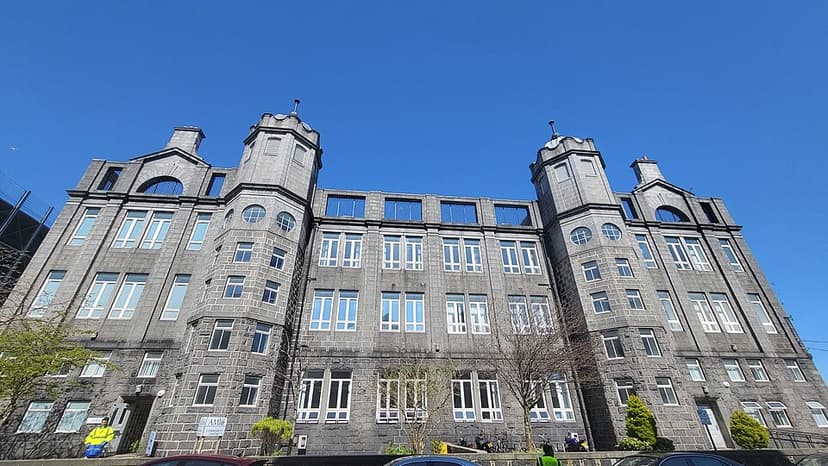
Aberdeen Mosque and Islamic Centre
The Aberdeen Mosque and Islamic Centre (AMIC) is the largest mosque and Islamic center in the North East of Scotland, operating across two sites in Aberdeen. Founded in 1978 by university students and local business people, it serves as a registered charitable organization for congregational prayers, religious services, and community outreach. AMIC plays a role in fostering understanding between Muslim and non-Muslim communities through open days and social projects.

17th of Ramadan Mosque
The 17th of Ramadan Mosque is a significant historical landmark located in Baghdad, Iraq, dating back to the royal era. Initially named the "Mosque of the Martyr" and later the "14th of Ramadan Mosque," its current name commemorates the Battle of Badr. The mosque is noted for its beautiful Islamic architecture, including calligraphy by Hashem Muhammad al-Baghdadi, and serves as an active worship site for both Sunni and Shi'a Muslims.

1st November of 1954 Great Mosque
The 1st November of 1954 Great Mosque is a significant Sunni mosque located in Batna, Algeria, within the Aurès region. Its construction, initiated in 1980, concluded in 2003, making it a relatively modern yet substantial place of worship and a notable landmark in the city.