
Zwickau
Zwickau is a historically significant city in Saxony, Germany, recognized as the fourth-largest in the state. Its development has been profoundly shaped by industrial activities, notably coal mining and the automotive industry, serving as the birthplace of Audi and the production site for the iconic Trabant. The city also holds cultural importance as the birthplace of composer Robert Schumann and possesses notable Gothic architecture.
Key Facts
- ›Zwickau is the fourth-largest city in Saxony, Germany.
- ›It is a historic center of the German automotive industry, being the birthplace of Audi.
- ›The city was a major production site for the East German Trabant car.
- ›Zwickau is the birthplace of the composer Robert Schumann.
- ›The city features significant Gothic architecture, including St. Mary's Church with its tall spire.

Gothic
St. Mary's Church, St. Catharine's Church, Gewandhaus, August Horch Museum, Robert Schumann House, Zwickau Mulde River, Silver Road
Terretorio Zcwickaw, šWikawa
Robert Schumann, August Horch, Thomas MüNtzer, Martin Luther, Nicholas Storch, Hans Sachs
- Received Town Charter In 1212
- Hosted Franciscans and Cistercians In the 13th Century
- Became A Free Imperial City
- Discovery of Silver In 1470 Led To Growth
- Became First City In Europe To Join Lutheran Reformation After Wittenberg
- Anabaptist Movement Began In 1520
- Seriously Damaged During the Thirty Years' War
- Nazi Show Trial of Polish Resistance Members
- Subcamp of FlossenbüRg Concentration Camp Located In Zwickau
- Us Troops Entered the City
- Handed Over To the Soviet Red Army
About Zwickau
Zwickau is a historically significant city located in the German state of Saxony, recognized as the fourth-largest urban center in the state. Situated in the valley of the Zwickau Mulde river, it lies within a densely populated region known for its industrial heritage. The city bears witness to centuries of development, from its early settlement by Sorbs and German colonists to its rise as a prominent economic and cultural hub.
Historically, Zwickau has been a cornerstone of the German automotive industry. It is celebrated as the birthplace of Audi, with the Horch automobile plant founded there in 1904 and Audiwerke AG established in 1909. The city also became synonymous with the production of the iconic Trabant car under VEB Sachsenring during the East German era. Today, a large Volkswagen plant continues this automotive legacy. Beyond industry, Zwickau is culturally renowned as the birthplace of the celebrated Romantic era composer Robert Schumann.
History and Development
The region around Zwickau was settled by Sorbs as early as the 7th century, with the name Zwickau likely deriving from a Sorbian toponym related to the Slavic Sun and fire god Svarozič. German settlers began arriving in the 10th century. A trading place known as "terretorio Zcwickaw" was first mentioned in 1118, and the settlement was granted a town charter in 1212. During the 13th century, Zwickau hosted Franciscan and Cistercian monastic communities, reflecting its early religious and civic importance.
The city's economic fortunes were significantly boosted by the discovery of silver ore in the nearby Erzgebirge (Ore Mountains) in the 15th century, leading to its growth into an important economic and cultural center throughout the 15th and 16th centuries. This period also saw the construction of significant religious buildings, including the Gothic Church of St. Mary, noted for its tall spire and substantial bell, and the Church of St. Catharine, where Thomas Müntzer once served as pastor. Zwickau was an early adopter of the Lutheran Reformation, becoming the first city in Europe to join after Wittenberg.
Industrialization in the 19th century was driven by coal mining and subsequently by the burgeoning automotive sector. The city experienced considerable damage during the Thirty Years' War and later endured hardships during World War II, including the presence of a subcamp of the Flossenbürg concentration camp. Post-war, Zwickau became a key industrial city within East Germany, continuing its automotive production, and has since adapted to post-reunification economic shifts with significant automotive manufacturing.
Notable Features and Cultural Significance
Zwickau's architectural landscape is marked by its Gothic heritage, with St. Mary's Church standing as a prime example, featuring a spire that reaches 87 meters. The Church of St. Catharine also holds historical and artistic value, with an altarpiece attributed to Lucas Cranach the Elder. The Gewandhaus, a late Gothic cloth merchants' hall built in the early 16th century, has been converted into a theatre, showcasing the city's adaptive use of historical structures.
The city is home to several museums that reflect its diverse history and cultural contributions. The August Horch Museum Zwickau celebrates the origins of the Audi and Horch automobile factories and is an Anchor Point of the European Route of Industrial Heritage. The Robert Schumann House, located in the composer's birthplace, serves as a museum dedicated to his life and work. Zwickau's educational landscape includes the University of Applied Sciences Zwickau, contributing to its role as a center for learning and innovation.
Source: Wikipedia ↗
Frequently Asked Questions
What is Zwickau known for historically?
Zwickau is historically known as a major center for the German automotive industry, being the cradle of Audi and the former production site of the Trabant. It also played a significant role in coal mining and developed into an important economic and cultural center of Saxony.
Who is the most famous person born in Zwickau?
The most famous person born in Zwickau is the renowned composer of the Romantic era, Robert Schumann, who was born there in 1810.
What significant architectural landmarks are in Zwickau?
Zwickau boasts impressive Gothic architecture, most notably the Church of St. Mary, which features a spire 87 meters high. The late Gothic Church of St. Catharine is also a significant landmark.
What industrial heritage can be found in Zwickau?
Zwickau's industrial heritage is highlighted by the August Horch Museum, which chronicles the history of the Audi and Horch automobile factories. The city also has a large Volkswagen plant, continuing its automotive legacy.
When did Zwickau receive its town charter?
Zwickau received its town charter in 1212. It also hosted Franciscans and Cistercians during the 13th century.
Related Monasteries

Freiberg
Freiberg is a historic university and former mining town in Saxony, Germany, renowned for its centuries-long connection to the silver and mining industries. Since 2019, its historic center and mining heritage have been recognized as a UNESCO World Heritage Site. The town is also home to the oldest university of mining and metallurgy in the world, founded in 1765, and features significant cultural landmarks like Freiberg Cathedral.
Hamborn Abbey
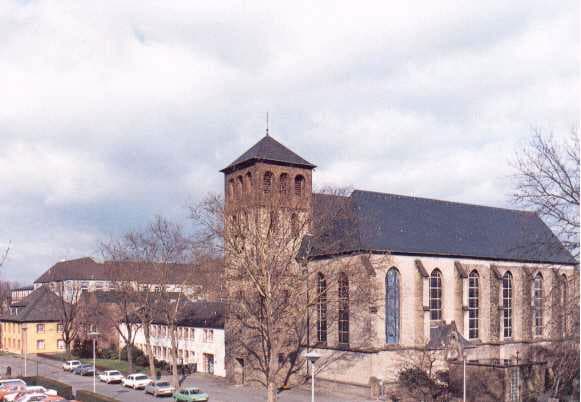
Hamborn Abbey is a Premonstratensian monastery located in Duisburg, Germany, with a history dating back to a 9th-century parish church. Founded in its current form in 1170, it was abolished during the Napoleonic era but re-established in 1959. Today, the abbey serves as a center for pastoral work, education, and social projects in the northern Duisburg area.

Sittichenbach Abbey
Sittichenbach Abbey, also known as Sichem Abbey, is a Cistercian monastery founded in 1141 and dissolved during the Reformation in 1540. After centuries of secular use, it was returned to the Cistercian order following German reunification in 1990. The restored abbey now functions as a retreat center and hotel, featuring a re-built chapel for daily prayer and an area for meditative walks.