
Zočište Monastery
Zočište Monastery, formally known as St. Cosmas and Damian's Monastery, is a Serbian Orthodox monastery located in Kosovo. Originally built in the 13th century and dedicated to St. Nicholas, it gained prominence for the relics of Saints Cosmas and Damian, believed to offer miraculous cures. The monastery has a history of destruction and reconstruction, most notably being destroyed in 1999 and rebuilt starting in 2004.
Key Facts
- ›The original church was built in the 13th century and dedicated to St. Nicholas.
- ›It is famous for the relics of Saints Cosmas and Damian, believed to heal eye diseases and mental disorders.
- ›The monastery was designated as Cultural Heritage of Serbia in 1954.
- ›It was destroyed in 1999 by the KLA and subsequently rebuilt starting in 2004.
- ›The graveyard contains tombstones dating back to the 15th and 16th centuries.

Serbian Orthodox
- Relics of Saints Cosmas and Damian
- Graveyard With 15th and 16th-Century Tombstones
- Original Building Material Used In Reconstruction
St. Cosmas and Damian's Monastery, Manastir Sv. Kozme I Damjana
Saints Cosmas and Damian, Serbian King Stefan DečAnski, Nikola BošKović
Damaged During the Battle of Kosovo In 1389, Destroyed By Kla In 1999, Reconstruction Started In 2004
About Zočište Monastery
Zočište Monastery: A Sanctuary of Faith and Resilience
Zočište Monastery, also formally recognized as St. Cosmas and Damian's Monastery, is a significant Serbian Orthodox monastic complex located in the village of Zočište, within the Metohija region of Kosovo. Its history traces back to the 13th century, with the original church dedicated to St. Nicholas. The monastery's enduring spiritual importance is largely attributed to the relics of Saints Cosmas and Damian, revered for their purported miraculous healing abilities, particularly concerning ailments of the eyes and various psychological disorders.
Historical Significance and Destruction
The monastery's earliest documented mention dates to 1327, during the reign of Serbian King Stefan Dečanski. Throughout its existence, it has weathered periods of conflict and destruction. It suffered damage during the Battle of Kosovo in 1389, and later, its stones were reportedly used to construct a mosque in Prizren. A significant period of rebuilding occurred in the late 16th century. More recently, the monastery endured a devastating destruction by the KLA in September 1999, following the Kosovo War. The irreplaceable relics of Saints Cosmas and Damian were temporarily transferred to Sopoćani Monastery for safekeeping.
Reconstruction and Cultural Heritage
Recognized for its historical and cultural importance, Zočište Monastery was designated as Cultural Heritage of Serbia in 1954 and later included in the Republic of Kosovo's list of "Special Protective Zones" in 2008. Reconstruction efforts commenced in October 2004, with a commitment to restoring the monastery to its former likeness, utilizing salvaged stones and fragments from the original church. This process, though facing some initial challenges, has aimed to re-establish the monastery as an active spiritual center. The monastery is also noted for its old Serbian graveyard, which features tombstones dating from the 15th and 16th centuries, further testifying to its long-standing presence in the region.
Source: Wikipedia ↗
Frequently Asked Questions
What is the primary religious tradition of Zočište Monastery?
Zočište Monastery is a Serbian Orthodox monastery. It belongs to the Eparchy of Raška and Prizren.
When was Zočište Monastery originally founded?
The original church at Zočište Monastery was built in the 13th century. The earliest recorded reference to the monastery dates to 1327.
What is Zočište Monastery most famous for?
The monastery is renowned for its relics of Saints Cosmas and Damian, who are believed to possess miraculous healing powers, particularly for eye diseases and mental and psychosomatic disorders.
Has Zočište Monastery faced destruction?
Yes, the monastery was destroyed by the KLA on September 13/14, 1999, after the Kosovo War. It was looted and then torched.
When was the monastery rebuilt?
Reconstruction of the monastery began in October 2004, utilizing original building materials from the ruins. The church building has been rebuilt on its consolidated foundations.
What is the significance of Zočište Monastery in the region?
It is considered "One of the most important cultural places for Serbian and Christian settlements in the Metohija region." It was designated as Cultural Heritage of Serbia in 1954.
Related Monasteries

Patriarchate of Peć Monastery
The Patriarchate of Peć Monastery is a significant medieval Serbian Orthodox monastic complex located near Peja, Kosovo. Established in the 13th century, it rose to prominence as the permanent seat of Serbian Archbishops and later, in 1346, became the center of the Serbian Patriarchate. The complex is notable for its four interconnected churches, serving as a vital spiritual and cultural hub and the mausoleum for Serbian church leaders.
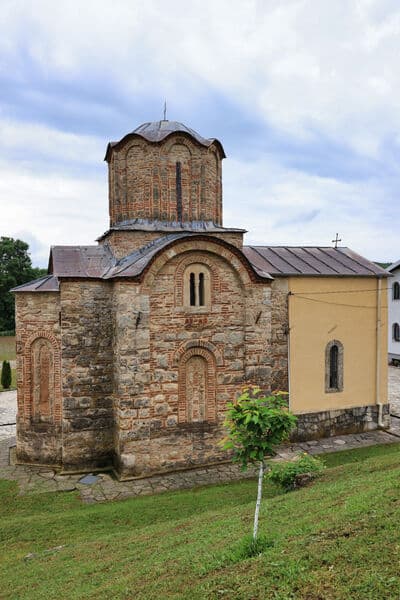
Budisavci Monastery
Budisavci Monastery is a medieval Serbian Orthodox monastery located in the village of Budisavci, near Klina and Peja. Founded in the early 14th century, the church is dedicated to the Transfiguration of Jesus Christ and is considered an important religious and cultural monument of medieval Serbian heritage. While its original frescoes are lost, significant repainting occurred in the 16th century, and the monastery remains an active spiritual center.

Gorioč Monastery
Gorioč Monastery is a Serbian Orthodox monastery located in Kosovo, serving as a dependency of Visoki Dečani Monastery. Traditionally founded in the 14th century by Serbian King Stefan Dečanski as a gift to Saint Nicholas, the monastery complex includes a church dedicated to the saint, dormitories, a bell tower, and economic buildings. It is recognized as a cultural monument of exceptional importance in Serbia.