
Ziesar
Ziesar is a town located in the Potsdam-Mittelmark district of Brandenburg, Germany, situated southwest of the city of Brandenburg. Historically, during the Cold War, Ziesar and its Autobahn 2 Exit 76 were a significant halfway point on the transit route between West Berlin and West Germany, with Allied road patrols providing assistance. The town has notable connections to figures like theologian Johannes Aepinus and painter Wilhelm Kuhnert.
Key Facts
- ›Located 24 km southwest of the city of Brandenburg.
- ›Played a strategic role during the Cold War as a halfway point for Allied transit routes to West Berlin.
- ›Associated with theologian and church reformer Johannes Aepinus (1499-1553).
- ›Paul Schneider was the last private owner of Castle Ziesar from 1917 to 1945.
- ›Painter Wilhelm Kuhnert (1865-1926) is another personality associated with the town.

Castle Ziesar
Johannes Aepinus, Paul Schneider, Wilhelm Kuhnert
Cold War Transit Route Significance
About Ziesar
Ziesar is a town located in the Potsdam-Mittelmark district of Brandenburg, Germany. It is situated approximately 24 kilometers southwest of the city of Brandenburg. The town's history includes a notable period during the Cold War when it was considered a critical strategic point.
Historical Significance
During the Cold War, Ziesar, particularly Exit 76 of the Autobahn 2, served as a crucial halfway point on the transit route connecting West Berlin with mainland West Germany. The Western Allies maintained road patrols in the area to offer breakdown services and assistance to travelers navigating interactions with DDR and Soviet authorities. This role underscored Ziesar's importance in the logistical and geopolitical landscape of divided Germany.
Associated Personalities
The town has connections to several notable individuals. Johannes Aepinus (1499-1553) was a theologian and church reformer born in Ziesar. Later, Paul Schneider, a secret war councilor, farmer, and the last private owner of Castle Ziesar, resided there from 1917 to 1945. The painter Wilhelm Kuhnert (1865-1926) is also among the personalities associated with Ziesar.
Source: Wikipedia ↗
Frequently Asked Questions
What was Ziesar's significance during the Cold War?
During the Cold War, Ziesar and specifically Exit 76 of Autobahn 2 were considered the halfway point on the transit route for Western Allies traveling between West Berlin and West Germany. Allied road patrols provided breakdown services and assistance to travelers navigating DDR and Soviet authorities.
Who are some notable people associated with Ziesar?
Johannes Aepinus, a theologian and church reformer born in 1499, is a notable figure from Ziesar. The painter Wilhelm Kuhnert (1865-1926) is also associated with the town. Paul Schneider was the last private owner of Castle Ziesar.
Where is Ziesar located?
Ziesar is situated in the Potsdam-Mittelmark district, within the state of Brandenburg, Germany. It lies approximately 24 kilometers southwest of the city of Brandenburg.
Related Monasteries
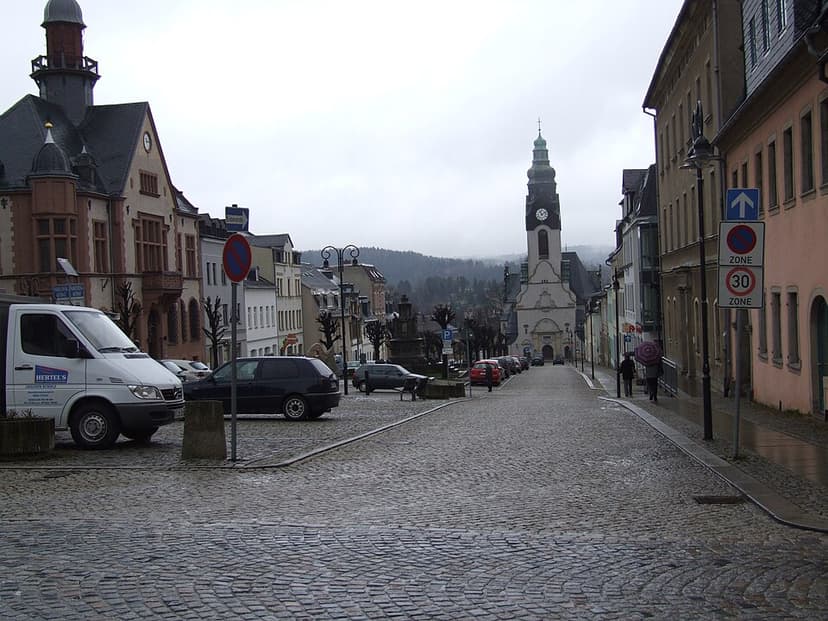
Adorf
Adorf is a small town in the Vogtlandkreis region of Saxony, Germany, with a history dating back to around 1200 when it was founded. It gained town status in 1293 and developed as a center for crafts, spinning, weaving, and musical instrument making due to its strategic location and transport links. Despite being destroyed by fire in 1768, Adorf has preserved historical structures like the Freiberger Tor, the last remaining town gate in Vogtland, and boasts attractions such as Miniaturschauanlage Klein-Vogtland.

Beckum
Beckum is a town in North Rhine-Westphalia, Germany, whose name originates from "home upon the brooks" due to its location near three streams. Granted town charter in 1224, it experienced periods of growth and hardship, eventually becoming a major center for the chalk and cement industries in the late 19th century. Today, Beckum is an industrial town with a focus on machine engineering and cement production.

Döbeln
Döbeln is a town in Saxony, Germany, situated on the Freiberger Mulde river. Historically significant, it experienced its first written mention in 981 and was described as a town around 1220. The town has endured numerous fires, occupations, and conflicts, including a significant fire in 1333 that destroyed much of the town and a battle during the Seven Years' War in 1762. Döbeln is locally known as the "boot town" due to its historical giant boots, with one model holding a Guinness World Record.