
Yeletskyi Monastery
Orthodox·Ukraine·Damaged, formerly active monastery, part of historical site·11th century
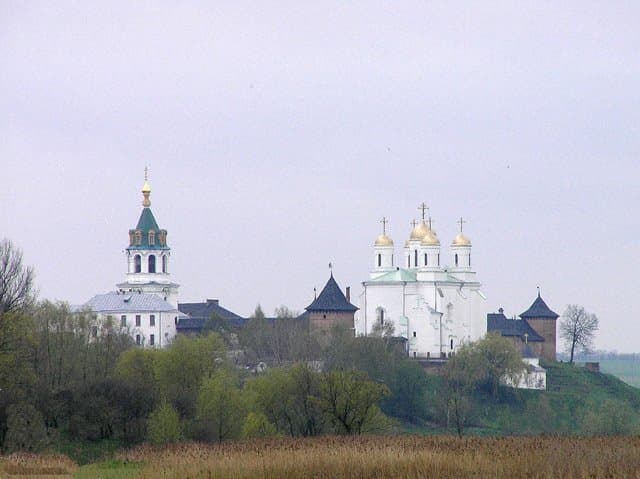
The Yeletskyi Dormition Monastery is one of Ukraine's oldest Orthodox monasteries, founded in 1060 in Chernihiv. Situated on a riverbank, it has experienced periods of destruction and rebuilding, notably during the Mongol invasion and Polish-Lithuanian rule. The monastery, which housed a famous icon of the Mother of God, was later closed by Soviet authorities and suffered damage in recent conflicts.
Key Facts
- ›Founded in 1060 by Prince Sviatoslav II of Kiev.
- ›Located on an elevated right bank of the Desna River in Chernihiv, Ukraine.
- ›The Dormition Cathedral dates back to the 2nd half of the 12th century.
- ›Suffered destruction in 1239 (Mongol invasion) and 1579 (Polish-Lithuanian siege).
- ›Completely rebuilt in Ukrainian Baroque style between 1669–1688.
- ›The gate bell tower, built in 1670–1675, is the oldest high-rise building in Chernihiv.

Ukrainian Baroque, 12th-Century Architecture
Dormition Cathedral, Gate Bell Tower, Yeletskyi Caves, Cells, Wooden Residential House, Yeletskyi Icon of the Mother of God
Yeletskyi Dormition Monastery, Holy Dormition Convent of Yeletskyi
Prince Sviatoslav Ii of Kiev, Samuel the Ermine, Archimandrite Joanikiy Galyatovsky, Catherine the Great, Yakov Kindratovich Lyzohub, Yeukhim Lyzohub, Archimandrite Feodosii Uglichky, Theodosius of Chernihiv
- Destroyed During the Mongol Invasion
- Restored During the Reign of Prince Ivan Mozhaisky
- Destroyed During the Polish-Lithuanian Siege
- Captured By the Polish
- Restored and Transferred To the Greek Catholic Church
- Captured By the Orthodox Following the Khmelnytsky Uprising
- Completely Rebuilt In Ukrainian Baroque Style
- Deprived of Land Holdings By Catherine the Great
- Closed By Soviet Authorities
- Part of Chernihiv Regional Philharmony
- Leased To the Moscow Patriarchate
- Damaged By Russian Bombing
About Yeletskyi Monastery
Yeletskyi Dormition Monastery
The Yeletskyi Dormition Monastery stands as one of Ukraine's most ancient monastic foundations, situated in the city of Chernihiv on a commanding position overlooking the Desna River. Its history is a testament to resilience, marked by periods of flourishing construction, devastating destruction, and eventual rebuilding.
Foundation and Early History
Established in 1060 by Prince Sviatoslav II of Kiev, the monastery's origins are linked to a legendary discovery of a miraculous icon of the Mother of God on a fir tree, which inspired its name. The early centuries saw the monastery grow, but also face severe challenges. In 1239, it was ravaged during the Mongol invasion, leading to a long period of decline for the region. Significant restoration efforts were undertaken later, including renovations to the Dormition Cathedral and the construction of new cells under Prince Ivan Mozhaisky.
The monastery's turbulent history continued through the Polish-Lithuanian period. It was destroyed again in 1579 and left empty after a siege in 1611, during which a part of the Dormition Cathedral's dome collapsed and the ancient Yeletskyi icon was lost. The site was restored in 1623 under Polish-Lithuanian rule and briefly transferred to the Greek Catholic Church before being recaptured by the Orthodox following the Khmelnytsky Uprising in 1649. A comprehensive rebuilding in the Ukrainian Baroque style took place between 1669 and 1688 under Archimandrite Joanikiy Galyatovsky.
Buildings and Architectural Ensemble
The architectural ensemble of the Yeletskyi Dormition Monastery is notable for several key structures. The main temple, the Dormition Cathedral, dates to the second half of the 12th century. Other significant buildings include the 17th-century gate bell tower, which is the oldest high-rise structure in Chernihiv, and the refectory Church of Peter and Paul. The monastery also preserves ancient cells, considered the oldest brick residential buildings in Left-Bank Ukraine, and a wooden residential house known as the house of Archimandrite Feodosii Uglichky, the oldest wooden building of its kind in the region.
Modern History and Recent Events
In the 20th century, the monastery faced secularization. Soviet authorities closed it in 1921, and its premises were repurposed for various institutions, including a period as part of the Chernihiv Regional Philharmony from 1944 to 1964. The Yeletskyi icon of the Mother of God, which had been recorded for numerous miracles in the 19th century, survived Soviet rule and was eventually transferred to the Historical Museum in 1999. From 1992 to 2024, the monastery was leased to the Moscow Patriarchate under the name of the Holy Dormition Convent of Yeletskyi. In a tragic turn of events in the spring of 2022, the monastery sustained damage from Russian bombing attacks during the conflict in Ukraine, affecting its historic facades and structures.
Source: Wikipedia ↗
Frequently Asked Questions
When was the Yeletskyi Dormition Monastery founded?
The Yeletskyi Dormition Monastery was founded in 1060. It is considered one of the oldest monasteries in Ukraine.
What is the significance of the Yeletskyi icon of the Mother of God?
The Yeletskyi icon of the Mother of God is a miraculous icon that gave the monastery its name. It was lost after the 1611 capture of Chernihiv but a copy is now held in the Dormition Cathedral and was transferred to the Historical Museum in 1999.
What architectural styles are present at the monastery?
The monastery's buildings showcase a mix of styles. The Dormition Cathedral dates to the 12th century, while significant rebuilding in the 17th century introduced Ukrainian Baroque elements. The gate bell tower and other structures also reflect 17th-century architecture.
Has the monastery been damaged recently?
Yes, in the spring of 2022, the Yeletskyi Dormition Monastery was bombed during the Russian invasion of Ukraine. Facades, the gate, bell tower, and dome drums sustained damage.
What is the current status of the Yeletskyi Dormition Monastery?
The monastery was leased to the Moscow Patriarchate as the Holy Dormition Convent of Yeletskyi from 1992 to 2024. It has also been used for various institutions and as part of the Chernihiv Regional Philharmony. The site has recently suffered damage from bombing.
Related Monasteries

Kyiv Pechersk Lavra
The Kyiv Pechersk Lavra, also known as the Kyiv Monastery of the Caves, is a historic Eastern Orthodox monastery that has served as a preeminent center of Eastern Christianity in Eastern Europe since its foundation in 1051. Renowned for its extensive cave systems and numerous architectural monuments, it has been a significant spiritual and cultural hub, facing periods of destruction and reconstruction throughout its history. Today, it is a UNESCO World Heritage Site and an active monastic community.
Assumption Cave Monastery
The Assumption Cave Monastery, also known as Sviatohirskyi Uspenskyi Zymnenskyi monastyr, is a significant Ukrainian Orthodox cave monastery located near the village of Zymne. Its origins are attributed to monastic legend, with some accounts suggesting a connection to Vladimir the Great. The monastery has a long and complex history, marked by periods of control by different religious authorities, dissolution, and re-establishment, eventually regaining its status as a stauropegial institution in 1996.

Bakhchysarai Cave Monastery
The Bakhchysarai Cave Monastery, also known as the Dormition Monastery of the Caves, is a significant Eastern Orthodox monastic site carved into cliffs near Bakhchysarai, Crimea. While local tradition suggests an 8th-century founding, the current monastic establishment dates to the 15th century, refounded by monks from Kyiv-Pechersk Lavra. It served as a vital center for Orthodox Christians, particularly those seeking refuge, before periods of decline and closure under Soviet rule, eventually reopening in 1993.