
Wigmore Priory
Wigmore Abbey was a prominent monastery of Canons Regular in Herefordshire, England, founded in 1179 and active until its dissolution in 1530. It was a significant religious and burial site for the powerful Mortimer family, and its history is documented in a surviving manuscript. Today, only ruins remain, noted for their 'very bad' condition on Historic England's Heritage at Risk Register.
Key Facts
- ›Founded in 1179 by Hugh de Mortimer, with considerable assistance from local landowners.
- ›Was one of the most frequently moved monastic foundations in England during its early years.
- ›Considered at one time to be the largest monastery in Herefordshire.
- ›Served as a burial site for numerous members of the Mortimer family, including five Earls of March.
- ›Destroyed during the Dissolution of the Monasteries in 1530.
- ›The surviving ruins are in 'very bad' condition according to Historic England.
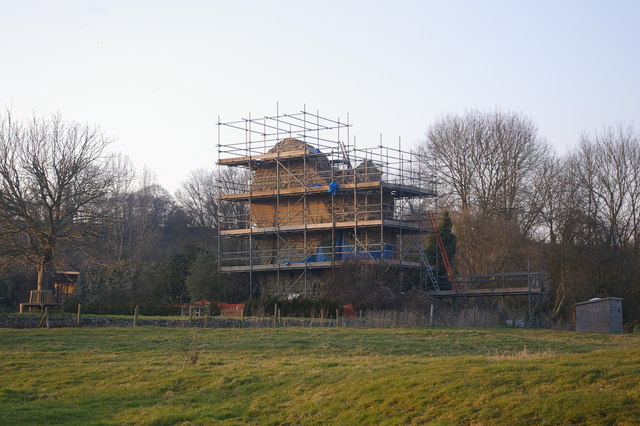
- Abbot's Lodging
- Site of A Significant Historical Manuscript Concerning the Mortimer Family
Ranulph De Mortimer, Hugh De Mortimer, Robert Foliot, Brian De Brampton, John De Brampton, Simon Merlymond, Andrew of St Victor, Roger Mortimer, Edmund Mortimer, John Challis
- Founded In 1179.
- Dissolution of the Monasteries In 1530, Leading To Destruction.
About Wigmore Priory
Wigmore Abbey
Wigmore Abbey was an important monastery of Canons Regular situated approximately one mile north of the village of Wigmore in Herefordshire, England. Its establishment was first considered during the reign of Henry I by Ranulph de Mortimer, but it was his son, Hugh de Mortimer, who saw the abbey consecrated in 1179. The construction of the abbey was supported by contributions of building materials from local landowners, including Brian de Brampton and his son John. Prior to its final consecration at Wigmore, the monastic community had resided in various locations across northern Herefordshire for some thirty years, making it one of the most mobile foundations in the country.
At its height, Wigmore Abbey was considered one of the largest monasteries in the county. The abbey church, like the parish church of Wigmore, was dedicated to St James. As the principal patrons of the abbey, many members of the powerful Mortimer family, including five Earls of March, were interred within its precincts. The abbey continued to thrive until 1530, when it was destroyed during the Dissolution of the Monasteries. The remnants of the abbey were subsequently granted to Sir T. Palmer.
Historical Significance and Documentation
Wigmore Abbey is believed to be the origin of a significant manuscript that details its own history and foundation, as well as the lineage of the Mortimer family. This manuscript, which includes the petition of Roger Mortimer's father, Edmund, to Parliament regarding his claim to the throne in 1374, is now held at the University of Chicago. Another chronicle related to the abbey has been lost, though fragments of its beginning and end survive in Manchester and Dublin.
Recent History of the Ruins
In recent times, the land encompassing the abbey ruins was owned by the Powell and later the Brierley families. The ruins themselves were acquired by the actor John Challis, who resided in the former abbot's lodging from 1998 until his death in 2021. The ruins have also served as a filming location for television productions.
The abbey ruins are currently listed on Historic England's Heritage at Risk Register, with their condition described as 'very bad'.
Source: Wikipedia ↗
Frequently Asked Questions
When was Wigmore Abbey founded?
Wigmore Abbey was consecrated in 1179. Its foundation was contemplated by Ranulph de Mortimer and brought to fruition by his son, Hugh de Mortimer.
Who was buried at Wigmore Abbey?
Wigmore Abbey was the burial site for many members of the Mortimer family, who were its principal patrons. This included five Earls of March, along with other notable family members like Roger Mortimer of Wigmore and Maud de Braose.
What happened to Wigmore Abbey?
Wigmore Abbey was dissolved and destroyed in 1530. The remains of the building were subsequently granted to Sir T. Palmer.
What is the current state of Wigmore Abbey?
Today, only ruins of Wigmore Abbey remain. Their condition is described as 'very bad' and they are listed on Historic England's Heritage at Risk Register.
Is there any surviving historical documentation about Wigmore Abbey?
A manuscript outlining the abbey's history, founding, and the lineage of the Mortimer family is thought to have originated at Wigmore Abbey. Copies of another lost chronicle also exist.
Related Monasteries
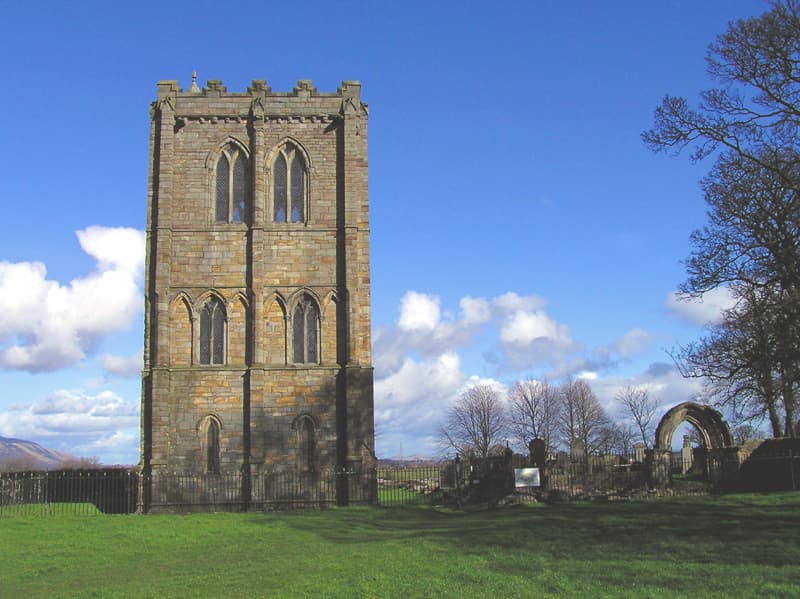
Cambuskenneth Abbey
Cambuskenneth Abbey, established around 1140 by King David I of Scotland, was a significant provostry of Canons Regular and the only Scottish house of the French Arrouaise Order. Situated by a meander of the River Forth near Stirling, it played a crucial role in Scottish public life, hosting parliaments and royal events, and was the burial site for King James III and Queen Margaret of Denmark. Although largely reduced to its foundations today, its 13th-century bell tower remains intact, and the site is managed by Historic Scotland and open to visitors.

Vorau Priory
Vorau Abbey, founded in 1163 by Margrave Ottokar III of Styria, is a significant Augustinian monastery in Vorau, Styria, Austria. It is renowned for its 18th-century Viennese High Baroque collegiate church and library, which houses an extensive collection of books and manuscripts. Despite facing invasions and commandeering by the Nazi government, Vorau Abbey remains an active monastic community and a testament to centuries of religious and architectural history.
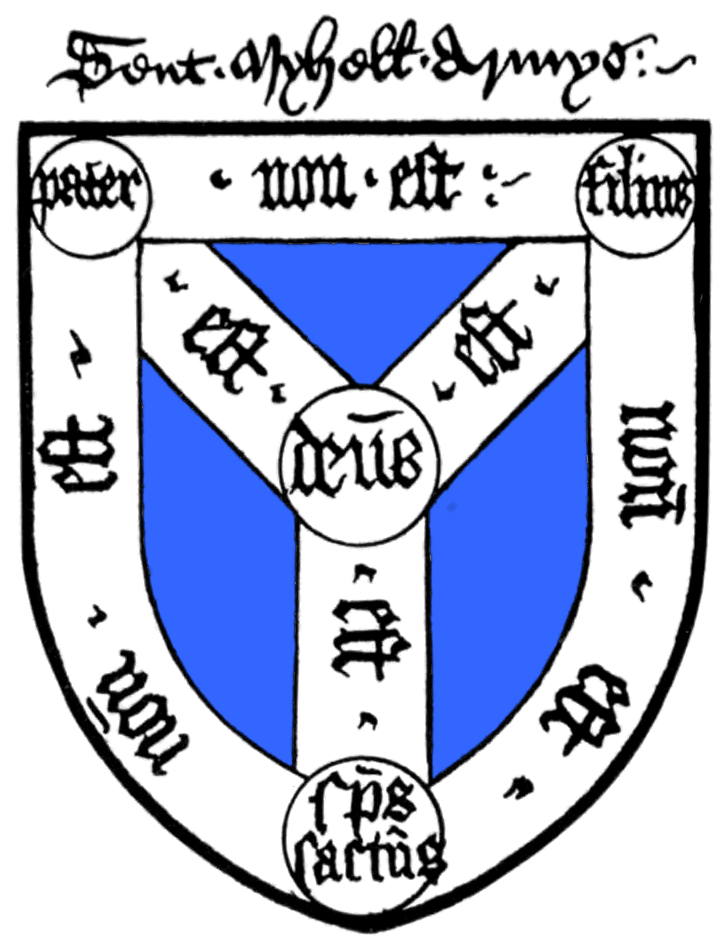
Aldgate Priory
Holy Trinity Priory, also known as Christchurch Aldgate, was an Augustinian priory founded around 1108 by Queen Matilda of Scotland near Aldgate in London. It held significant ties to English royalty, with several queens maintaining a close relationship with the priory and some royal children buried there. The priory was a center of learning in the 12th century and played a role in civic life, with its prior serving as an Alderman of London. It was dissolved in 1532 and its buildings have since been largely lost, with only remnants surviving.