
Weston Priory
Weston Priory is a Benedictine monastic community located in Weston, Vermont, founded in 1953. It is known for its contributions to Roman Catholic liturgical music, its engagement with social justice and peace movements, and the crafts produced by its monks. The priory also has a notable connection to Latin America and is part of the Swiss-American Congregation.
Key Facts
- ›Founded in 1953 by Abbot Leo a. Rudloff of Dormition Abbey in Jerusalem.
- ›Known for its original music for Roman Catholic worship, developed since the 1960s.
- ›Engaged in social justice initiatives, including support for refugees and advocacy for the poor in Mexico.
- ›Monks produce crafts, including pottery, with pieces held in museum collections.
- ›Became an independent or conventual priory and was incorporated into the Swiss-American Congregation in June 2026.

Original Liturgical Music Compositions, Pottery and Other Crafts, Gardens and Livestock, Bookstore
Abbot Leo A. Rudloff, Brother Thomas, Gregory Norbet, Tomie Depaola
- Founded In 1953
- Began Writing Liturgical Music In the 1960s
- Established A Retreat Center In Cuernavaca, Mexico
- Pledged To Provide For Refugees In the 1980s
- Awarded Peace Abbey Courage of Conscience Award In 1992
- Incorporated Into the Swiss-American Congregation In June 2026
About Weston Priory
Weston Priory is a Benedictine monastic community situated in Weston, Vermont, and operates under the Swiss-American Congregation. Established in 1953 by Abbot Leo A. Rudloff of Dormition Abbey in Jerusalem, the priory was conceived with the dual purpose of supporting the Jerusalem community and fostering monastic renewal.
History and Mission
Abbot Leo Rudloff chose a site in Vermont's Green Mountains after considering other locations. The initial foundation utilized an old farmhouse and a renovated barn that served as the chapel. From its inception, Weston Priory was part of a North American movement towards Benedictine renewal, with a focus on educated monks praying the full Liturgy of the Hours. Over time, the community became increasingly involved in peace and social justice movements. They forged connections with Benedictine nuns in Mexico, contributing to the establishment of a retreat center in Cuernavaca to raise awareness of Latin American issues. The priory also engaged in efforts to support refugees seeking homes in the United States and advocated for the poor, notably through relationships with senators Patrick Leahy and Bernie Sanders.
Music and Arts
A significant aspect of Weston Priory's identity is its contribution to Roman Catholic liturgical music. Beginning in the 1960s, the monks started composing their own music for worship, which has since gained worldwide recognition. Beyond music, the brothers maintain gardens and livestock, and produce various crafts. The pottery created at the monastery is particularly notable, with pieces held in collections such as the Museum of Fine Arts in Boston.
Notable Members and Recognition
Key figures associated with Weston Priory include Abbot Leo Rudloff, who also served on a pre-Vatican Council Commission for Christian-Jewish reconciliation. Other prominent members were ceramic artist Brother Thomas (Thomas Bezanson) and composer Gregory Norbet. Author Tomie dePaola was also briefly a member. In recognition of its humanitarian efforts, the Weston Priory Community received the Peace Abbey Courage of Conscience Award in 1992 for sheltering a Guatemalan refugee family.
Source: Wikipedia ↗
Frequently Asked Questions
When was Weston Priory founded?
Weston Priory was founded in 1953 by Abbot Leo A. Rudloff. He envisioned it as a community dedicated to monastic renewal.
What is Weston Priory known for?
The priory is particularly recognized for the original music composed by its monks for liturgical use, which has gained international recognition. They are also known for their engagement with social justice issues and the crafts they produce, such as pottery.
What is the religious tradition of Weston Priory?
Weston Priory is a community of Benedictine monks. They belong to the Roman Catholic tradition and are part of the Swiss-American Congregation.
Where is Weston Priory located?
Weston Priory is situated in Weston, Vermont, within the confines of the Roman Catholic Diocese of Burlington.
Does Weston Priory have an active community?
Yes, Weston Priory is an active community of Benedictine monks. They maintain gardens, livestock, and a bookstore, and continue their work in music and crafts.
Is Weston Priory open to visitors?
While the article doesn't explicitly state public access policies, the mention of a bookstore and the general nature of monastic communities suggest that parts may be accessible. However, specific details about visiting hours or public access are not provided.
Related Monasteries
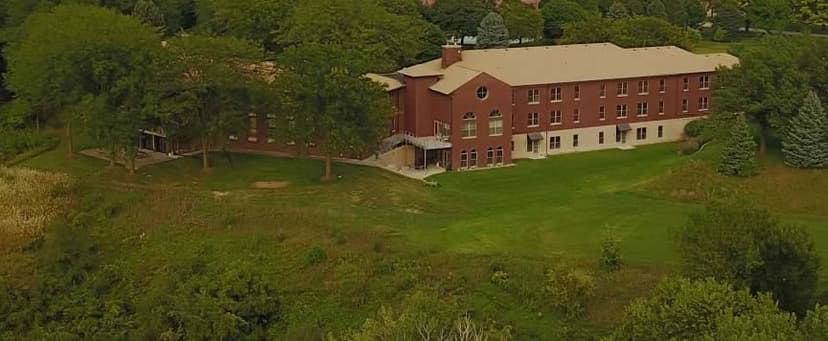
Mount Michael Abbey
Mount Michael Abbey is a Benedictine monastery located outside Elkhorn, Nebraska, within the Archdiocese of Omaha. Founded in 1952, it traces its roots to Engelberg Abbey in Switzerland and Conception Abbey in Missouri. The abbey's primary apostolate is education, operating an attached high school, and its community follows the Rule of Saint Benedict, balancing prayer with various forms of work.

Passionist Fathers Monastery
The Passionist Fathers Monastery, located in Chicago, Illinois, is a historic religious building constructed in 1910 for the Passionists, a Roman Catholic monastic order known for its emphasis on austere living and spiritual retreats. Designed by architect Joseph Molitor, the monastery showcases a blend of Classical Revival, Baroque Revival, and Romanesque Revival architectural styles. It was added to the National Register of Historic Places in 2013, recognizing its architectural significance and historical role.

Holy Name Monastery
Holy Name Monastery, a Roman Catholic Benedictine women's monastery in Saint Leo, Florida, traces its origins to 1889 when five sisters arrived to establish Holy Name Convent and Academy. Initially serving German immigrant children as teachers, the community evolved through various names and locations, eventually settling on its current site and name in the 1990s. The monastery continues to follow the Rule of St. Benedict, balancing prayer and work, and engages in active ministry.