
Vysotsky Monastery
Vysotsky Monastery is a Russian Orthodox monastery situated on the high left bank of the Nara River in Serpukhov. Founded in the 1370s by Vladimir the Bold, it initially served as a vital border fortress defending Moscow's southern approaches. The monastery has a rich history marked by destruction and rebuilding, notable patrons, and significant religious artifacts, making it a prominent spiritual and historical site.
Key Facts
- ›Founded in the 1370s by Vladimir the Bold.
- ›Served as a border fortress defending Moscow from Tatar incursions.
- ›The Cathedral of the Conception was financed by Ivan the Terrible after the 1571 fire.
- ›Fortified with stone walls and towers in the MID-17th century.
- ›Houses a venerated copy of the icon of the Inexhaustible Chalice, attracting numerous pilgrims.
- ›Returned to the Russian Orthodox Church in 1991 and underwent restoration.

Neo-Byzantine
Icon of the Inexhaustible Chalice, Cathedral of the Conception, 17th-Century Stone Walls and Towers, Neoclassical Belfry, Church of the Nativity of the Theotokos
Vladimir the Bold, Afanasy the Elder, St. Sergius of Radonezh, St. Nikon of Radonezh, Ivan the Terrible, Gavrila Golovkin, Fyodor Soimonov, Roman Klein
- Founded In the 1370s
- Reduced To Ashes After the Russo–Crimean War
- Rebuilt On A Grander Scale
- Fortified With Stone Walls In the Mid-17th Century
- Destroyed After the Russian Revolution
- Returned To the Russian Orthodox Church In 1991
About Vysotsky Monastery
Vysotsky Monastery is a significant Russian Orthodox monastery situated on the high left bank of the Nara River in Serpukhov, Russia. Its name, derived from the Russian word for "heights," aptly describes its commanding location. The monastery's foundation in the 1370s by Vladimir the Bold marked the beginning of its long history, initially serving as a crucial border fortress that defended the southern approaches to Moscow from Tatar incursions.
Historical Development and Significance
The monastery has endured periods of destruction and subsequent rebuilding. Following its reduction to ashes after the Russo–Crimean War in 1571, it was restored on a larger scale, with the five-domed Cathedral of the Conception dating from this reconstruction, financed by Ivan the Terrible. In the mid-17th century, the monastery was further secured with stone walls and four corner towers, solidifying its defensive and religious importance. It competed with the Vladychny Monastery as the preeminent spiritual center in Serpukhov and became a desired burial site for wealthy patrons, including Chancellors and Governors.
The monastery celebrated its 500th anniversary with the construction of the All Saints church, designed by Roman Klein in a Neo-Byzantine style. However, this church was destroyed after the Russian Revolution, a period during which the monastery was repurposed as barracks for the Latvian Riflemen. By the end of the Soviet era, the monastery had suffered considerable dilapidation, losing many of its walls.
Modern Era and Pilgrimage
Restoration efforts began immediately after the monastery's return to the Russian Orthodox Church in 1991. Repairs have been undertaken on structures like the 17th-century Church of the Nativity of the Theotokos, which contains historical icon screens. The monastery's modern prosperity is significantly boosted by the presence of a venerated copy of the icon of the Inexhaustible Chalice. This icon attracts hundreds of pilgrims annually from across Russia and internationally, and is reputed to be particularly effective in aiding recovery from alcoholism.
Vysotsky Monastery, with its rich historical past and ongoing spiritual significance, continues to be a vital center for Orthodox Christianity and a testament to the resilience of monastic tradition.
Source: Wikipedia ↗
Frequently Asked Questions
When was Vysotsky Monastery founded?
Vysotsky Monastery was founded in the 1370s. Its establishment was spearheaded by Vladimir the Bold, a significant figure in Russian history.
What was the historical significance of Vysotsky Monastery?
Historically, Vysotsky Monastery played a crucial role as a border fortress, defending the southern approaches to Moscow from Tatar invasions. It was also a significant religious center, rivaling other important shrines in Serpukhov.
What notable structures are part of Vysotsky Monastery?
Key structures include the five-domed Cathedral of the Conception, built with financing from Ivan the Terrible. The monastery was also fortified with stone walls and four corner towers in the mid-17th century, and features a Neoclassical belfry completed in the 1840s.
What is the main attraction for pilgrims at Vysotsky Monastery today?
The monastery's current prosperity largely stems from the venerated copy of the icon of the Inexhaustible Chalice. This icon draws hundreds of pilgrims from Russia and abroad, and is particularly associated with aiding those with alcoholism.
What happened to Vysotsky Monastery after the Russian Revolution?
Following the Russian Revolution, the monastery was repurposed for use as barracks by the Latvian Riflemen. By the end of the Soviet period, it had fallen into disrepair, losing much of its original fortifications.
When did restoration efforts begin at Vysotsky Monastery?
Restoration work commenced immediately after the monastery was returned to the Russian Orthodox Church in 1991. Significant repairs were made to the Church of the Nativity of the Theotokos, and reconstruction of damaged walls is planned.
Related Monasteries
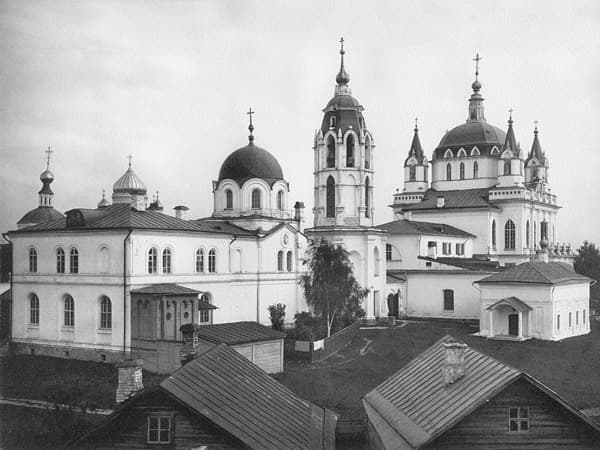
Conception Convent
The Conception Convent, also known as the Zachatyevsky Monastery, is a Russian Orthodox convent located on the Moskva River in Moscow. Originally believed to occupy the site of the oldest nunnery in Moscow, it was reestablished in 1995 after being closed by the Bolsheviks in 1918 and undergoing significant damage and repurposing during the Soviet era. Its reconstruction has seen the rebuilding of its katholikon in a Russian Revival style.

Savvino-Storozhevsky Monastery
The Savvino-Storozhevsky Monastery is a significant Russian Orthodox monastery located in Zvenigorod, west of Moscow. Founded in 1398 by Prince Yuri of Zvenigorod at the request of Saint Savva, it served as a spiritual center and a defensive outpost. The monastery later became a favored suburban residence for Tsar Alexis and continued to be visited by Russian royalty for blessings before coronations, solidifying its importance as a major religious and historical landmark.
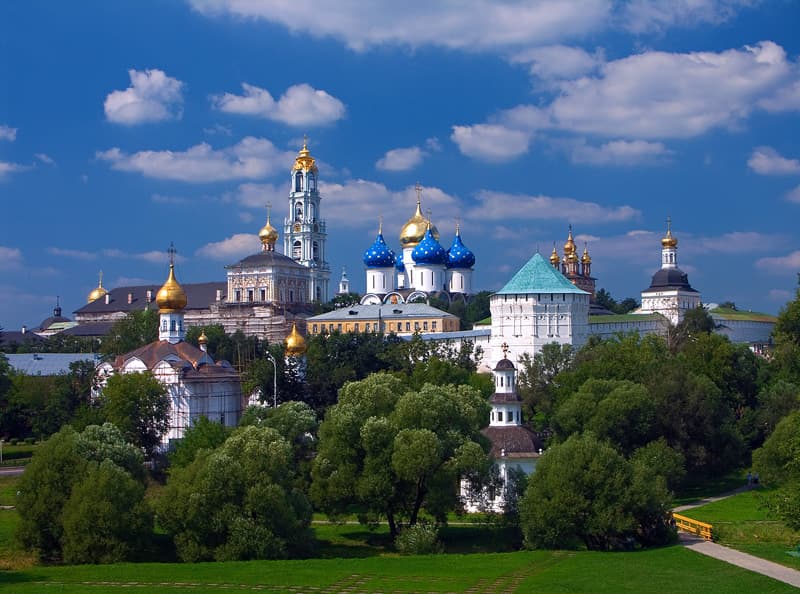
Troitse-Sergiyeva Lavra
The Trinity Lavra of St. Sergius, also known as the Trinity Monastery of St. Sergius, is the most important Russian monastery and the spiritual heart of the Russian Orthodox Church, located in Sergiyev Posad. Founded in 1337 by St. Sergius of Radonezh, it has played a pivotal role in Russian history, serving as a spiritual center, a site of royal baptisms and services, and a fortress during sieges. The monastery boasts a rich architectural heritage and is currently home to over 300 monks.