
Troitse-Sergiyeva Lavra
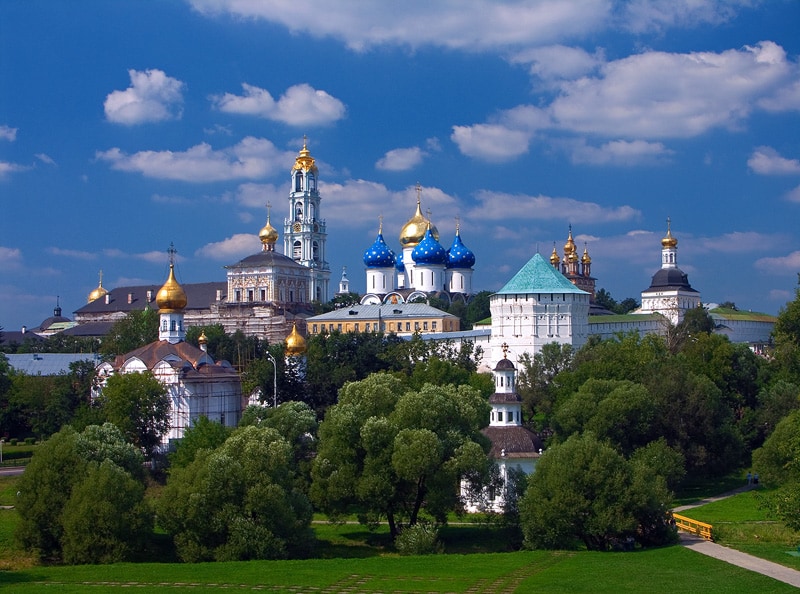
The Trinity Lavra of St. Sergius, also known as the Trinity Monastery of St. Sergius, is the most important Russian monastery and the spiritual heart of the Russian Orthodox Church, located in Sergiyev Posad. Founded in 1337 by St. Sergius of Radonezh, it has played a pivotal role in Russian history, serving as a spiritual center, a site of royal baptisms and services, and a fortress during sieges. The monastery boasts a rich architectural heritage and is currently home to over 300 monks.
Key Facts
- ›Founded in 1337 by St. Sergius of Radonezh on Makovets Hill.
- ›Served as a model for over 400 monasteries founded by Sergius's followers.
- ›The relics of St. Sergius are housed in the 15th-century Holy Trinity Cathedral.
- ›Withstood a 16-month siege by Polish-Lithuanian forces in 1608–1610.
- ›Inscribed on the UN World Heritage List in 1993.
- ›Currently houses over 300 monks.
Medieval Russian, Baroque
Relics of St. Sergius of Radonezh, Holy Trinity Cathedral, Assumption Cathedral, Baroque Belltower, Stone Walls and Twelve Towers, Refectory of St. Sergius
Trinity Lavra of St. Sergius, Holy Trinity-St. Sergius Lavra
Sergius of Radonezh, Andrei Rublev, Daniil Chyorny, Ivan Iii, Ivan the Terrible, Boris Godunov, Empress Elizabeth, Peter I, Pavel Florensky
- Founded By St. Sergius of Radonezh
- Introduction of A Charter For Auxiliary Buildings
- Support For Dmitri Donskoi In the Battle of Kulikovo
- Devastated By Fire During A Tatar Raid
- First Stone Cathedral Built By Serbian Monks
- Construction of the Church of the Holy Spirit
- Construction of the Assumption Cathedral Commissioned By Ivan the Terrible
- Built Stone Walls and Twelve Towers
- Survived A 16-Month Polish-Lithuanian Siege
- Survived An Abortive Siege By Wladyslaw Iv
- Young Peter I Found Refuge Within the Monastery
- Conferred Dignity of A Lavra By Empress Elizabeth
- Closed By the Soviet Government
- Reopened To the Russian Orthodox Church
- Inscribed On the Un World Heritage List
About Troitse-Sergiyeva Lavra
The Trinity Lavra of St. Sergius
The Trinity Lavra of St. Sergius stands as the paramount monastery in Russia and the spiritual nucleus of the Russian Orthodox Church. Located in the town of Sergiyev Posad, approximately 70 kilometers northeast of Moscow, this historic site is currently home to a vibrant community of over 300 monks.
History and Significance
The monastery's origins trace back to 1337 when St. Sergius of Radonezh, one of Russia's most revered saints, established a wooden church dedicated to the Holy Trinity on Makovets Hill. The early development of the monastic community is well-documented, and Sergius's charter, introduced in 1355, served as a blueprint for over 400 monasteries founded by his disciples across Russia. The Lavra played a critical role in supporting secular powers, notably St. Sergius's backing of Dmitri Donskoi during his struggle against the Tatars, sending monks to participate in the Battle of Kulikovo in 1380.
Architectural and Historical Development
The 15th century saw the construction of the first stone cathedral by Serbian monks, dedicated to the Holy Trinity, which now houses the relics of St. Sergius and was adorned with frescoes by renowned icon painters Andrei Rublev and Daniil Chyorny. This cathedral was a traditional site for royal baptisms and thanksgiving services. Subsequent centuries witnessed further architectural expansion and fortification. The 16th century brought the construction of the Assumption Cathedral, commissioned by Ivan the Terrible, which is larger than its Moscow Kremlin counterpart and contains the icon of the Last Supper by Simon Ushakov.
The monastery's defenses were significantly enhanced in the 1550s with the construction of 1.5 km of stone walls and twelve towers, enabling it to withstand a famous 16-month siege by Polish-Lithuanian forces in 1608–1610. The late 17th century saw the addition of numerous buildings, including a Baroque palace for patriarchs and a royal palace, alongside the expansive refectory of St. Sergius. In 1744, Empress Elizabeth elevated the cloister to the status of a Lavra, a title signifying its preeminence. The monastery also boasts a striking white-and-blue Baroque belltower, one of the tallest structures in Russia at the time of its completion.
Modern Era and Legacy
Despite being closed by the Soviet government in 1920 and its treasures dispersed or lost, the Trinity Lavra was returned to the Russian Orthodox Church in 1945. Divine services resumed in the Assumption Cathedral, and the Lavra continued to be a major center for religious education. Significant restoration efforts in the latter half of the 20th century helped preserve its rich heritage. In 1993, the Trinity Lavra was recognized for its global importance and inscribed on the UN World Heritage List. The monastery also maintains representative churches and sketes in various locations, extending its spiritual influence.
Source: Wikipedia ↗
Frequently Asked Questions
When was the Trinity Lavra of St. Sergius founded?
The monastery was founded in 1337 by St. Sergius of Radonezh. He established a wooden church on Makovets Hill, marking the beginning of this significant spiritual center.
What is the spiritual significance of the Trinity Lavra of St. Sergius?
It is considered the most important Russian monastery and the spiritual center of the Russian Orthodox Church. It has been a vital religious institution throughout Russian history.
What is the architectural style of the Trinity Lavra of St. Sergius?
The monastery showcases a variety of architectural styles reflecting its long history, including medieval Russian, Baroque, and later additions. Notable structures include the Holy Trinity Cathedral, the Assumption Cathedral, and a Baroque belltower.
Is the Trinity Lavra of St. Sergius a UNESCO World Heritage Site?
Yes, the Trinity Lavra of St. Sergius was inscribed on the UN World Heritage List in 1993, recognizing its outstanding universal value.
Who is buried at the Trinity Lavra of St. Sergius?
Notable burials at the monastery include St. Sergius of Radonezh, Tsar Boris Godunov and his family, and several Russian Patriarchs. The relics of St. Sergius are also housed there.
What historical events are associated with the Trinity Lavra of St. Sergius?
The monastery supported Dmitri Donskoi in the Battle of Kulikovo, withstood a major siege in the early 17th century, and was a refuge for young Peter I. It was closed by the Soviet government in 1920 and reopened in 1945.
Related Monasteries

Ferapontov Monastery
The Ferapontov Monastery is a historically significant Russian Orthodox monastery located in the Vologda Oblast, founded in 1398 by Saint Ferapont. It gained prominence under Saint Martinian and was favored by Ivan III's family, eventually housing invaluable frescoes by the medieval painter Dionisius, making it the last surviving Russian medieval church with fully painted walls. Though it experienced periods of decline, devastation, and closure, it was reinstituted as a convent and later transformed into a museum, recognized as a UNESCO World Heritage Site in 2000.

Novodevichy Convent
Novodevichy Convent, also known as Bogoroditse-Smolensky Monastery, is a renowned cloister in Moscow, founded in 1524 by Grand Duke Vasily III to commemorate the capture of Smolensk. It has largely retained its 17th-century appearance and is celebrated for its Moscow Baroque architecture. Recognized as a UNESCO World Heritage Site in 2004, the convent has served as a spiritual center, a defensive structure, and a place of residence for royal and noble women, while also housing museums and theological courses.
Conception Convent
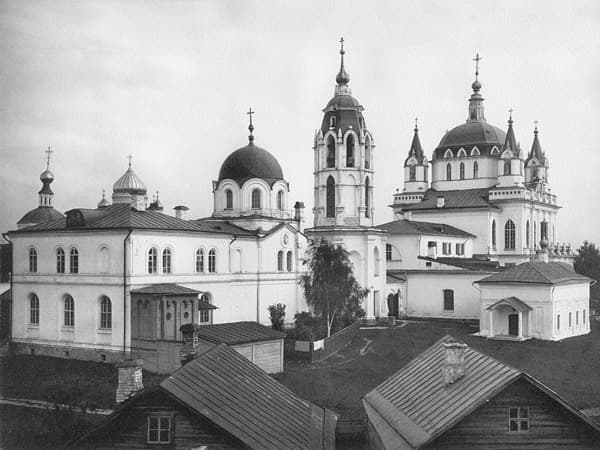
The Conception Convent, also known as the Zachatyevsky Monastery, is a Russian Orthodox convent located on the Moskva River in Moscow. Originally believed to occupy the site of the oldest nunnery in Moscow, it was reestablished in 1995 after being closed by the Bolsheviks in 1918 and undergoing significant damage and repurposing during the Soviet era. Its reconstruction has seen the rebuilding of its katholikon in a Russian Revival style.