
Ferapontov Monastery
The Ferapontov Monastery is a historically significant Russian Orthodox monastery located in the Vologda Oblast, founded in 1398 by Saint Ferapont. It gained prominence under Saint Martinian and was favored by Ivan III's family, eventually housing invaluable frescoes by the medieval painter Dionisius, making it the last surviving Russian medieval church with fully painted walls. Though it experienced periods of decline, devastation, and closure, it was reinstituted as a convent and later transformed into a museum, recognized as a UNESCO World Heritage Site in 2000.
Key Facts
- ›Founded by Saint Ferapont in 1398.
- ›Features the Cathedral of Nativity of the Virgin, built in 1490.
- ›The cathedral's interior walls are entirely covered with frescoes by Dionisius.
- ›Was a site of exile for clerics, including Patriarch Nikon.
- ›Abolished in 1798, reinstituted as a convent in 1904, and closed by Bolsheviks in 1924.
- ›Designated a UNESCO World Heritage Site in 2000.

Medieval Russian
Cathedral of Nativity of the Virgin, Frescoes By Dionisius, Annunciation Church With A Belfry, Tent-Like Church of Saint Martinian, Two-Tented Barbican Church
Saint Ferapont, Saint Martinian, Saint Cyril of Beloozero, Ivan Iii, Ivan the Terrible, Patriarch Nikon, Dionisius
- Founded By Saint Ferapont In 1398.
- Cathedral of Nativity of the Virgin Built In 1490.
- Ravaged By Poles During the Time of Troubles.
- Abolished By Emperor Paul In 1798.
- Reinstituted As A Convent In 1904.
- Closed By Bolsheviks In 1924.
- Turned Into A Museum In 1975.
- Added To the Unesco List of World Heritage Sites In 2000.
About Ferapontov Monastery
The Ferapontov Monastery is a significant historical and religious site located in Ferapontovo, Kirillovsky District, Vologda Oblast, Russia. Founded in 1398 by Saint Ferapont, the monastery played a notable role in the spiritual and cultural landscape of the Russian North.
History and Significance
The monastery's fame began to grow under Saint Martinian, a disciple of Saint Cyril of Beloozero. It enjoyed the patronage of Ivan III's family, and its most ancient structure, the Cathedral of Nativity of the Virgin, was built in 1490. This cathedral is distinguished by its fully painted interior walls, featuring invaluable frescoes by the medieval master Dionisius, making it the last surviving Russian medieval church of its kind.
During the 1530s, the complex was expanded with a treasury, refectory, and the Annunciation church with a belfry. At its height, the monastery received special privileges from Ivan the Terrible and owned considerable land. The monastery suffered damage during the Time of Troubles and was later used as a place of exile for prominent clerics like Patriarch Nikon.
Transformation and Recognition
The monastery was abolished by Emperor Paul in 1798 but was reinstituted as a convent in 1904. Following its closure by the Bolsheviks twenty years later, it was transformed into a museum in 1975. Since 1991, it has been part of the Russky Sever (Russian North) National Park. In recognition of its cultural and historical importance, the Ferapontov Monastery was designated a UNESCO World Heritage Site in 2000.
Source: Wikipedia ↗
Frequently Asked Questions
When was the Ferapontov Monastery founded?
The Ferapontov Monastery was founded in 1398 by Saint Ferapont. This marked the beginning of its long history in the Russian North.
What is the most significant artistic feature of the Ferapontov Monastery?
The most significant artistic feature is the Cathedral of Nativity of the Virgin, whose interior walls are entirely covered with invaluable frescoes by the renowned medieval painter Dionisius. This makes it the last surviving Russian medieval church with fully painted walls.
Has the Ferapontov Monastery always been active?
No, the monastery's history includes periods of closure and transformation. It was abolished in 1798, reinstituted as a convent in 1904, and then closed by the Bolsheviks in 1924. Since 1975, it has operated as a museum.
Is the Ferapontov Monastery a UNESCO World Heritage Site?
Yes, the Ferapontov Monastery was added to the UNESCO list of World Heritage Sites in 2000. This recognition highlights its outstanding universal value.
What historical figures are associated with the Ferapontov Monastery?
Saint Ferapont founded the monastery, and Saint Martinian, a disciple of Saint Cyril of Beloozero, helped spread its fame. The monastery was also favored by members of Ivan III's family and visited by Ivan the Terrible. Patriarch Nikon was exiled there during its later history.
Related Monasteries

Goritsky Monastery (Pereslavl-Zalessky)
The Goritsky Monastery of Dormition was a Russian Orthodox monastery located in Pereslavl-Zalessky, Russia. Although purportedly founded in the early 14th century, its original architecture is no longer extant. The monastery was closed in 1788, and its grounds now house the Pereslavl-Zalessky Historical Museum.

Transfiguration Monastery
The Transfiguration Monastery, also known as Spaso-Preobrazhensky Monastery, was a former Russian Orthodox monastery founded in 1192 in Staraya Russa. Initially established with a wooden church, it later saw the construction of a stone Transfiguration Church in 1198, which still exists in part. The monastery endured periods of occupation and damage, notably by Swedish troops and during World War II, leading to significant rebuilding and alterations over centuries. Today, its surviving structures house the Staraya Russa Town Museum.
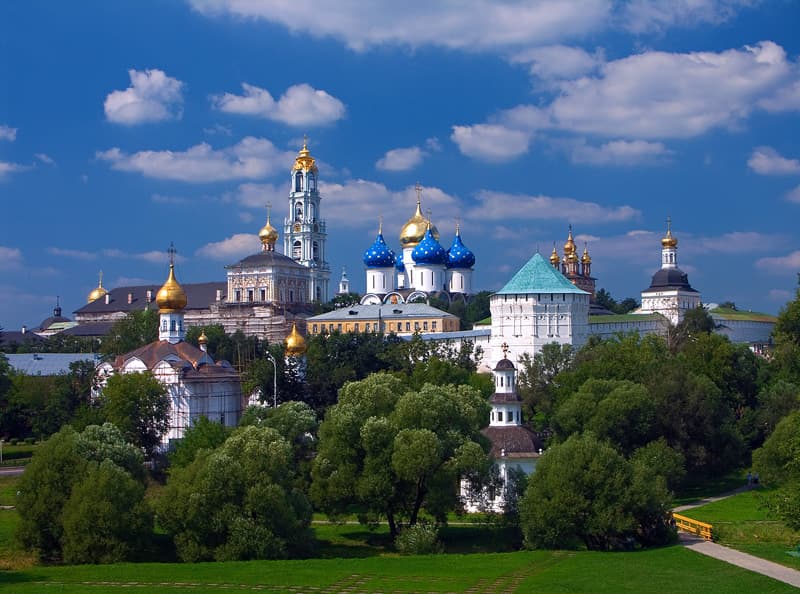
Troitse-Sergiyeva Lavra
The Trinity Lavra of St. Sergius, also known as the Trinity Monastery of St. Sergius, is the most important Russian monastery and the spiritual heart of the Russian Orthodox Church, located in Sergiyev Posad. Founded in 1337 by St. Sergius of Radonezh, it has played a pivotal role in Russian history, serving as a spiritual center, a site of royal baptisms and services, and a fortress during sieges. The monastery boasts a rich architectural heritage and is currently home to over 300 monks.