
Goritsky Monastery (Pereslavl-Zalessky)
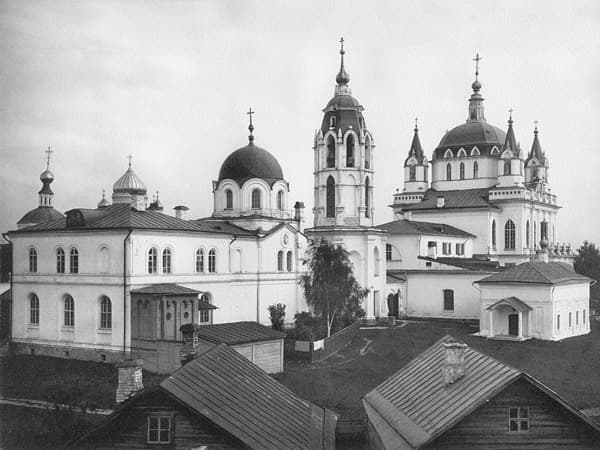
The Goritsky Monastery of Dormition was a Russian Orthodox monastery located in Pereslavl-Zalessky, Russia. Although purportedly founded in the early 14th century, its original architecture is no longer extant. The monastery was closed in 1788, and its grounds now house the Pereslavl-Zalessky Historical Museum.
Key Facts
- ›Supposedly founded in the early 14th century during the reign of Ivan I of Moscow.
- ›Destroyed in 1382 by Tokhtamysh Khan.
- ›Rebuilt after a supposed miraculous escape of Grand Princess Eudoxia of Moscow.
- ›All original manuscripts were lost in a fire on June 12, 1722.
- ›No original architecture is preserved; surviving structures date from the 17th-18th centuries.
- ›Closed in 1788 and its territory later used for the Pereslavl-Zalessky Historical Museum.

- Site of the Pereslavl-Zalessky Historical Museum
Goritsky Monastery of Dormition, успенский горицкий монастырь
Ivan I of Moscow, Tokhtamysh Khan, Grand Princess Eudoxia of Moscow
- Destruction By Tokhtamysh Khan In 1382
- Fire On June 12, 1722, Destroying Manuscripts
- Closure In 1788
- Establishment of the Pereslavl-Zalessky Historical Museum In 1919
About Goritsky Monastery (Pereslavl-Zalessky)
The Goritsky Monastery of Dormition (Russian: Успенский Горицкий монастырь) was a significant Russian Orthodox monastery situated in Pereslavl-Zalessky, Russia. Historical accounts suggest its establishment in the early 14th century, during the reign of Ivan I of Moscow, also known as Ivan Kalita. Its early history was marked by destruction in 1382 by Tokhtamysh Khan, an event from which it was reputedly rebuilt following a miraculous escape by Grand Princess Eudoxia of Moscow.
History and Significance
Little is known about the monastery's early centuries due to a catastrophic fire on June 12, 1722, which destroyed all its original manuscripts. Consequently, most historical details prior to this event are based on legend or later records. While the monastery itself was closed in 1788, its architectural ensemble, though lacking original structures, comprises buildings from the 17th and 18th centuries. In 1919, the Pereslavl-Zalessky Historical Museum was founded on the monastery's grounds, transforming the site into a center for local history and culture.
Architectural Features and Legacy
No architecture from the monastery's original founding period survives. The extant buildings date from the 17th and 18th centuries, representing later architectural periods. The monastery's historical significance lies in its long association with the spiritual and historical landscape of Pereslavl-Zalessky. Today, the site functions as a museum, preserving the memory and remnants of its monastic past while serving the public's interest in history and art.
Source: Wikipedia ↗
Frequently Asked Questions
When was the Goritsky Monastery founded?
The monastery was supposedly established in the early 14th century, during the reign of Ivan I of Moscow. However, definitive historical records are scarce due to subsequent destruction and fires.
What happened to the Goritsky Monastery?
The monastery was destroyed by Tokhtamysh Khan in 1382. It was later rebuilt, but all its manuscripts were lost in a fire in 1722. The monastery was officially closed in 1788.
Is any of the original architecture of the Goritsky Monastery still standing?
No original architecture from the monastery's early period has been preserved. The oldest parts of the ensemble that can be seen today date from the 17th and 18th centuries.
What is at the site of the Goritsky Monastery now?
Following its closure, the Pereslavl-Zalessky Historical Museum was established within the monastery's territory in 1919. The site now serves as a cultural and historical institution.
Related Monasteries

Ferapontov Monastery
The Ferapontov Monastery is a historically significant Russian Orthodox monastery located in the Vologda Oblast, founded in 1398 by Saint Ferapont. It gained prominence under Saint Martinian and was favored by Ivan III's family, eventually housing invaluable frescoes by the medieval painter Dionisius, making it the last surviving Russian medieval church with fully painted walls. Though it experienced periods of decline, devastation, and closure, it was reinstituted as a convent and later transformed into a museum, recognized as a UNESCO World Heritage Site in 2000.

Transfiguration Monastery
The Transfiguration Monastery, also known as Spaso-Preobrazhensky Monastery, was a former Russian Orthodox monastery founded in 1192 in Staraya Russa. Initially established with a wooden church, it later saw the construction of a stone Transfiguration Church in 1198, which still exists in part. The monastery endured periods of occupation and damage, notably by Swedish troops and during World War II, leading to significant rebuilding and alterations over centuries. Today, its surviving structures house the Staraya Russa Town Museum.
Conception Convent
The Conception Convent, also known as the Zachatyevsky Monastery, is a Russian Orthodox convent located on the Moskva River in Moscow. Originally believed to occupy the site of the oldest nunnery in Moscow, it was reestablished in 1995 after being closed by the Bolsheviks in 1918 and undergoing significant damage and repurposing during the Soviet era. Its reconstruction has seen the rebuilding of its katholikon in a Russian Revival style.