
Vujan Monastery
Vujan Monastery is a Serbian Orthodox Church monastery situated on the wooded slopes of Mount Vujan in Prislonica, Serbia. It was rebuilt in 1805 near the foundations of a medieval monastery abandoned in the late 16th century. The monastery is recognized as a cultural monument of great importance and has historical ties to prominent figures of Serbian uprisings and the Obrenović dynasty.
Key Facts
- ›Rebuilt in 1805 by Nikola MILIćević Lunjevica, a participant in the Takovo uprising.
- ›The konak (monastic residence) was constructed in 1853 at the request of Prince Alexander Karađorđević.
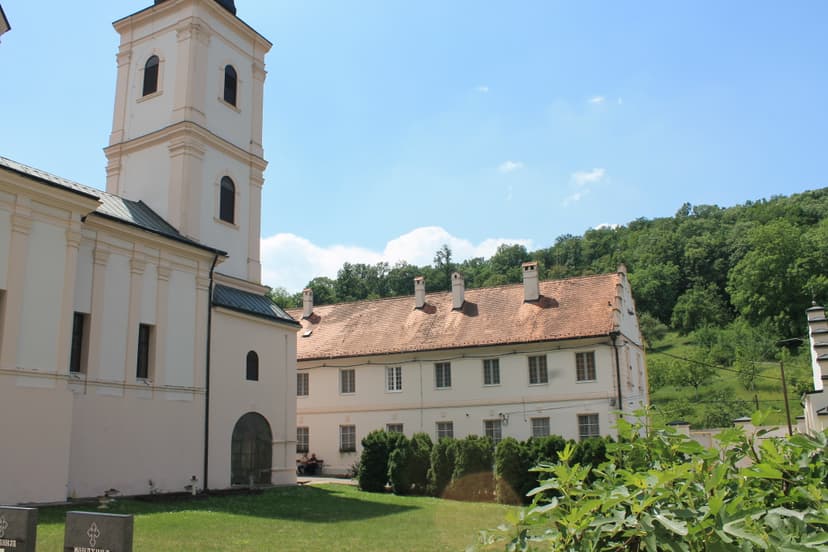
- ›The church features a single nave, semicircular apse, and a bell tower adorned with decorative friezes and lion motifs.
- ›Voivode Lazar Mutap-Čačanin, a hero of the Serbian uprisings, is buried in the narthex.
- ›The monastery is a designated cultural monument of great importance in Serbia.

Serbian Orthodox
Wooded Slopes of Mount Vujan, Fresco Dating From 1808, New Iconostasis Installed 1939-1943, Open Wooden Porch
манастир вујан
Nikola MilićEvić Lunjevica, Draga MašIn, Lazar Mutap-čAčAnin, Alexander KarađOrđEvić, Djurdjija Lunjevica, Panta Lunjevica
Rebuilt In 1805, Konak Built In 1853, Renovated In 1858, Church Restoration Between 1939 and 1943
About Vujan Monastery
Vujan Monastery is a significant Serbian Orthodox Church monastery nestled on the verdant slopes of Mount Vujan, near Prislonica, Serbia. Recognized as a cultural monument of great importance, its history is intertwined with key moments in Serbian national and dynastic history.
History and Significance
The monastery stands near the site of the medieval Obrovin Monastery, which fell into disuse by the late 16th century. The current structure was revitalized in 1805 by Nikola Milićević Lunjevica, a notable figure in the Takovo uprising. His family ties extended to royalty, as he was the grandfather of Draga Mašin, the final queen of the Obrenović dynasty; his grandmother was interred within the monastery's church. The voivode Lazar Mutap-Čačanin, a celebrated hero of the Serbian uprisings against Ottoman rule, found his final resting place in the church's narthex. The main monastic residence, known as the konak, was erected in 1853, commissioned by Prince Alexander Karađorđević. Further renovations and additions were undertaken in 1858 by Nikola's widow, Djurdjija Lunjevica, and their son, Panta Lunjevica. The monastery grounds became a burial site for most members of the Milićević-Lunjevica family, with the notable exception of Queen Draga, who was buried in Belgrade.
Architecture and Art
The monastery church is characterized by a single nave that extends into a semicircular apse, fronted by a narthex from which a tall bell tower rises. An open wooden porch enhances its design. The exterior facades are subtly ornamented with a profiled serrated frieze beneath the roof cornice and striking depictions of lions grasping human heads on the bell tower's flanks. The building material consists of crushed and cut stones, covered with plaster. Inside, a fresco from 1808, originally by painters Stojan and Jeremije, was later meticulously copied by Rafailo Marković during the church's restoration between 1939 and 1943. A new iconostasis was also installed during this period.
Source: Wikipedia ↗
Frequently Asked Questions
When was Vujan Monastery founded?
The current monastery was rebuilt in 1805. It is located near the foundations of an older monastery, Obrovin Monastery, which was founded in the Middle Ages but abandoned at the end of the 16th century.
Who rebuilt Vujan Monastery?
The monastery was rebuilt in 1805 by Nikola Milićević Lunjevica, who was involved in the Takovo uprising. His grandmother was also buried in the church of the new monastery.
What notable historical figures are associated with Vujan Monastery?
Voivode Lazar Mutap-Čačanin, a hero of the Serbian uprisings, is buried in the narthex of the church. Nikola Milićević Lunjevica, who rebuilt the monastery, was the grandfather of Draga Mašin, the last queen of the Obrenović dynasty.
What is the architectural style of Vujan Monastery's church?
The church has a single nave with a semicircular apse and a narthex topped by a bell tower. Facade decorations include a serrated frieze and depictions of lions holding human heads on the bell tower sides.
Is Vujan Monastery a protected cultural site?
Yes, Vujan Monastery is included in the list of cultural monuments of great importance of the Republic of Serbia, signifying its historical and artistic value.
Related Monasteries
Beočin Monastery
Beočin Monastery is a Serbian Orthodox monastery situated on Fruška Gora mountain in Vojvodina, Serbia. While its exact founding date is unknown, it was first documented in 1566/1567. The monastery has undergone significant reconstruction, particularly between 1732 and 1740 for its church and in 1762 for its bell tower, and was declared a Monument of Culture of Exceptional Importance in 1990.

Berkasovo Monastery
The Berkasovo Monastery, dedicated to Saint Petka Trnovska, is a Serbian Orthodox monastery situated near the village of Berkasovo in Serbia's Srem region. Established as a monastery on August 8, 2008, its current church was founded in the latter half of the 19th century, built around a sacred spring believed to possess healing properties. Historically, the area was significant, with mentions of a fortified town in the possession of notable figures like Vuk Grgurević and Jovan Branković.

Bođani Monastery
Bođani Monastery is the oldest Serbian Orthodox monastery in the Bačka region of Vojvodina, Serbia, founded in 1478. According to tradition, it was established by a merchant named Bogdan who regained his sight after washing in a local spring. The monastery has undergone numerous reconstructions due to damage from wars, fires, and floods, with the current church dating to 1722. It is renowned for its Baroque architecture and extensive frescoes by Hristofor Žefarović, which are considered a significant contribution to Serbian art.