
Vranjina Monastery
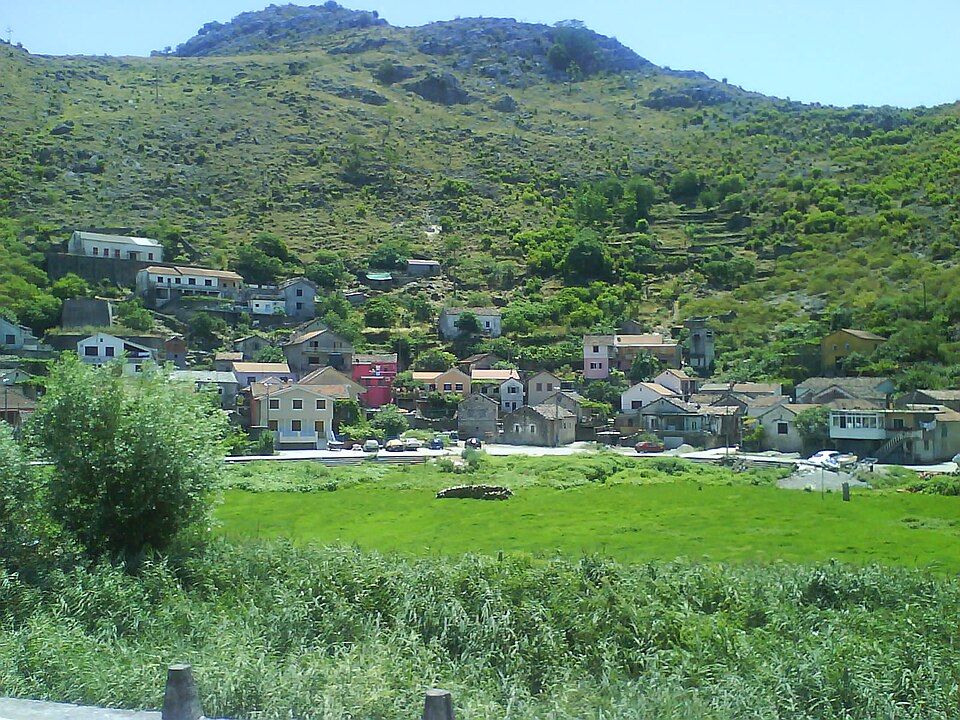
Vranjina Monastery, also known as the Monastery of St. Nicholas, is a historic Serbian Orthodox monastery situated on Vranjina island in Skadar Lake, Montenegro. First mentioned in the early 13th century, it was a significant religious and political center, receiving substantial endowments from Serbian rulers. Despite being completely destroyed multiple times, particularly in the 19th century, the monastery has been consistently rebuilt, most recently in 1886, and continues to hold religious importance.
Key Facts
- ›Originally built on the ruins of a 6th-century Byzantine church.
- ›First mentioned in the founding charter of Archbishop Sava Nemanjić in 1232/33.
- ›Received significant land and income grants from the Nemanjić, BalšIć, and Crnojević noble families.
- ›Served as a temporary seat for the Metropolitanate of Zeta in the late 15th century.
- ›Completely destroyed in attacks during the 19th century and rebuilt in 1886.
- ›Comprises a church dedicated to Saint Nicholas, a larger lodge, and a smaller lodge.
Church Dedicated To Saint Nicholas, Church Dedicated To the Theotokos, Church Dedicated To Saint Sava, Monastic Graveyard
Monastery of St. Nicholas
Sava Nemanjić, Ilarion, Stefan Vladislav, Helen of Anjou, Stefan Milutin, Stefan DušAn, đUrađ Stracimirović, BalšA Iii, Stefan Crnojević, Nikon Jerusalimac, Jelena Lazarević, Ivan Crnojević, Mehmed the Conqueror, Skenderbeg Crnojević, PjetëR Bogdani, Nikolaj From Podgori, Ratko Orlandić, Osman Pasha Skopljak, Nicholas of Montenegro, Alexander Iii of Russia, Amfilohije Radović
- Mentioned In Archbishop Sava Nemanjić's Charter
- Received Endowments From Nemanjić Dynasty
- Granted Estates By BalšIć and Crnojević Families
- Assembly Organized By Stefan Crnojević
- Served As Temporary Seat of the Metropolitanate of Zeta
- Attacked and Set On Fire By Ottoman Forces
- Destroyed In Attacks
- Rebuilt By Prince Nicholas
- Church Lodge Burnt Down
- Smaller Lodge Built
- Reconstruction of Larger Lodge Began
About Vranjina Monastery
Vranjina Monastery, also known as the Monastery of St. Nicholas, is a significant Serbian Orthodox monastic complex located on the island of Vranjina in Skadar Lake, Montenegro. Its history dates back to the early 13th century, making it one of the oldest monasteries in the region. The monastery's church is dedicated to Saint Nicholas, and it was originally built on the foundations of a 6th-century Byzantine church.
History and Significance
The monastery's foundation is closely linked to Archbishop Sava Nemanjić, the first primate of the autocephalous Serbian Church, who is credited with its establishment or that of his disciple, Bishop Ilarion. Throughout the medieval period, Vranjina Monastery was a recipient of substantial land and income grants from prominent Serbian ruling dynasties, including the Nemanjić, Balšić, and Crnojević families. These endowments solidified its importance not only as a spiritual center but also as an economic and political entity.
During the late 15th century, Vranjina Monastery briefly served as the seat of the Metropolitanate of Zeta, highlighting its crucial role in the ecclesiastical administration of the time. However, its strategic location and wealth also made it a target. The monastery suffered severe destruction multiple times, notably during Ottoman incursions in the 18th and 19th centuries. The attacks in 1843 and 1862 led to its complete ruin.
Reconstruction and Modern Status
Despite its repeated destruction, the monastery has been a site of resilience and continuous rebuilding. The current church was reconstructed in 1886 under the patronage of Prince Nicholas of Montenegro, with support from Russian Emperor Alexander III. Further renovations and constructions have taken place in recent decades, including the building of lodges and ongoing reconstruction efforts. Today, Vranjina Monastery continues to function as an active religious community and is accessible to visitors, preserving its rich historical and spiritual legacy on the shores of Skadar Lake.
Source: Wikipedia ↗
Frequently Asked Questions
When was Vranjina Monastery first established?
The monastery is believed to have been founded after 1221, possibly by Archbishop Sava Nemanjić himself or his disciple Bishop Ilarion. It was first mentioned in a charter from 1232/33.
What is the religious affiliation of Vranjina Monastery?
Vranjina Monastery is a Serbian Orthodox monastery.
What historical events led to the destruction of Vranjina Monastery?
The monastery was severely damaged and destroyed multiple times due to conflicts. It was set on fire by Ottoman forces in 1714 and completely destroyed in attacks in 1843 and again in 1862.
Who was instrumental in the rebuilding of Vranjina Monastery?
Prince Nicholas of Montenegro had the church rebuilt in 1886 with assistance from Russian Emperor Alexander III. A smaller lodge was built in 1998, and reconstruction of a larger lodge began in 2010.
What is the significance of Vranjina Monastery in Montenegrin history?
It was one of the oldest monasteries in Montenegro and a significant religious and political center, especially during the Nemanjić era. It also served as a temporary seat for the Metropolitanate of Zeta.
Related Monasteries

Dovolja Monastery
The Dovolja Monastery is a Serbian Orthodox monastery situated on the right bank of the Tara River near Pljevlja, Montenegro. Believed to have been founded by King Stefan Milutin at the end of the 13th century, it was first documented in 1513 and is dedicated to the Assumption of the Holy Mother of God. The monastery is ecclesiastically administered by the Eparchy of Mileševa, and at some point after 1699, the relics of Archbishop Arsenije I were transferred from Dovolja to Dobrilovina Monastery.
Đurđevi Stupovi Monastery
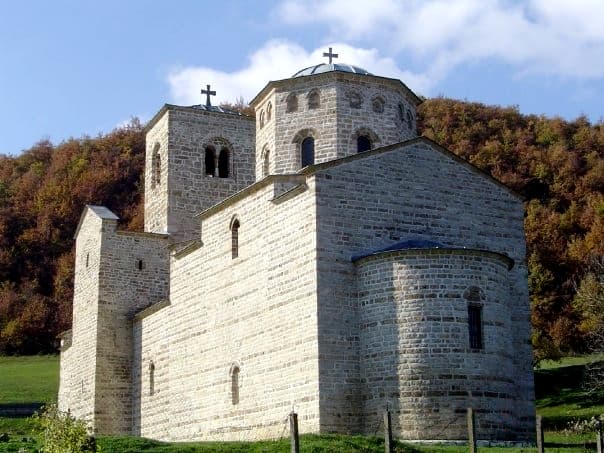
Đurđevi Stupovi Monastery is a Serbian Orthodox monastery located in Berane, Montenegro. Founded in 1213 by Stefan Prvoslav, it served as the episcopal seat for the Eparchy of Budimlja for centuries and continues to be a significant religious center today. The monastery is characterized by its historical importance as a spiritual and administrative hub for the region.

Morača Monastery
Morača Monastery is a significant Serbian Orthodox monastery located in central Montenegro, founded in 1252 by Stefan Vukanović of the Nemanjić dynasty. Recognized as one of Montenegro's finest medieval monuments, it features Rascian-style architecture with Romanesque portals and important frescoes dating from the 13th and 16th centuries, including depictions of the life of Prophet Elias and the Last Judgment. Despite suffering damage from Ottoman incursions, it has undergone reconstructions and remains a vital historical and religious site.