
Vanevan Monastery
Vanevan Monastery is an Armenian Apostolic monastery located in the Gegharkunik Province of Armenia, southeast of Lake Sevan. Its main church, Saint Grigor, was constructed in 903 by Prince Shapuh Bagratuni and his sister Mariam. The monastery holds historical significance as the burial site of King Smbat I of Armenia and is noted for its distinct architectural features, particularly in the design of its churches.
Key Facts
- ›The main church, Saint Grigor, was built in 903 by Prince Shapuh Bagratuni and his sister Mariam.
- ›King Smbat I of Armenia was buried at Vanevan Monastery in 914.
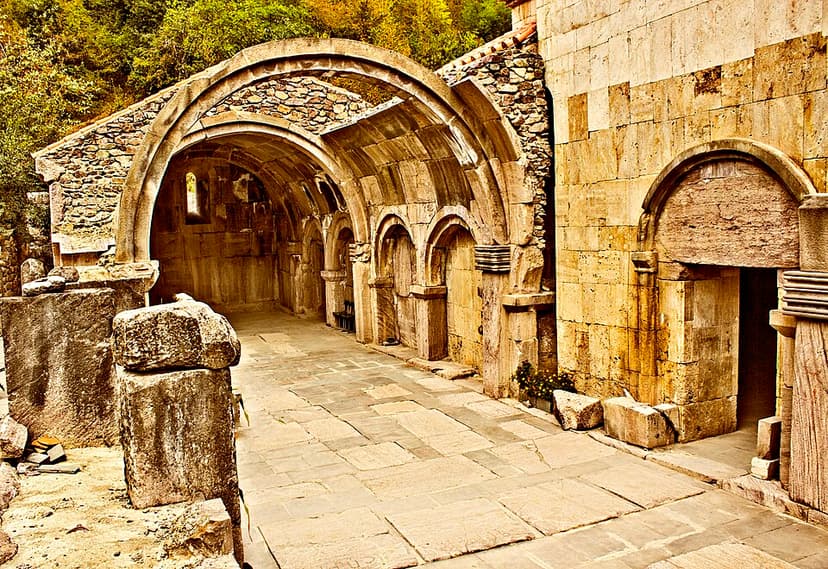
- ›The church features a unique architectural design with four progressively widening central arches.
- ›The drum of Saint Grigor's church is octagonal both internally and externally.
- ›A surrounding wall was built during a late 10th-century restoration by King Gagik I.

Armenian
- Spring and Cave Behind the Monastery, Said To Be An Escape Route
- Large, Broken Khachkar Monument Nearby
- Early Cemetery and Church Remains In the Vicinity
վանեվան
Prince Shapuh Bagratuni, Mariam Bagratuni, King Smbat I of Armenia, King Gagik I of the Bagratid Dynasty
- Construction of the Main Church In 903
- Burial of King Smbat I In 914
- Restoration and Construction of A Surrounding Wall In the Late 10th Century
About Vanevan Monastery
Vanevan Monastery is an Armenian Apostolic religious site located in the Gegharkunik Province of Armenia, situated along a gorge south of the village of Artsvanist and southeast of Lake Sevan. The monastery's primary structure, the Church of Saint Grigor, was constructed in 903 by Prince Shapuh Bagratuni and his sister Mariam, who were related to King Smbat I of Armenia. While the main church dates to the early 10th century, the gavit situated between two churches was added at a later period. The monastery is historically significant as the burial place of King Smbat I, who was interred there in 914.
Architecture and Features
The architecture of Vanevan Monastery is notable for its churches, particularly the Church of Saint Grigor. This church exhibits a distinctive design characterized by four central arches that progressively widen, a feature also found in the contemporary Tatev Monastery, suggesting shared architectural influences or builders. The drum of Saint Grigor's church is octagonal both on the interior and exterior, with an inscription on the latter that helps date the structure. While the dome on the main church remains, the drum and dome of the other church have collapsed.
Behind the monastery, a spring and cave are present, which historical accounts suggest were once utilized as an escape route from invaders. In the vicinity, a large, though now broken, khachkar monument stands to the east. Nearby archaeological findings include an early cemetery and the remains of another church just south of Artsvanist, along with other early medieval churches and the cyclopean fortress of Bruti Berd, indicating a rich historical landscape in the region.
Source: Wikipedia ↗
Frequently Asked Questions
When was Vanevan Monastery founded?
The main church of Vanevan Monastery, dedicated to Saint Grigor, was built in 903. Other structures like the gavit were added at a later point.
Who built Vanevan Monastery?
The main church of Saint Grigor was built by Prince Shapuh Bagratuni and his sister Mariam, who were siblings of King Smbat I. The monastery was later restored by King Gagik I of the Bagratid dynasty.
What is the architectural style of Vanevan Monastery?
The monastery's architecture is characterized by its churches, featuring four central arches that widen progressively, a design also seen in Tatev Monastery. Saint Grigor's drum is octagonal both inside and out.
Is Vanevan Monastery a significant historical site?
Yes, Vanevan Monastery is historically significant as the burial place of King Smbat I of Armenia, who died in 914. It also showcases early examples of specific architectural techniques.
Where is Vanevan Monastery located?
Vanevan Monastery is situated along a gorge south of the village of Artsvanist, in the Gegharkunik Province of Armenia, southeast of Lake Sevan.
Related Monasteries

Marmashen Monastery
Marmashen Monastery is a 10th-century Armenian monastic complex located in the Shirak Province of Armenia, near the village of Marmashen. The complex comprises five churches and exhibits architectural styles similar to those of Khtzkonk Monastery. It was constructed by Vahram Pahlavouni, a significant figure in Armenian history.

Tsakhats Kar Monastery
Tsakhats Kar Monastery is an Armenian monastic complex located in the Vayots Dzor Province of Armenia, overlooking the Yeghegis River. Founded in the 10th century during the Bagratid kingdom, it served as a significant medieval educational institution, particularly for painting. The monastery is divided into two groups of structures, with the western section now largely in ruins, and features several churches, including Surb Hovhannes and Surb Karapet, along with numerous khachkars.
Vahanavank
Vahanavank is a 10th-11th century Armenian Apostolic cathedral located in the Syunik Province of Armenia, west of Kapan. Founded by Prince Vahan Nakhashinogh, it served as a religious and educational center for the kings of Syunik and housed a spiritual school. The monastery complex includes the oldest church, Surb Grigor Lusavorich, built in 911, and later additions like the Surb Astvatsatsin church.