
Vahanavank
Vahanavank is a 10th-11th century Armenian Apostolic cathedral located in the Syunik Province of Armenia, west of Kapan. Founded by Prince Vahan Nakhashinogh, it served as a religious and educational center for the kings of Syunik and housed a spiritual school. The monastery complex includes the oldest church, Surb Grigor Lusavorich, built in 911, and later additions like the Surb Astvatsatsin church.
Key Facts
- ›Founded in the early 10th century by Prince Vahan Nakhashinogh.
- ›The oldest structure is the church of Surb Grigor Lusavorich, built in 911.
- ›Served as the religious center for the kings of Syunik in the 11th century.
- ›Housed a spiritual school for young boys from various provinces.
- ›Features include a domed hall church, vestibule, portico, and khachkars.
- ›Restoration efforts began in 1978 but were not fully completed.
Armenian
Surb Grigor Lusavorich Church, Surb Astvatsatsin Church, Vestibule, Portico, Khachkars, Bronze Age Grave Field, Spiritual School
Prince Vahan Nakhashinogh, Prince Gagik of Kapan, Stepanos Orbelian, Vahan Jevanshir Ii, Queen Shahandukht Ii of Syunik, Katan
- Building of Surb Grigor Lusavorich Church
- Establishment of A Spiritual School
- Vahan Jevanshir Ii Becoming Bishop of Syunik and Catholicos
- Building of Surb Astvatsatsin Church
- Restoration Efforts Began
About Vahanavank
Vahanavank is a significant historical Armenian Apostolic religious complex located in the Syunik Province of Armenia, situated about 5 kilometers west of the town of Kapan. The site, which predates the monastery with a Bronze Age grave field from the 13th-11th centuries BCE, was developed into a monastic center in the 10th century.
History and Construction
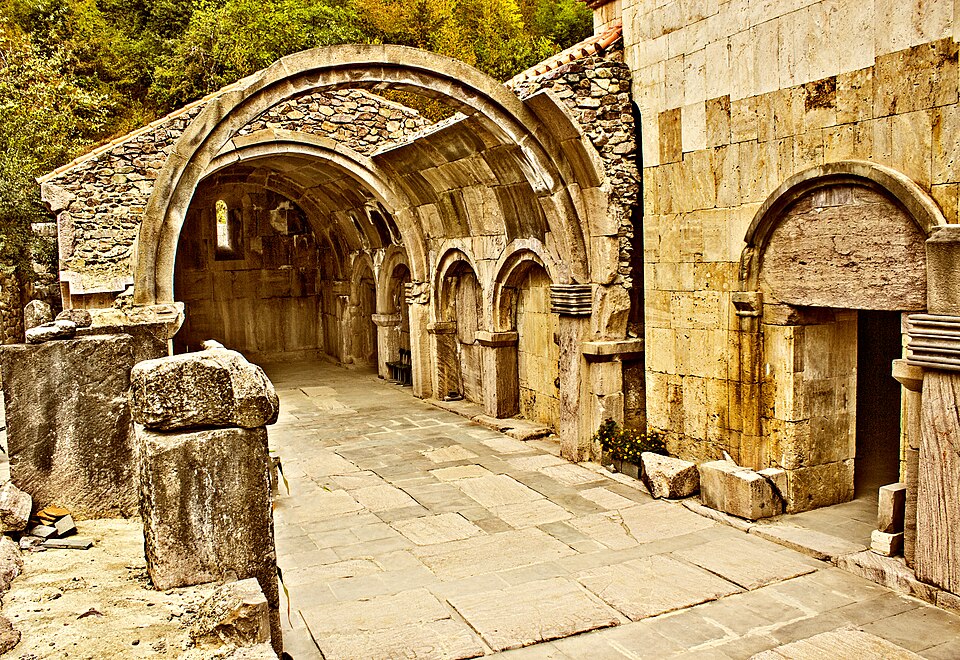
The monastery's origins trace back to Prince Vahan Nakhashinogh, son of Prince Gagik of Kapan, who founded it in the early 10th century. According to historian Stepanos Orbelian, Prince Vahan adopted a monastic life to overcome demonic possession. In 911, he established the oldest structure at the site, the church of Surb Grigor Lusavorich, a domed hall building with a main temple and sacristies. Prince Vahan himself was buried near the church's entrance. The complex also features a vestibule and portico, dating to the first half of the 10th century, which served as burial sites for the kings and princes of Syunik. The cornices of the vestibule are adorned with vegetal and animal motifs.
Religious and Educational Center
During the 11th century, Vahanavank rose to prominence as the religious heart for the Syunik dynasty. A spiritual school was established within the monastery, educating young boys from Baghk and surrounding regions. Notably, Prince Vahan Nakhashinogh's nephew, Vahan Jevanshir II, received his education here before ascending to become the Bishop of Syunik around 940 and later the Catholicos around 960. In 1086, Queen Shahandukht II of Syunik and her sister Katan commissioned the church of Surb Astvatsatsin as their family burial site and also constructed the southern entrance and a vestibule for this church.
Later Developments and Status
Alongside the main churches, Vahanavank also contains various household buildings, khachkars, and tombstones that date from the 10th to 11th centuries. Restoration efforts commenced at the monastery in 1978, concluding in 1990, though these were not fully completed. Today, Vahanavank stands as a historical monument, with many of its structures in a state of ruin, reflecting its long and rich past as a vital spiritual and cultural hub.
Source: Wikipedia ↗
Frequently Asked Questions
When was Vahanavank founded?
Vahanavank was founded in the early 10th century by Prince Vahan Nakhashinogh. The oldest surviving structure, the church of Surb Grigor Lusavorich, was built in the year 911.
Where is Vahanavank located?
Vahanavank is located approximately 5 kilometers west of the town of Kapan in the Syunik Province of Armenia. It is situated at the foot of Tigranasar mountain along the right bank of the Voghdji River.
What is the significance of Vahanavank?
Vahanavank was a significant religious and educational center, particularly for the kings of Syunik in the 11th century. It also hosted a spiritual school where young boys received education.
What are the notable structures within Vahanavank?
The oldest structure is the domed hall church of Surb Grigor Lusavorich. Other notable parts include the vestibule, portico, and the church of Surb Astvatsatsin, built as a burial site.
Who was Prince Vahan Nakhashinogh?
Prince Vahan Nakhashinogh was the founder of Vahanavank and the son of Prince Gagik of Kapan. Historical accounts suggest he took on a monk's lifestyle to cure himself of demonic possession before building the monastery.
Related Monasteries

Marmashen Monastery
Marmashen Monastery is a 10th-century Armenian monastic complex located in the Shirak Province of Armenia, near the village of Marmashen. The complex comprises five churches and exhibits architectural styles similar to those of Khtzkonk Monastery. It was constructed by Vahram Pahlavouni, a significant figure in Armenian history.

Tsakhats Kar Monastery
Tsakhats Kar Monastery is an Armenian monastic complex located in the Vayots Dzor Province of Armenia, overlooking the Yeghegis River. Founded in the 10th century during the Bagratid kingdom, it served as a significant medieval educational institution, particularly for painting. The monastery is divided into two groups of structures, with the western section now largely in ruins, and features several churches, including Surb Hovhannes and Surb Karapet, along with numerous khachkars.

Vanevan Monastery
Vanevan Monastery is an Armenian Apostolic monastery located in the Gegharkunik Province of Armenia, southeast of Lake Sevan. Its main church, Saint Grigor, was constructed in 903 by Prince Shapuh Bagratuni and his sister Mariam. The monastery holds historical significance as the burial site of King Smbat I of Armenia and is noted for its distinct architectural features, particularly in the design of its churches.