
Valmagne Abbey
Christian·France·Active vineyard and tourist site; church functions as wine cave·12th century
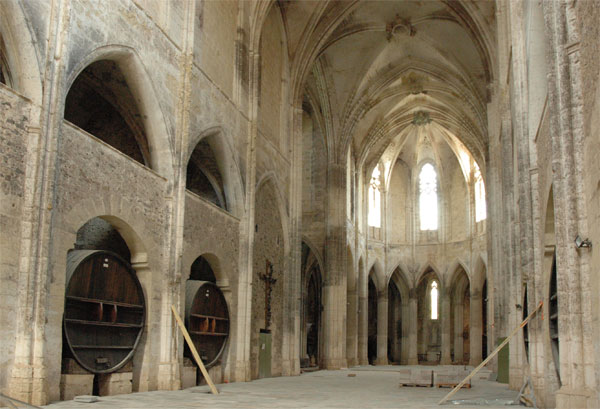
Valmagne Abbey, located near Villeveyrac in south-central France, began as a Benedictine monastery in 1138 before transitioning to the Cistercian Order in 1159. It flourished as one of the wealthiest monasteries in southern France, housing nearly 300 monks at its peak. Though devastated by the Black Death and subsequent wars, it survived the French Revolution and its church was converted into a wine cave, a function it still serves today.
Key Facts
- ›Founded as a Benedictine abbey in 1138, later becoming Cistercian in 1159.
- ›Reached its zenith between the 12th and 14th centuries, becoming one of southern France's richest monasteries.
- ›At its peak, it was home to nearly 300 monks.
- ›The current abbey church was constructed in the Gothic style starting in 1257.
- ›The abbey church has been used as a wine cave since 1791.
- ›The monastery's vineyard, established in the 12th century, continues to operate today.
Romanesque, Gothic
Gothic Abbey Church, Groin Vaulted Cloister, Chapter House With Single-Span Vaulted Roof, Octagonal Lavabo, Active Vineyard
Abbaye De Valmagne
Raymond Trencavel, Pope Hadrian Iv, Pierre, Monsieur Granier-Joyeuse, Count Henri-AméDéE-Mercure De Turenne
- Founded As Benedictine
- Attached To Cistercian Order
- Devastated By the Black Death
- Attacks and Looting During the Hundred Years' War
- Attack By Huguenots
- Confiscated By the State and Sold
- Converted Into A Wine Cave
About Valmagne Abbey
Valmagne Abbey, known in French as Abbaye de Valmagne, is a significant historical site located near Villeveyrac in the Hérault department of south-central France. Originally established in 1138 as a Benedictine monastery, it underwent a pivotal transition in 1159 when it became affiliated with the Cistercian Order under the authority of Pope Hadrian IV. This affiliation marked the beginning of a period of substantial growth and prosperity.
History and Significance
Under Cistercian rule, Valmagne Abbey experienced a golden age, becoming one of the wealthiest monastic institutions in southern France. Local benefactors endowed the abbey with lands and funds, allowing for significant expansion of its buildings and the establishment of a considerable vineyard. At its zenith, the abbey was home to nearly 300 monks. The abbey church, initially Romanesque, was rebuilt on a grander scale in the Gothic style, commencing in 1257 and completed over the subsequent four decades.
The abbey's fortunes waned with the arrival of the Black Death in 1348, which decimated its monastic population. Further challenges arose during the Hundred Years' War and the French Wars of Religion, with the abbey suffering from mercenary attacks, looting, and damage, including a severe assault by Huguenots in 1575. The appointment of external abbots from 1477 onwards also contributed to a decline in religious observance and the abbey's overall stability. Despite preservation efforts in the 17th century, many windows were bricked up due to lack of funds for proper repair.
During the French Revolution, Valmagne Abbey faced its final major upheaval. The monastery was confiscated by the state, and its last three monks departed in 1790. In 1791, the property was sold to Monsieur Granier-Joyeuse, who ingeniously converted the magnificent abbey church into a wine cave. This unique transformation, utilizing the vast space for maturing wine in large barrels, has persisted to the present day. The abbey has remained in the same family ownership since its acquisition by Count Henri-Amédée-Mercure de Turenne in 1838.
Architectural Features and Legacy
The abbey church stands as a testament to Gothic architecture, measuring 83 meters in length. Its design includes a nave, transept, and nine radiating chapels off a semi-circular ambulatory, with a narthex flanked by defensive towers. The cloister, characterized by groin vaults, surrounds a central garden courtyard and is notable for its chapter house, which features an unusual single-span vaulted roof without the typical internal columns. An open octagonal structure on the south side of the cloister houses a lavabo, fed by a spring, where monks could perform ritual cleansing before meals.
The vineyard, originally planted by the Cistercian monks in the 12th century, continues to be cultivated and now covers 75 hectares, with a portion classified under the AOC appellation. Valmagne Abbey, while no longer housing an active monastic community, functions as a well-preserved historical monument and a working winery, attracting visitors interested in its rich history, architecture, and viticultural heritage.
Source: Wikipedia ↗
Frequently Asked Questions
When was Valmagne Abbey founded?
Valmagne Abbey was founded in 1138 by Raymond Trencavel, Vicomte de Béziers. Initially, it was a Benedictine abbey, but it later joined the Cistercian Order in 1159.
What religious order was Valmagne Abbey part of?
Valmagne Abbey was founded as a Benedictine monastery. However, in 1159, it was attached to the Cistercian Order, adopting the rule of Saint Bernard and becoming a daughter house of Bonnevaux Abbey.
What is the current function of the Valmagne Abbey church?
Following its confiscation during the French Revolution, the abbey church was sold and converted into a wine cave in 1791. It continues to serve this purpose today, with large barrels used for maturing wine.
What historical events impacted Valmagne Abbey?
The abbey was significantly impacted by the Black Death in 1348, which led to many deaths and the flight of monks. It also suffered from attacks and looting during the Hundred Years' War and the French Wars of Religion, with a notable attack by Huguenots in 1575.
Who owns Valmagne Abbey now?
After being confiscated by the state, Valmagne Abbey was sold to Monsieur Granier-Joyeuse in 1791. Upon his death in 1838, it was acquired by Count Henri-Amédée-Mercure de Turenne and has remained in the same family since.
What are some notable architectural features of Valmagne Abbey?
The present abbey church, built in the Gothic style, features a nave, transept, and nine radiating chapels. The cloister is groin vaulted and surrounds a garden courtyard, with unique features like a chapter house with a single-span vaulted roof and an octagonal lavabo structure.
Related Monasteries
Abbey of Loc-Dieu
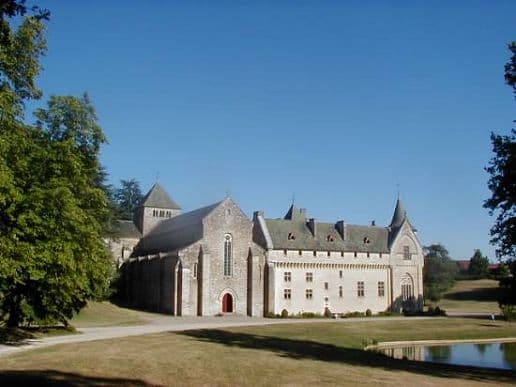
Abbey of Loc-Dieu is a Cistercian abbey situated in Aveyron, France, founded in 1123 on a site historically known as "devil's place" before being renamed "place of God" by its monastic inhabitants. Despite facing destruction and rebuilding, it became a significant Gothic architectural site and, during World War II, served as a safe haven for artworks from the Louvre, including the Mona Lisa. Today, the abbey and its park are open to the public.

Cadouin Abbey
Cadouin Abbey was a Cistercian monastery founded in 1115 as a hermitage. It rose to prominence as a major pilgrimage site due to its possession of a relic believed to be the Sudarium of Christ, attracting significant prestige and wealth. The abbey was dissolved during the French Revolution in 1791, with its assets looted and library destroyed, though its church still remains.

Flaran Abbey
Flaran Abbey, a former Cistercian monastery located near Valence-sur-Baïse in Gers, France, was founded in 1151 as a daughter house of Escaladieu Abbey. It flourished in the Middle Ages, even co-founding the town of Valence-sur-Baïse, but suffered damage during historical conflicts and was suppressed during the French Revolution. Today, after extensive restoration, it stands as one of the best-preserved abbeys in southwestern France and hosts cultural activities and an exhibition on the Way of St. James.