
Tronoša Monastery
Tronoša Monastery is a Serbian Orthodox monastery located in western Serbia, ecclesiastically part of the Eparchy of Šabac. Traditionally attributed to King Stefan Dragutin, its construction was completed by his widow in 1317. The monastery has a rich history of destruction and reconstruction, notably rebuilt in 1559 and later renovated in 1834. It is also popularly associated with the linguist Vuk Stefanović Karadžić, who learned to write nearby, and is known for its unique tradition of "plowmen candles."
Key Facts
- ›Traditionally founded by King Stefan Dragutin, with construction finished by Queen Catherine in 1317.
- ›Rebuilt in 1559 on the foundations of the original edifice.
- ›Associated with the early schooling of Serbian language reformer Vuk Stefanović KaradžIć.
- ›Known for the tradition of "plowmen candles," a custom listed as Serbia's intangible cultural heritage.
- ›Currently a female monastery, officially celebrated its 700th anniversary in 2017.
- ›Built in the Raška architectural school style.

RašKa Architectural School
Museum of Vuk's Early Schooling, Chapel of the Saint Holy Martyr Pantaleon, Ten-Pipe Concrete Drinking Fountain, Tradition of "Plowmen Candles"
манастир троноша
King Stefan Dragutin, Queen Catherine, Vuk Stefanović KaradžIć, Hegumen Pajsije, Monk Arsenije, Monk Genadije, Mihailo Konstantinović, Nikola Janković, Hieromonk Josif TronošAc, Hegumen Georgije Bojić, Veselin Misita, Vratko Nemanjić, Jugović Brothers, Venerable Stefan of TronošA
- Looted and Razed By the Ottoman Empire Several Times In the 14th and 15th Centuries.
- Burned By the Ottomans In the Early 1800s.
- Badly Damaged During World War I.
- Serbian Wounded Soldiers Treated At the Monastery During the Battle of Cer .
- Church Books Burned and Doors Destroyed By the Austro-Hungarian Army.
- Burned By German Forces In October 1941 After the Liberation of Loznica.
- Cannonball Punched Through One of Its Walls By German Forces.
- Celebrated 700th Anniversary In 2017.
About Tronoša Monastery
Tronoša Monastery is a significant Serbian Orthodox monastery situated in western Serbia, near the villages of Tršić and Korenita, within the administrative area of the city of Loznica. Ecclesiastically, it belongs to the Eparchy of Šabac. While tradition attributes its founding to King Stefan Dragutin, the construction was completed by his widow, Queen Catherine, in 1317. The monastery's name is said to derive from "three water-bearing rivers" that converge at its location.
History and Reconstruction
The early history of Tronoša is marked by destruction; the original edifice was repeatedly looted and razed by the Ottoman Empire in the 14th and 15th centuries, leading to its complete demolition. The monastery was significantly rebuilt in 1559 under the leadership of hegumen Pajsije and monks Arsenije and Genadije, with the Church of the Presentation of Mary constructed in the same year. A scriptorium for transcribing manuscripts was also operational shortly thereafter. The monastery faced further devastation when the Ottomans burned it in the early 1800s in retaliation for hajduk attacks. It underwent renovation in 1834, with its interiors painted by Mihailo Konstantinović and Nikola Janković.
World Wars and Contemporary Period
Tronoša suffered considerable damage during World War I. During the Battle of Cer in 1914, Serbian wounded soldiers were housed there, and subsequently, the Austro-Hungarian army burned church books and removed doors. During World War II, in August 1941, the monastery's hegumen Georgije Bojić was involved in the liberation of Loznica. When German forces reoccupied the area in October 1941, they burned monastic books and damaged a wall with a cannonball.
Notable Features and Traditions
In the monastery's vicinity is the Chapel of the Saint Holy Martyr Pantaleon and the "Fountain of the Nine Jugović," traditionally attributed to mythological figures from before the Battle of Kosovo. Both have been restored and are adorned with frescoes. A unique and cherished tradition at Tronoša is the crafting of large "plowmen candles," made from 50 kg of wax and standing 1.5 meters tall. These candles are lit on Maundy Thursday, with the belief that they help preserve the harvest. This custom has been inscribed on Serbia's list of intangible cultural heritage.
Cultural and Educational Significance
The monastery holds cultural importance as a place where Vuk Stefanović Karadžić, the pivotal figure in Serbian language reform, learned to write while traveling from the nearby village of Tršić. A section of the monastery has been adapted into the "Museum of the Vuk's early schooling" to commemorate this connection. Today, Tronoša functions as a female monastery and was officially recognized as a cultural monument of great importance in 1979. It was protected by law on December 22, 1948.
Source: Wikipedia ↗
Frequently Asked Questions
When was Tronoša Monastery founded?
According to tradition, the monastery was built by King Stefan Dragutin. Its construction was finished by his widow, Queen Catherine, in 1317. However, the original edifice was demolished, and it was rebuilt in 1559 on the same foundations.
What is the significance of Tronoša Monastery?
Tronoša Monastery is significant for its historical resilience, having been rebuilt multiple times after being destroyed by the Ottoman Empire and during the World Wars. It is also popularly linked to Vuk Stefanović Karadžić, a key figure in Serbian language reform, who attended school nearby. The monastery's tradition of "plowmen candles" is recognized as part of Serbia's intangible cultural heritage.
What architectural style is Tronoša Monastery?
The monastery was built in the Raška architectural school. This style shares resemblances with other monasteries in the region, such as Uvac Monastery and Dobrilovina Monastery.
Are there any special traditions at Tronoša Monastery?
One of the most well-known traditions is the making of large "plowmen candles." These are cast annually from 50 kg of wax and are 1.5 meters tall. On Maundy Thursday, they are lit in the church, believed to help preserve and enhance the harvest. This custom is part of Serbia's intangible cultural heritage.
What is the connection between Tronoša Monastery and Vuk Stefanović Karadžić?
Vuk Stefanović Karadžić, the renowned Serbian linguist and language reformer, learned to write by attending school from the nearby village of Tršić. He would travel through the forest to the monastery, and a section has been adapted into a museum dedicated to his early schooling.
Is Tronoša Monastery still active?
Yes, Tronoša Monastery is an active female monastery. It continues to be a site of religious practice and cultural preservation, having officially celebrated its 700th anniversary in 2017.
Related Monasteries

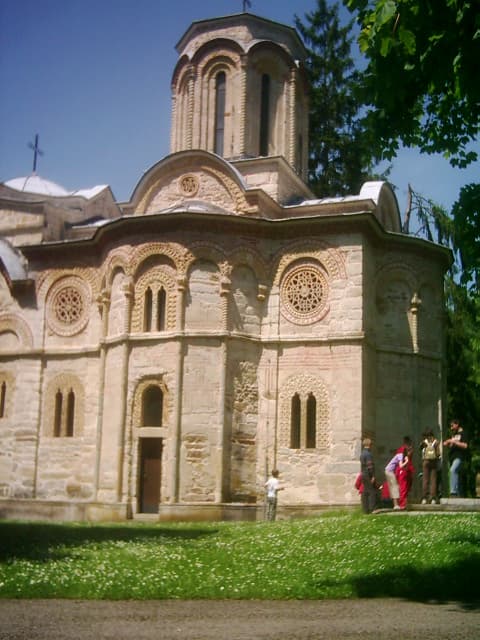
Ježevica Monastery
Ježevica Monastery is a Serbian Orthodox monastery situated near the village of Ježevica, south of Čačak, Serbia, dedicated to St. Nicholas. While tradition attributes its founding to King Stefan Milutin, historical records suggest a nobleman in service to King Stefan Dušan founded it in 1337. The monastery's interior was adorned with paintings in the early 17th century, and a Baroque bell tower was added in the 19th century, making it a significant cultural heritage site.
Ljubostinja Monastery
Ljubostinja Monastery is a Serbian Orthodox monastery near Trstenik, Serbia, built between 1388 and 1405 by Princess Milica. Dedicated to the Holy Virgin, its name signifies a "place of love," purportedly built on the site where Prince Lazar and Princess Milica first met. The monastery served as Princess Milica's endowment and later became a refuge for widows of fallen noblemen, eventually housing about fifty nuns and being declared a Monument of Culture of Exceptional Importance.
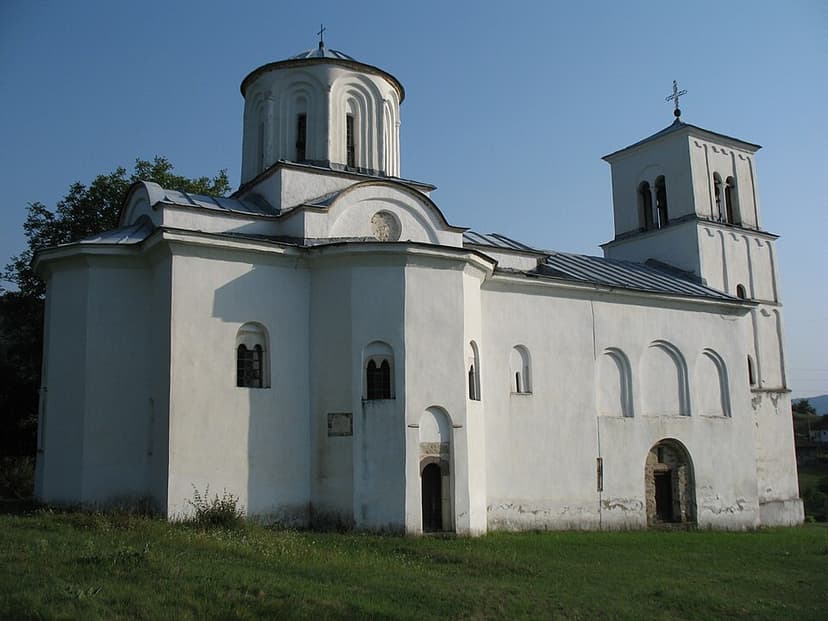
Nova Pavlica Monastery
Nova Pavlica Monastery is a 14th-century Serbian Orthodox monastery situated in Pavlica, Raška, southwestern Serbia. Founded by Stefan and Lazar Musić, it is dedicated to the Presentation of Mary and exemplifies the Morava architectural school. The monastery holds historical significance, having hosted the relics of Prince Lazar on their journey to Ravanica.