
Thorney Abbey
Christian·United Kingdom·Active Parish Church (partially extant)·10th century
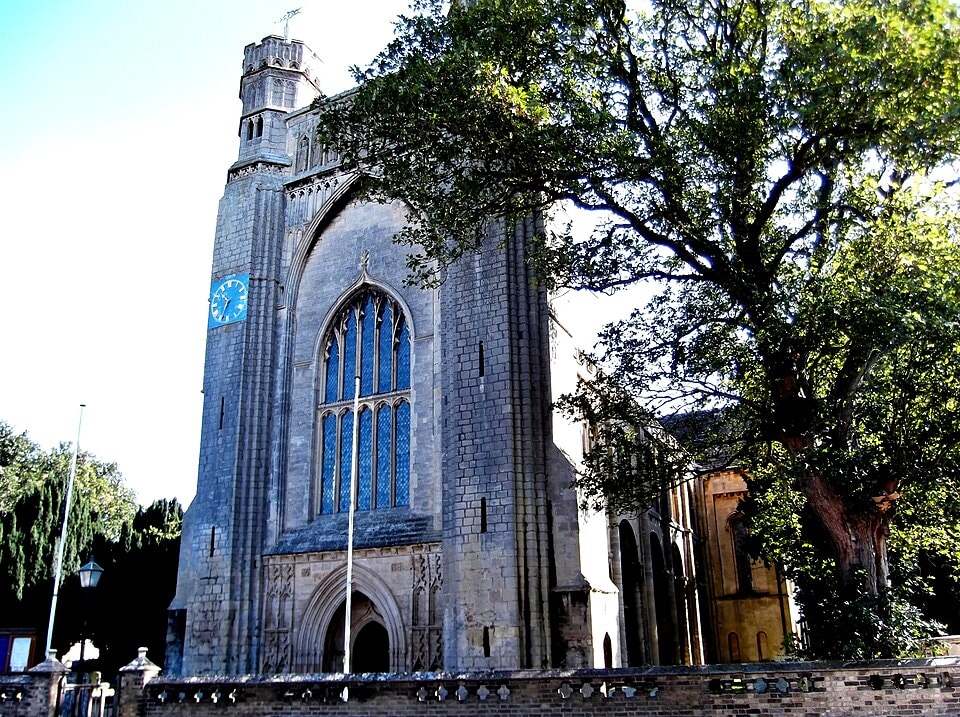
Thorney Abbey was a significant medieval English Benedictine monastery located in Thorney, Cambridgeshire. Its history traces back to a 7th-century hermitage, with a Benedictine foundation in the 10th century. Following the Norman Conquest, a substantial rebuilding program commenced, establishing it as a prominent religious center. While most of its structures were dismantled after the Dissolution of the Monasteries in the 16th century, the nave of its church survived and was later restored as the Parish Church of St Mary and St Botolph.
Key Facts
- ›Founded as a Benedictine monastery in the 970s.
- ›Underwent major rebuilding after the Norman Conquest of 1066.
- ›Henry I was a noted benefactor of the abbey.
- ›Most of its buildings were demolished after the Dissolution of the Monasteries in 1539.
- ›The nave of the church was preserved and restored as a parish church in 1638.
- ›The site is associated with the burial of numerous Anglo-Saxon saints.
Norman
Burial Site of Numerous Anglo-Saxon Saints, Surviving Nave of the Medieval Church, Model of the Monastery In the Thorney Museum
Church of St Mary and St Botolph
Athwulf of Thorney, Benedict Biscop, Botwulf of Thorney, Cissa of Crowland, Herefrith of Thorney, Huna of Thorney, Tancred of Thorney, Torthred of Thorney, Tova, Wihtred of Thorney, Albinus of Thorney, Gunther of Le Mans, Henry I, Robert Blythe
Destruction of Hermitage By Viking Incursion, Norman Conquest, Rebuilding of the Church, Dissolution of the Monasteries, Restoration of the Nave As A Parish Church
About Thorney Abbey
Thorney Abbey, now functioning as the Church of St Mary and St Botolph, stands as a historically significant medieval English Benedictine monastery situated in Thorney, Cambridgeshire, within the marshy Fens region. Its origins can be traced back to a hermitage established in the mid-7th century, which was later destroyed by Viking raids. A formal Benedictine monastery was founded in the 970s, and a substantial rebuilding program was initiated following the Norman Conquest in 1066. A new monastic church commenced construction under Abbot Gunther of Le Mans, appointed in 1085, and was in use by 1089, with completion in 1108. The abbey benefited from royal patronage, including that of Henry I, who issued a writ ensuring the return of the manor of Sawbridge to the abbey.
The settlement's focus gradually shifted away from the fen edge in the late 12th or early 13th century, possibly due to encroaching waters. The earlier site was reoccupied in the 13th and 14th centuries with the addition of clay layers to support timber buildings, and more substantial structures were added in the 16th century, likely as part of an expanding complex for guesthouses, stables, or workshops.
Following the Dissolution of the Monasteries, most of Thorney Abbey's structures vanished. The last abbot, Robert Blythe, a supporter of King Henry VIII, signed a letter to the Pope. The abbey was surrendered to royal commissioners on December 1, 1539, and its buildings were largely demolished and their materials repurposed. The site was subsequently granted to John Russell, 1st Earl of Bedford in 1549/50. Crucially, the nave of the church survived and was restored as the Parish Church of St Mary and St Botolph in 1638, with its aisles demolished and arcade openings walled up. Some stained glass from this period may have originated from Steelyard in London. The current east end of the church, designed in the Norman style by Edward Blore, dates from 1840–1841. The church is now a Grade I listed building.
Thorney Abbey is also notable as the burial place for numerous Anglo-Saxon saints, including Athwulf, Benedict Biscop, Botwulf, and Tancred. Archaeological excavations in 2002 unearthed pottery, animal bone, roofing material, and a significant deposit of high-quality painted glass dating from the 13th and 14th centuries, providing further insight into the monastery's rich past. A model of the monastery is preserved in the Thorney Museum.
Source: Wikipedia ↗
Frequently Asked Questions
When was Thorney Abbey founded?
A Benedictine monastery was founded at Thorney in the 970s. However, historical sources also refer to an earlier hermitage that existed in the mid-7th century.
What happened to Thorney Abbey after the Dissolution?
After the Dissolution of the Monasteries, most of Thorney Abbey's buildings were demolished, and the stone was reused. The site was granted to John Russell, 1st Earl of Bedford in 1549/50.
Is any part of Thorney Abbey still standing?
Yes, the nave of Thorney Abbey's church survived and was restored as the Parish Church of St Mary and St Botolph in 1638. The present east end of the church, in Norman style, was added in the 1840s.
Are there any notable figures associated with Thorney Abbey?
Thorney Abbey was a burial site for many Anglo-Saxon saints, including Athwulf, Benedict Biscop, Botwulf, and Tancred. The last abbot, Robert Blythe, was a supporter of King Henry VIII.
What is known about the architecture of Thorney Abbey?
A significant rebuilding program occurred after the Norman Conquest, with a new church begun around 1085 and finished by 1108. The present east end of the surviving church is in the Norman style, dating from the 1840s.
Related Monasteries
Pilton Priory
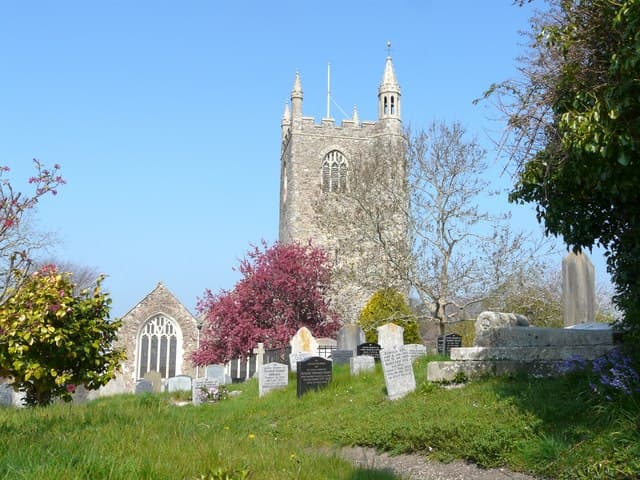
Pilton Priory was a Benedictine monastic cell founded between 925 and 940 as a dependency of Malmesbury Abbey. It ceased to function as a monastery during the Dissolution of the Monasteries in 1533 and its church, now the Anglican parish church of St Mary the Virgin in Pilton, Barnstaple, retains significant elements of its medieval and later architecture. The church building showcases a blend of 13th and 15th-century construction with later restorations, incorporating visible traces of the former monastic structures.

Bardsey Abbey
Bardsey Abbey, also known as St Mary's Abbey, was a significant religious site founded in the 6th century on Bardsey Island, Wales. It served as a major center of pilgrimage and a burial place for saints and important figures. The monastery, which eventually became part of the Augustinian Canons Regular by 1212, was dissolved and its buildings demolished in 1537 by Henry VIII, though the island retains its spiritual importance and is a destination for modern pilgrims.

Bentley Priory
Bentley Priory began as a medieval priory for Augustinian Canons in Middlesex, though no remnants of the original structure survive. The current stately home, designed by Sir John Soane, was built in the late 18th century and expanded over the following decades. It later served as the final residence for Queen Adelaide, a hotel, and a girls' school before becoming the crucial headquarters for RAF Fighter Command during World War II. Today, parts of the building house a museum dedicated to its wartime role, while the grounds function as a nature reserve.