
Talacre
Talacre is a village located on the north coast of Wales, known for its sandy beach, dunes, and proximity to the Point of Ayr. Historically, the area served as a military firing range and a refuge for evacuees during World War II. The Talacre estate, once home to the Mostyn baronets, also housed a Benedictine nunnery in the 20th century.
Key Facts
- ›Northernmost mainland settlement in Wales.
- ›Features a sandy beach with dunes and adjacent holiday caravan parks.
- ›The lighthouse on the beach is a notable landmark, often associated with reported ghostly sightings.
- ›Served as an aircraft firing range and refuge for evacuees during World War II.
- ›The former Talacre estate was home to the Mostyn baronets and later housed Benedictine nuns.

Talacre Lighthouse, Sandy Beach With Dunes, Talacre Beach Resort, Presthaven Sands Holiday Park, Westbury Castle
Margaret Mostyn
- Used By Armed Forces As An Aircraft Firing Range During World War Ii
- Served As A Refuge For Evacuees From Liverpool During World War Ii
- Occupied By Benedictine Nuns From 1921 To 1988
About Talacre
Talacre is a village situated on the picturesque north coast of Wales in Flintshire, holding the distinction of being the northernmost mainland settlement in the country. Its landscape is characterized by a sandy beach, extensive dunes, and adjacent holiday caravan parks, with the Clwydian Range hills forming a backdrop to the east, marking the boundary of the Vale of Clwyd. The name 'Talacre' itself is a Welsh derivation, combining 'tal' (end) and 'acrau' (acres), reflecting the local dialect's pronunciation.
Historical Significance and Modern Appeal
The village and its surroundings have a varied history. During the Second World War, Talacre played a strategic role, serving as an aircraft firing range for the armed forces and a sanctuary for evacuees from Liverpool, who found refuge in temporary accommodations. The area is perhaps most famously associated with its lighthouse, a landmark on the beach that has become a focal point for reported paranormal activity, with claims of sightings of a spectral lighthouse keeper. The television drama 'Skins' also featured the lighthouse in an episode, further contributing to its recognition.
The Talacre Estate
Historically, the Talacre estate, which included Talacre Hall built in 1829, was the seat of the Mostyn baronets. A notable figure from this estate was Margaret Mostyn, a Carmelite who grew up there in the early 17th century. The estate underwent a significant transformation in the 20th century; it was sold at auction in 1919 and subsequently occupied by a community of Benedictine nuns from 1921 until their departure in 1988. The main hall, now a Grade II* listed building, has been restored as a private residence and is known as Westbury Castle.
Source: Wikipedia ↗
Frequently Asked Questions
What is the meaning of the name Talacre?
The name Talacre is derived from Welsh words. 'Tal' means 'end', and 'acrau' (pronounced 'acre' in the local dialect) means 'acres'. This combination has influenced its pronunciation in English.
What is Talacre most popular for?
Talacre is most popular for its lighthouse on the nearby beach, the Talacre Beach Resort, and the Presthaven Sands holiday park. The lighthouse is also noted for numerous reported ghostly sightings.
What was Talacre used for during World War II?
During World War II, Talacre was utilized by the armed forces as an aircraft firing range. It also served as a refuge for evacuees from Liverpool, who were housed in hastily constructed huts.
What was the history of Talacre Abbey?
The Talacre estate, including what was referred to as Talacre Abbey and Talacre Hall, was the ancestral home of the Mostyn baronets. After being sold in 1919, it was occupied by Benedictine nuns from 1921 until 1988. The main hall has since been repurposed as a private residence and renamed Westbury Castle.
Related Monasteries

Aberconwy Abbey
Aberconwy Abbey was a significant Cistercian monastery, initially founded near Caernarfon in 1186 before moving to Conwy. It rose to prominence as the most important abbey in North Wales during the 13th century, largely due to the patronage of Llywelyn the Great, who was buried there. The abbey was later forcibly relocated by King Edward I to Maenan to make way for Conwy Castle and was eventually suppressed in 1537.
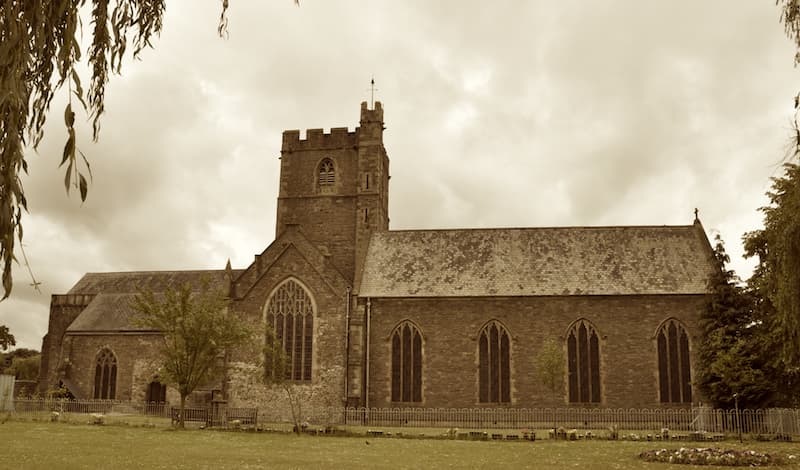
Abergavenny Priory
The Priory Church of St Mary, Abergavenny, is a significant parish church in Monmouthshire, Wales, often referred to as "the Westminster Abbey of Wales" due to its size and collection of high-status tombs. Originally established as a Benedictine priory in the late 11th century, it became a parish church after the Dissolution of the Monasteries. The church is renowned for its numerous medieval effigies and notable architectural features, including 15th-century choir stalls and a unique 15th-century wooden carving known as "The Jesse."

Bangor Monastery
Bangor Cathedral, dedicated to its founder Saint Deiniol, stands on a site of Christian worship since the sixth century. Originally established as St Deiniol's Monastery, it has a long and tumultuous history marked by destruction and rebuilding, evolving from its Norman origins to its current Gothic Revival appearance. The cathedral is a significant religious and historical landmark in Gwynedd, Wales, known for its architectural evolution and notable features.