
Sucevița Monastery
Sucevița Monastery is a historic Eastern Orthodox convent located in northeastern Romania, built in 1585. It is renowned for its unique architecture, blending Byzantine and Gothic elements, and for its extensive interior and exterior mural paintings that depict biblical scenes. Originally serving as a fortified princely residence and manuscript workshop, it now houses a museum showcasing its rich artistic and historical legacy.
Key Facts
- ›Built in 1585 by Ieremia Movilă, Gheorghe Movilă, and Simion Movilă.
- ›Features a blend of Byzantine and Gothic architectural styles.
- ›Walls are covered in mural paintings dating from around 1601, representative of the Moldavian style of exterior paintings.
- ›The monastic ensemble includes defensive walls and four towers.
- ›Served as both a fortified monastery and a princely residence.
- ›Inscribed on the UNESCO World Heritage list in 2010 as part of the Painted Churches of Moldavia.

Byzantine, Gothic
- Extensive Interior and Exterior Mural Paintings
- Defensive Walls
- Four Towers
- Museum With Historical and Art Objects
- Manuscript Workshop and Printing Center Legacy
Ieremia Movilă, Gheorghe Movilă, Simion Movilă
- Built In 1585
- Decorated With Mural Paintings Around 1601
- Inscribed As A Unesco World Heritage Site In 2010
About Sucevița Monastery
Sucevița Monastery is a significant Eastern Orthodox convent located in the northeastern part of Romania, near the Suceviţa River in the village of Sucevița. Established in 1585 by Ieremia Movilă, Gheorghe Movilă, and Simion Movilă, the monastery stands as a remarkable example of religious and artistic heritage.
Architecture and Art
The architectural design of Sucevița Monastery is a compelling fusion of Byzantine and Gothic elements, incorporating styles typical of the painted churches of northern Moldavia. Its most striking feature is the extensive mural paintings that adorn both the interior and exterior walls. These vibrant artworks, dating from around 1601, are of immense artistic value, depicting episodes from the Old and New Testaments and representing one of the last instances of the renowned Moldavian style of exterior painting.
Historical Significance and Features
Beyond its religious function, Sucevița Monastery was also a fortified princely residence. The monastic ensemble is characterized by its nearly square interior court, measuring 100 by 104 meters, which is encircled by imposing defensive walls standing 6 meters high and 3 meters wide. Four towers, one at each corner, further enhance its fortified nature. The thick walls today enclose a museum that exhibits a distinguished collection of historical and art objects. This collection includes the tomb covers of Ieremia and Simion Movilă, elaborate embroidered portraits, ecclesiastical silverware, books, and illuminated manuscripts, testifying to Sucevița's historical importance as both a center for manuscript production and a former printing hub.
Recognition and Modern Status
In recognition of its exceptional cultural and historical significance, Sucevița Monastery was inscribed by UNESCO on its list of World Heritage Sites in 2010, as part of the group known as the Painted Churches of Moldavia. It is also noted as a major attraction along the Via Transilvanica long-distance trail, following Putna Monastery in popularity.
Source: Wikipedia ↗
Frequently Asked Questions
When was Sucevița Monastery built?
Sucevița Monastery was built in the year 1585. The construction was overseen by Ieremia Movilă, Gheorghe Movilă, and Simion Movilă.
What is the architectural style of Sucevița Monastery?
The architecture of Sucevița Monastery combines Byzantine and Gothic elements. It also incorporates features characteristic of other painted churches found in northern Moldavia.
What are the notable features of Sucevița Monastery?
The monastery is famous for its extensive mural paintings covering both interior and exterior walls, depicting biblical episodes. It also features high defensive walls, four corner towers, and houses a museum with historical and art objects.
Is Sucevița Monastery a UNESCO World Heritage Site?
Yes, Sucevița Monastery was inscribed by UNESCO on its list of World Heritage Sites in 2010. It is recognized as one of the Painted Churches of Moldavia.
Who is buried at Sucevița Monastery?
Ieremia Movilă is buried at Sucevița Monastery. His tomb cover, an embroidered portrait in silver thread, is part of the monastery's collection.
Related Monasteries

Ciolanu Monastery
Ciolanu Monastery is an Eastern Orthodox monastic community situated in Tisău commune, Buzău County, Romania. Founded around 1570 by the boyar Dumitru Ciolanu and the Sorescu family, it bears the name of its founder. The monastery complex includes a museum showcasing icons by Gheorghe Tattarescu and other religious artifacts.

Pochayiv Holy Dormition Lavra
The Holy Dormition Pochaiv Lavra is a significant monastery and lavra located in Pochaiv, Ukraine, atop a 60-meter hill. It has served as a crucial spiritual center for Eastern Orthodoxy, Greek Catholicism, and again for Orthodoxy, with recent rulings granting spiritual control to the Orthodox Church of Ukraine. The monastery is renowned for its historical importance, architectural significance, and the revered icon of Our Lady of Pochaiv.
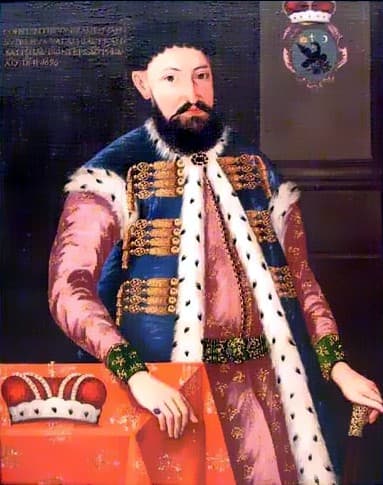
Brâncoveni Monastery
Brâncoveni Monastery is a religious site associated with the martyrdom of Prince Constantin Brâncoveanu and his sons, who were executed by the Ottoman Empire for refusing to renounce their Christian faith. The monastery, along with other significant constructions like Hurezi Monastery, is representative of the distinctive Brâncovenesc architectural style, which harmoniously blends local traditions with Neo-Byzantine and Renaissance influences. Following their martyrdom, Constantin Brâncoveanu and his family were canonized as saints by the Romanian Orthodox Church, with their feast day celebrated annually.