
Strata Florida Abbey
Strata Florida Abbey was a significant Cistercian monastery founded in 1164 in Wales. It served as a royal mausoleum for the Dinefwr family and was a vital center for Welsh culture and politics, notably compiling the "Brut y Tywysogion." The abbey faced destruction, plundering, and eventual dissolution in the 16th century, with its remains later undergoing archaeological excavation and preservation.
Key Facts
- ›Founded in 1164 as a Cistercian monastery.
- ›Became a burial site for the princely Dinefwr family of Deheubarth.
- ›The "Brut y Tywysogion," a key historical source for Wales, was compiled here.
- ›Was temporarily used as a military base during Owain Glyndŵr's rebellion.
- ›Dissolved in 1539, with most buildings demolished for materials.
- ›Archaeological excavations in the 19th and 20th centuries have revealed significant remains.

Main Entrance Archway, Great West Door of the Abbey Church, Excavated Medieval Tiling, On-Site Museum, Graveyard Still In Use, Memorial To Dafydd Ap Gwilym
Abaty Ystrad Fflur
Robert Fitzstephen, Rhys Ap Gruffydd, Gruffydd Ap Rhys Ii, Dafydd Ap Gwilym, Llywelyn Ap Iorwerth, Dafydd Ap Llywelyn, Owain GlyndŵR, Henry Iv, Earl of Worcester, Stephen Williams
- Founded In 1164
- Church Consecrated In 1201
- Ordered Destroyed By King John In 1212, But Paid A Fine To Avert Destruction
- Prince Llywelyn Ap Iorwerth Held A Council Here Around 1238
- Taken and Plundered By King Henry Iv In 1401 During Owain GlyndŵR's Rebellion
- Dissolved In 1539 By Church Commissioners Under Henry Viii
About Strata Florida Abbey
Strata Florida Abbey, known in Welsh as Abaty Ystrad Fflur, is a former Cistercian monastery located near Pontrhydfendigaid in Ceredigion, Wales. Founded in 1164, it quickly became a significant religious and cultural center. The abbey's history is deeply intertwined with the Welsh princes of Deheubarth, particularly the Dinefwr family, who made it a royal mausoleum and interred many of their descendants there.
History and Significance
The foundation of Strata Florida was part of the rapid expansion of the Cistercian order in the 12th century. Initially established as Hen Fynachlog, it was refounded and developed under the patronage of Rhys ap Gruffydd. The abbey's importance grew, evidenced by Prince Llywelyn ap Iorwerth holding a council there in 1238 to secure recognition for his son's succession. Critically, Strata Florida Abbey is recognized as the place where the "Brut y Tywysogion" (Chronicle of the Princes), a vital primary source for early Welsh history, was compiled. The abbey also controlled numerous farms, or "granges," across Wales.
During the early years of Owain Glyndŵr's rebellion, the abbey was seized by King Henry IV and used as a military base, with its monks evicted due to perceived sympathy for the Welsh cause. Following the rebellion's end, the monastic site was returned to the Cistercians.
Dissolution and Later History
In 1539, as part of Henry VIII's dissolution of the monasteries, Strata Florida Abbey was dissolved and its buildings were valued and sold off. The majority of the structures were demolished for building materials. However, the refectory and dormitory were repurposed into a house known as Tŷ Abaty. The site's interest was rekindled in the late 19th century with the arrival of railways, leading to archaeological excavations by Stephen Williams, which uncovered many of the remains visible today. The site is now a Scheduled Ancient Monument in the care of Cadw, preserving the remnants of its rich past.
Source: Wikipedia ↗
Frequently Asked Questions
When was Strata Florida Abbey founded?
Strata Florida Abbey was founded in 1164. The initial settlement began with Cistercian monks from Whitland Abbey constructing a religious site on the banks of the Afon Fflur.
Who patronized Strata Florida Abbey?
The abbey was founded under the patronage of Rhys ap Gruffydd and later reaffirmed under the patronage of Deheubarth, a principality of South Wales. The princely Dinefwr family transferred their patronage to Strata Florida and many of their members were interred there.
What historical significance does Strata Florida Abbey hold?
It was an important religious and political center, hosting councils and serving as the compilation site for the "Brut y Tywysogion," a crucial source for early Welsh history. It also acted as a royal burial ground for the Dinefwr dynasty.
What happened to Strata Florida Abbey after its dissolution?
Following its dissolution in 1539, the abbey's buildings were largely demolished for building materials. Some structures, like the refectory and dormitory, were repurposed. The site later became a focus for archaeological interest and preservation efforts.
Are there any notable figures buried at Strata Florida Abbey?
Yes, Strata Florida Abbey is the burial place for many members of the Dinefwr family, including eleven princes of the Welsh royal house during the 12th and 13th centuries. Notable burials include Prince Gruffydd ap Rhys II and the famous Welsh poet Dafydd ap Gwilym.
What can be seen at Strata Florida Abbey today?
Today, visitors can see various ruins of the former monastery, including the main entrance archway and the Great West Door of the Abbey Church. A modern roof protects excavated medieval tiling, and a small museum displays artifacts, including tile fragments and a replica of a memorial to the buried princes.
Related Monasteries
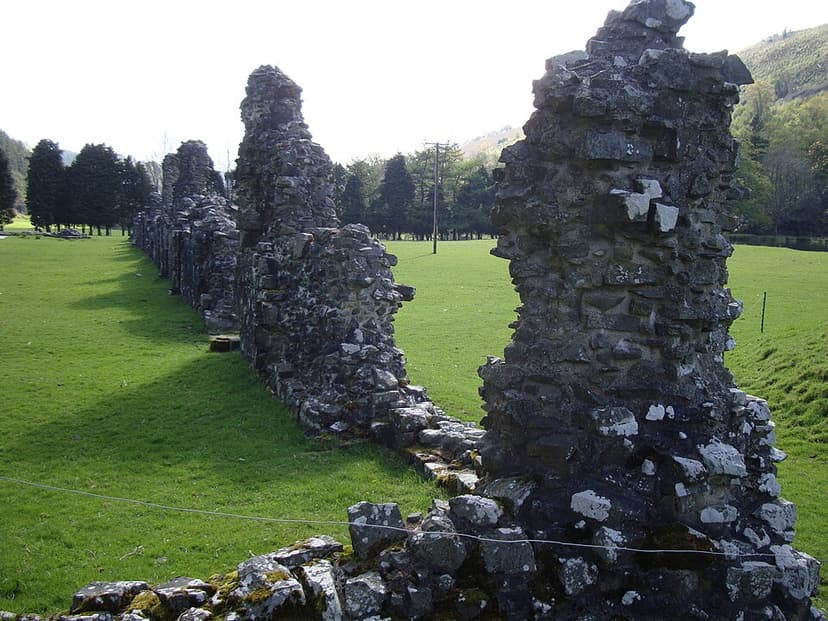
Cwmhir Abbey
Cwmhir Abbey was a Welsh Cistercian monastery founded in 1176 by Cadwallon ap Madog, though a spurious tale attributed its origin to an earlier date and founder. Situated near Llandrindod Wells in Powys, the abbey endured significant hardship due to feuds with the Mortimer family and damage during English conflicts, including the uprising of Owain Glyndŵr. Despite an ambitious construction project for its church, it was abandoned due to ongoing troubles, leading to a drastic decline in its community size by the time of its dissolution in 1536.
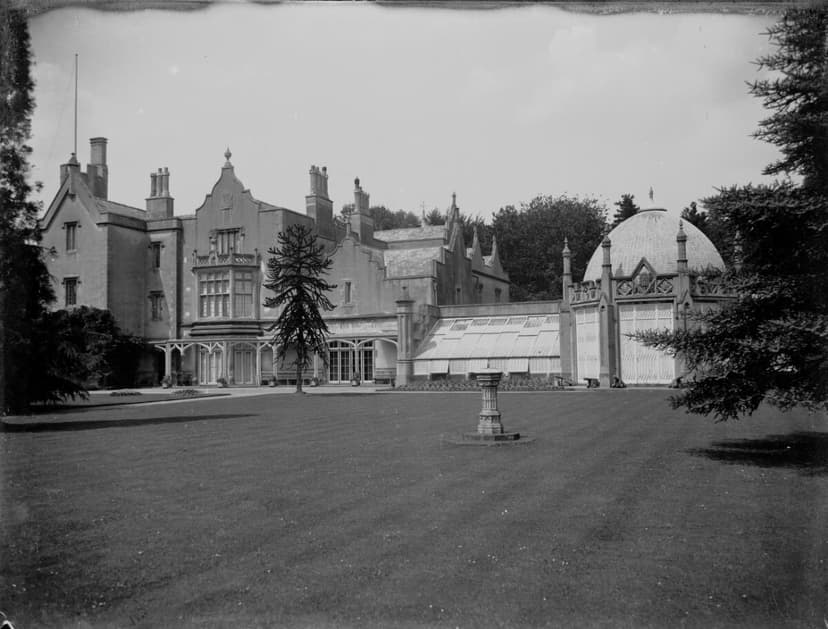
Llantarnam Abbey
Llantarnam Abbey is a historic Cistercian monastery site in Wales, founded in the late 12th century. After its dissolution in 1536, the site underwent various transformations, including becoming a country house and military depot, before being re-established as a monastic institution in 1946 by the Sisters of St Joseph of Annecy. The main abbey building is now a Grade II*-listed Tudor Revival country house.

Llanllugan Abbey
Llanllugan Abbey was a Cistercian nunnery in Powys, Wales, notable for being one of only two Cistercian women's monasteries in the region. Founded in the early 13th century, it received significant land charters and income from appropriated churches, initially as a dependency of Strata Marcella Abbey. The abbey is also celebrated in Welsh literature, particularly through a poem by Dafydd ap Gwilym, though historical records suggest a small community.