
Llanllugan Abbey
Cistercian·Wales·ruins/former monastery·13th century
Llanllugan Abbey was a Cistercian nunnery in Powys, Wales, notable for being one of only two Cistercian women's monasteries in the region. Founded in the early 13th century, it received significant land charters and income from appropriated churches, initially as a dependency of Strata Marcella Abbey. The abbey is also celebrated in Welsh literature, particularly through a poem by Dafydd ap Gwilym, though historical records suggest a small community.
Key Facts
- ›One of only two Cistercian women's monasteries in Wales.
- ›Received core estates in Llanllugan via a charter from Maredudd ap Rhobert, Lord of Cedewain.
- ›Income derived from estates such as Hydan grange and Cowney, and appropriated churches.
- ›The former monastery church still stands as the parish church of Llanllugan.
- ›Famous in Welsh literature due to Dafydd ap Gwilym's poem 'Cyrchu Lleian'.

Former Monastery Church
Maredudd Ap Rhobert, Dafydd Ap Gwilym, Hugh of St Asaph, Anian of St Asaph
About Llanllugan Abbey
Llanllugan Abbey was a significant Cistercian nunnery situated in Llanllugan, Powys, Wales. It held the distinction of being one of only two Cistercian women's monasteries established in Wales, a testament to the presence and influence of the Cistercian order within Welsh religious life.
Founding and Estates
The abbey's origins trace back to the early thirteenth century when Maredudd ap Rhobert, the Lord of Cedewain, granted an early charter. This charter provided the nuns with their primary estates located in the township of Llanllugan, between two streams known as the Rhiw. Over time, Llanllugan Abbey expanded its holdings to include other estates, such as Hydan grange in Castle Caereinion and Cowney in Llangadfan. The abbey also received income from appropriated churches, with the rectory of Llanfair Caereinion granted by Bishop Hugh of St Asaph in 1239 and Llanllwchairan by Bishop Anian of St Asaph in 1263. Initially, Llanllugan Abbey was founded as a dependency of the Cistercian monks at the Abbey of Strata Marcella.
Cultural Significance and Community Size
The abbey holds a notable place in Welsh literature, famously featured in the poem "Cyrchu Lleian" (Wooing a nun) by the renowned poet Dafydd ap Gwilym. In this work, the poet directs a messenger to "proud Llanllugan" to persuade a nun to leave the convent. Despite the poetic imagery, historical records suggest a rather modest community. In 1377, only four nuns and an abbess were recorded. While Dafydd ap Gwilym's poem, written before the Black Death, implies a larger number of nuns, it is widely understood that the two Welsh Cistercian nunneries typically housed fewer than a dozen members each, suggesting the poet's portrayal may have been embellished for artistic effect.
Surviving Structures and Location
Today, the former monastery church endures as the parish church of Llanllugan, serving as a tangible link to the abbey's past. However, the precise location of the abbey's main buildings remains uncertain. Archaeological speculation suggests they might have been situated in a meadow approximately 200 meters to the south of the present-day church.
Source: Wikipedia ↗
Frequently Asked Questions
When was Llanllugan Abbey founded?
The founding charter from Maredudd ap Rhobert was likely issued in the early thirteenth century, placing its establishment around that period. It was founded as a dependency of the Cistercian monks at the Abbey of Strata Marcella.
What was Llanllugan Abbey's significance?
It was one of only two Cistercian nunneries in Wales. Its existence and place in Welsh culture are highlighted by its mention in the famous poem 'Cyrchu Lleian' by Dafydd ap Gwilym.
How large was the community at Llanllugan Abbey?
Historical records suggest a small community, with only four nuns and an abbess recorded in 1377. While Dafydd ap Gwilym's poem implies a larger number, it is generally believed that Welsh Cistercian nunneries rarely exceeded a dozen members.
What remains of Llanllugan Abbey today?
The former church of the monastery survives and is now the parish church of Llanllugan. The exact location of the other abbey buildings remains uncertain, though they may have been situated in a meadow south of the current church.
Related Monasteries
Cwmhir Abbey
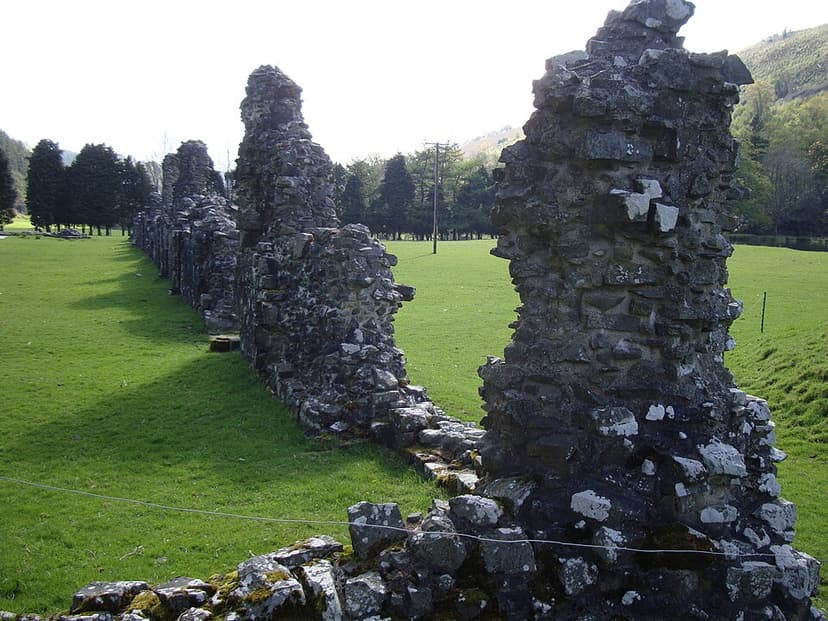
Cwmhir Abbey was a Welsh Cistercian monastery founded in 1176 by Cadwallon ap Madog, though a spurious tale attributed its origin to an earlier date and founder. Situated near Llandrindod Wells in Powys, the abbey endured significant hardship due to feuds with the Mortimer family and damage during English conflicts, including the uprising of Owain Glyndŵr. Despite an ambitious construction project for its church, it was abandoned due to ongoing troubles, leading to a drastic decline in its community size by the time of its dissolution in 1536.
Llantarnam Abbey
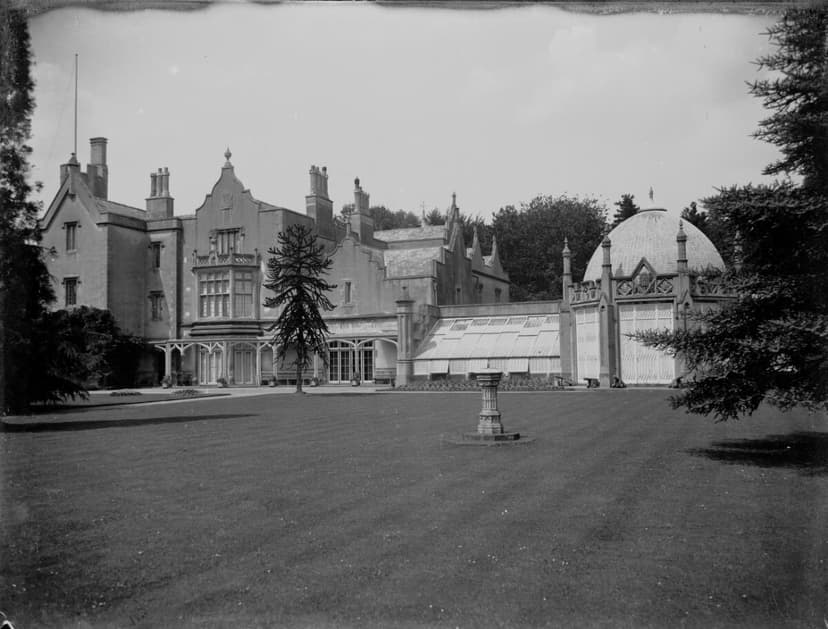
Llantarnam Abbey is a historic Cistercian monastery site in Wales, founded in the late 12th century. After its dissolution in 1536, the site underwent various transformations, including becoming a country house and military depot, before being re-established as a monastic institution in 1946 by the Sisters of St Joseph of Annecy. The main abbey building is now a Grade II*-listed Tudor Revival country house.

Strata Florida Abbey
Strata Florida Abbey was a significant Cistercian monastery founded in 1164 in Wales. It served as a royal mausoleum for the Dinefwr family and was a vital center for Welsh culture and politics, notably compiling the "Brut y Tywysogion." The abbey faced destruction, plundering, and eventual dissolution in the 16th century, with its remains later undergoing archaeological excavation and preservation.