
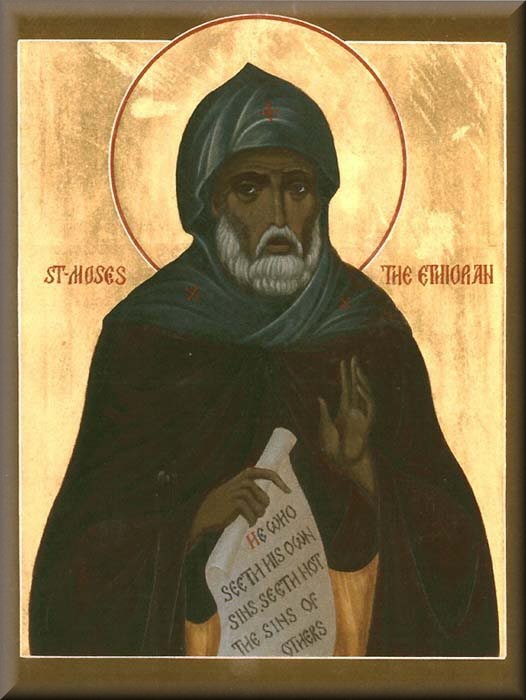
St. Moses the Black
St. Moses the Black was a Nubian ascetic hieromonk and Desert Father in 4th-century Egypt who famously converted from a life of crime to extreme asceticism. He is highly venerated in the Eastern Orthodox and Oriental Orthodox Churches for his dramatic transformation and teachings on non-violence and humility. His life story, documented in historical accounts like Sozomen's Ecclesiastical History, highlights his journey from a feared robber leader to a respected spiritual figure and martyr.
Key Facts
- ›Born in Nubia (modern-day Sudan/Egypt) in the 4th century AD.
- ›Initially a leader of a violent gang of 75 robbers.
- ›Converted to Christianity after encountering monks in the desert of Wadi El Natrun.
- ›Became a hieromonk and spiritual leader among the Desert Fathers.
- ›Ordained a priest and was martyred by bandits around 405 AD.
- ›His relics and major shrine are located at the Paromeos Monastery in Egypt.
Paromeos Monastery, Wadi El Natrun
Moses the Strong, Moses the Robber, Moses the Nubian, Murin
Isidore, John Cassian
Conversion From A Life of Crime To Asceticism, Ordination As A Priest, Martyrdom By Berber Bandits
About St. Moses the Black
St. Moses the Black, born in Nubia in the 4th century AD, stands as a profound example of radical repentance and spiritual transformation within early Christian monasticism. Initially known as Moses the Robber, he led a notorious gang of 75 criminals, wielding immense physical strength and courage. His life took a dramatic turn when, seeking refuge with monks in the desert of Wadi El Natrun, he was deeply moved by their devotion and peaceful existence. This encounter led to his conversion, baptism, and subsequent entry into monastic life.
Life and Asceticism
Moses's journey within the monastic community was marked by zealous dedication, though traces of his former passions initially lingered. He famously subdued a group of robbers who attacked his cell, dragging them before the other monks for judgment, an act that underscored his struggle and eventual commitment to Christian principles. Under the guidance of abbots like Isidore, Moses learned the slow process of spiritual perfection. He proved to be an effective spiritual leader, his actions often interpreted as upholding divine commandments over human rules, such as in the instance of offering hospitality during a fasting period.
Teachings and Martyrdom
Later ordained a priest, Moses became a spiritual leader for a colony of hermits. He is remembered for his teachings on non-violence, humility, and self-reflection, urging monks to focus on their own faults rather than those of others. In approximately 405 AD, at the age of 75, St. Moses the Black and seven companions were martyred by Berber bandits. He had forbidden the other monks to resist, choosing to remain behind and face death, interpreting it as a fitting end for his past life.
Legacy
His conversion and rapid spiritual attainment were considered extraordinary by contemporaries, with Hermias Sozomen noting it as unprecedented. St. Moses the Black influenced later monastic figures, including John Cassian, and is highly venerated in the Eastern Orthodox and Oriental Orthodox Churches. His feast day is celebrated on June 18th in the Greek Church and August 28th in the Syriac Orthodox Church. Today, his relics and a major shrine are located at the Paromeos Monastery in Egypt's Wadi El Natrun.
Source: Wikipedia ↗
Frequently Asked Questions
Who was St. Moses the Black?
St. Moses the Black was a 4th-century Nubian ascetic hieromonk and Desert Father in Egypt. He is known for his dramatic conversion from a life of crime and robbery to intense Christian asceticism and spiritual leadership.
What was St. Moses the Black's life like before his conversion?
In his youth, Moses was a slave and later became the leader of a notorious gang of 75 robbers. He was known for his immense physical strength, courage, and a violent reputation that terrorized communities in the Nile Valley.
How did St. Moses the Black convert to Christianity?
Moses's conversion began when he sought shelter with monks in the desert of Wadi El Natrun after a failed robbery attempt. The monks' dedication, peace, and contentment deeply influenced him, leading him to give up his criminal life, be baptized, and join their monastic community.
What was St. Moses the Black's monastic life like?
Moses faced challenges adjusting to monastic discipline, with traces of his former tendencies lingering. However, he became a zealous monk, a prophetic spiritual leader, and was eventually ordained a priest, influencing many disciples with his teachings on humility and non-violence.
How did St. Moses the Black die?
Around the age of 75, St. Moses the Black and seven other monks were martyred by attacking Berber bandits. Moses refused to let the monks defend themselves, choosing instead to remain with the few who stayed behind, believing a violent death was fitting for his past.
Where are St. Moses the Black's relics and shrine located?
The relics and major shrine of St. Moses the Black are found today at the Church of the Virgin Mary in the Paromeos Monastery, a Coptic Orthodox monastery situated in Wadi El Natrun, Egypt.
Related Monasteries

Al-Sultan Coptic Orthodox Monastery
Al-Sultan Coptic Orthodox Monastery, also known as Deir es-Sultan, is an Oriental Orthodox monastery situated on the roof of the Chapel of Saint Helena within the Church of the Holy Sepulchre complex in Jerusalem's Old City. Its ownership is a long-standing dispute between the Coptic Orthodox Church and the Ethiopian Orthodox Tewahedo Church, with historical claims dating back to the Umayyad Caliphate and subsequent confirmations by Saladin. The monastery occupies a significant area and has been the site of numerous historical events and ongoing tensions between the two denominations.

Monastery of Saint Samuel the Confessor
The Monastery of Saint Samuel the Confessor, also known as Deir el-Qalamun, is an ancient Egyptian monastery situated in the Western Desert. Its origins trace back to the late 3rd or early 4th century, with hermits initially inhabiting caves in the Qalamun valley. Over centuries, it evolved into a significant monastic community, enduring periods of prosperity and devastation, and is currently home to around one hundred monks.

Paromeos Coptic Orthodox Monastery
Paromeos Monastery, also known as Baramos Monastery, is likely the oldest of the four extant Coptic Orthodox monasteries in Egypt's Wadi El Natrun. Founded around 335 AD by Saint Macarius the Great, its name may derive from Roman emperors or saints. The monastery has a long history of resilience, having been rebuilt after raids, and has contributed significantly to the Coptic Church by producing several Patriarchs.