
Sorø Klosterkirke
Christian·Denmark·Active (as a church)·12th century
Sorø Abbey Church, known historically as Sorø Klosterkirke, is a significant historical church located in Sorø, Denmark. Founded by Archbishop Absalon and constructed by Cistercians between 1161 and 1201, it is notable for its early use of red brick and its architectural similarities to the Abbey of Fontenay. The church serves as a royal burial site, housing the tombs of several Danish monarchs and Archbishop Absalon himself. Today, it is managed by the Sorø Academy Foundation.
Key Facts
- ›Founded by Archbishop Absalon.
- ›Built by Cistercians from 1161 to 1201.
- ›Constructed using red brick, an innovative material for its time.
- ›Architecturally influenced by the Abbey of Fontenay.
- ›Contains the royal graves of multiple Danish monarchs and Archbishop Absalon.
- ›Managed by the Sorø Academy Foundation.

Romanesque
Royal Burial Site, Use of Red Brick In Construction
Sorø Klosterkirke
Absalon, Christopher Ii, Euphemia, Valdemar Atterdag, Olaf Haraldsen
About Sorø Klosterkirke
Sorø Abbey Church
Sorø Abbey Church, known in Danish as Sorø Klosterkirke, stands as a historically significant ecclesiastical structure in the town of Sorø, Denmark. Its foundations were laid through the initiative of Danish archbishop Absalon, with the Cistercian order undertaking its construction. The building period spanned from 1161 to 1201, a crucial era for the development of Danish religious architecture.
Architectural Innovation and Royal Significance
A key characteristic of Sorø Abbey Church is its pioneering use of red brick as a primary building material, a departure from earlier traditions and a notable material for its time. Architecturally, it bears a resemblance to the Abbey of Fontenay, suggesting a shared stylistic influence. Beyond its construction, the church holds profound historical importance as a royal necropolis. It is the resting place for several Danish monarchs, including King Christopher II, Queen Euphemia, King Valdemar Atterdag, and King Olaf Haraldsen, as well as its founder, Archbishop Absalon.
Current Administration
Today, the stewardship and operation of Sorø Abbey Church are managed by the Sorø Academy Foundation (Stiftelsen Sorø Akademi). This foundation also oversees the adjacent Sorø Academy. While the monastic community itself is no longer active in its original form, the church continues to function and serves as a vital link to Denmark's medieval past and royal lineage.
Source: Wikipedia ↗
Frequently Asked Questions
Who founded Sorø Abbey Church?
Sorø Abbey Church was founded by Danish archbishop Absalon. He was a prominent figure in Danish history and played a key role in its establishment.
When was Sorø Abbey Church built?
The construction of Sorø Abbey Church was undertaken by Cistercians and took place between 1161 and 1201. This period marks its initial establishment and development.
What makes the construction of Sorø Abbey Church significant?
A notable aspect of its construction is the use of red brick, which was a relatively new material for ecclesiastical buildings during that era. This innovative material choice contributed to its unique appearance and construction techniques.
Who is buried at Sorø Abbey Church?
Sorø Abbey Church holds the burials of several significant figures, including its founder, Archbishop Absalon. It also serves as the final resting place for Danish royalty, such as King Christopher II, Queen Euphemia, King Valdemar Atterdag, and King Olaf Haraldsen.
Who is responsible for the management of Sorø Abbey Church today?
The responsibility for Sorø Abbey Church and its grounds falls under the Sorø Academy Foundation. This foundation also oversees the operations of Sorø Academy.
Related Monasteries

Asserbo Charterhouse
Asserbo Charterhouse was a short-lived Carthusian monastery founded in the late 12th century by Bishop Absalon in North Zealand, Denmark. Despite its initial monastic purpose, it soon transitioned to being used as a farmhouse and later leased to noble families. The site was famously swallowed by drifting sands from the 15th century until the 18th century, with the ruins eventually excavated in the 19th century.

Børglum Abbey
Børglum Abbey was a significant Premonstratensian monastery in medieval Denmark, flourishing from the 12th century until the Reformation. Originally a royal farm, it became the seat of the bishopric of Vendsyssel before the Premonstratensians established a daughter house that grew to become the mother house for their order in Scandinavia. The abbey's church served as the cathedral, making it a powerful religious and political entity, known for its seminary and annual market.
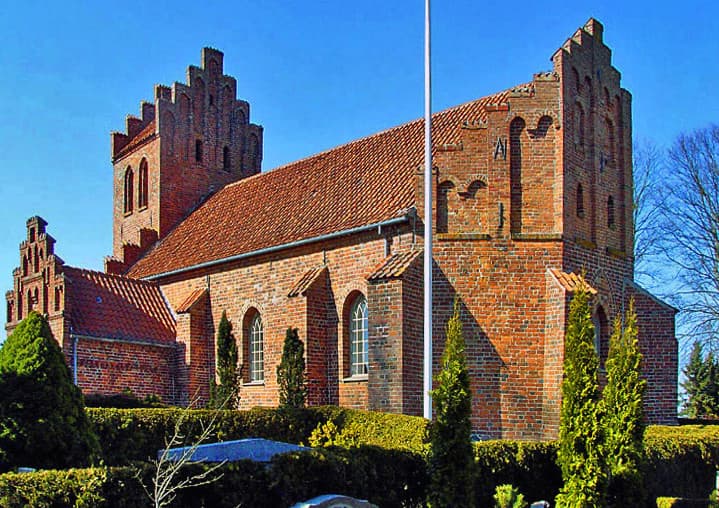
Eskilsø Abbey
Æbelholt Abbey was an Augustinian monastery founded on Eskilsø Island in 1104 before relocating to Æbelholt in 1167. It became a significant religious center, particularly after the canonization of its first abbot, William of Æbelholt, as St. Vilhelm in 1224. Following the Reformation, the abbey was dissolved in 1560, its buildings were largely demolished for reuse, and the site now hosts an abbey museum and a reconstructed medieval garden.