
Shaftesbury Abbey
Shaftesbury Abbey was a prominent Benedictine nunnery in Shaftesbury, Dorset, founded around 888 by Alfred the Great. It became a significant pilgrimage site, particularly after the translation of the relics of St. Edward the Martyr. The abbey was dissolved in 1539 during the English Reformation, having been one of the wealthiest nunneries in England.
Key Facts
- ›Founded by Alfred the Great around 888 and served as the first abbess by his daughter, Æthelgifu.
- ›Became a major pilgrimage destination following the translation of the relics of St. Edward the Martyr in 981.
- ›Was the second-wealthiest nunnery in England at the time of its dissolution.
- ›Dissolved in 1539 by Thomas Cromwell on the orders of King Henry VIII.
- ›The site now houses a museum with excavated stonework and a medieval garden.
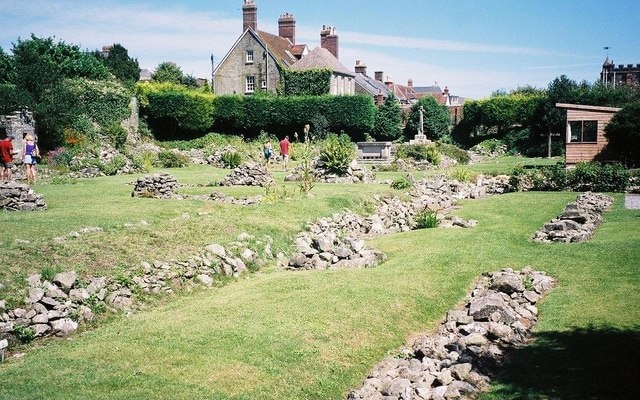
Museum With Excavated Stonework, Medieval Period Garden and Orchard, Site of the Tomb of St. Edward the Martyr
Alfred the Great, æThelgifu, æLfgifu, King Edmund I, St. Dunstan, æLfhere, Ealdorman of Mercia, St. Edward the Martyr, King æThelred, Anselm of Canterbury, Cardinal Otto Candidus, Pope Gregory Ix, Elizabeth De Burgh, Thomas Cromwell, King Henry Viii, Elizabeth Zouche, Thomas Hardy, Victoria Glendinning, Hilary Mantel, Dorothea Clancy, Dorothy Clusey, Cardinal Wolsey, Lauren Groff, Marie De France
- Foundation of the Convent
- Installation of æThelgifu As First Abbess
- Burial and Veneration of æLfgifu
- Translation of the Relics of St. Edward the Martyr
- Claimed Miracles At the Tomb of St. Edward
- Elevation of the Relics of St. Edward
- Rededication To the Mother of God and St. Edward
- Visit and Charter Confirmation By Cardinal Otto Candidus
- Imprisonment of Elizabeth De Burgh
- Dissolution of the Monasteries
About Shaftesbury Abbey
Shaftesbury Abbey, located in Shaftesbury, Dorset, England, was a significant Benedictine nunnery with a rich history stretching back to the late 9th century. Founded by Alfred the Great around 888, it was initially led by his daughter, Æthelgifu, as its first abbess. The abbey grew in prominence, particularly after it became the resting place for the relics of St. Edward the Martyr, whose translation in 981 transformed the site into a major pilgrimage destination. Numerous miracles were reportedly attributed to his intercession, further enhancing the abbey's spiritual and economic importance.
By the time of the English Reformation, Shaftesbury Abbey had amassed considerable wealth, being recognized as the second-richest nunnery in England. This affluence, however, also made it a target. In 1539, under the direction of Thomas Cromwell, the abbey was dissolved by order of King Henry VIII. The last abbess, Elizabeth Zouche, surrendered the institution, leading to its demolition and the dispersal of its assets. Despite its destruction, the historical and cultural significance of Shaftesbury Abbey endures.
History and Significance
Alfred the Great's foundation of the convent in approximately 888 marked the beginning of its long history. His daughter, Æthelgifu, served as the first abbess. The abbey's status was significantly elevated with the translation of the bones of St. Edward the Martyr from Wareham. This event, overseen by prominent figures like St. Dunstan, drew considerable attention and devotion, with accounts of miracles occurring during the procession and at the saint's tomb. These events, re-enacted a millennium later in 1981, cemented the abbey's reputation as a holy site and a center of pilgrimage.
The abbey's wealth and spiritual authority grew over centuries. It was rededicated to the Mother of God and St. Edward, and its Benedictine community was noted for its devotion. William of Malmesbury, a medieval historian, praised the nuns for their "steadfast preservation of their purity." The abbey's influence extended to civic life, with its steward swearing in the town's mayor by 1340. Its considerable holdings were such that it was famously conjectured that if the abbess of Shaftesbury and the abbot of Glastonbury had been able to marry, their offspring would have been wealthier than the King of England.
Dissolution and Legacy
The dissolution of Shaftesbury Abbey in 1539 marked the end of its monastic life. Thomas Cromwell, acting for King Henry VIII, orchestrated the surrender and subsequent demolition of the abbey. The last abbess, Elizabeth Zouche, signed the deed of surrender, leading to the sale of the abbey's lands. This event caused a temporary decline in the town of Shaftesbury.
Today, the site of Shaftesbury Abbey is managed as a museum and heritage attraction. Excavated stonework, including Anglo-Saxon carvings and medieval floor tiles, are displayed, offering insights into the abbey's past. The grounds also feature a medieval garden and orchard. The site continues to host various events, from open-air film screenings to historical lectures, ensuring its ongoing connection to the community and its rich past. Literary works, including novels by Victoria Glendinning and Hilary Mantel, have explored the history and dissolution of Shaftesbury Abbey, keeping its story alive in popular culture.
Source: Wikipedia ↗
Frequently Asked Questions
When was Shaftesbury Abbey founded?
Shaftesbury Abbey was founded around 888. It was established by Alfred the Great, who installed his daughter Æthelgifu as the first abbess.
Why did Shaftesbury Abbey become a pilgrimage site?
The abbey became a significant pilgrimage site due to the translation of the relics of St. Edward the Martyr in 981. Reports of miracles attributed to his intercession drew many visitors.
What happened to Shaftesbury Abbey?
Shaftesbury Abbey was dissolved in 1539 during the English Reformation by order of Thomas Cromwell on behalf of King Henry VIII. The abbey was demolished, and its lands were sold.
What can be seen at the Shaftesbury Abbey site today?
The site of Shaftesbury Abbey now includes a museum featuring excavated stonework, Anglo-Saxon carvings, and medieval floor tiles. There is also a medieval period garden and orchard.
What was the significance of Shaftesbury Abbey in terms of wealth?
At the time of its dissolution, Shaftesbury Abbey was the second-wealthiest nunnery in England, surpassed only by Syon Abbey. Its extensive lands contributed to its considerable wealth.
Related Monasteries

St Oswald's Priory, Gloucester
St Oswald's Priory in Gloucester was founded in the late 9th or early 10th century by Æthelflæd, daughter of Alfred the Great, and her husband Æthelred. Initially dedicated to St Peter, it was renamed in honour of St Oswald after his relics were translated there. The priory enjoyed royal favour and was a significant pilgrimage site before declining in importance from the 11th century and being suppressed in 1536.

St Serf's Inch Priory
St Serf's Inch Priory, also known as Portmoak Priory, was an Augustinian monastic community initially located on St Serf's Inch in Loch Leven, Scotland. Its origins trace back to at least 838 AD with a church dedication, evolving into an Augustinian priory in 1150 under King David I. The priory is recognized as one of Scotland's oldest Christian sites and was home to notable figures like the chronicler Andrew de Wyntoun before its eventual dissolution and conversion into a fishing hut.

Charlieu Abbey
Charlieu Abbey, also known as St. Fortunatus' Abbey, was a significant Benedictine monastery founded in 872 in the Forez region of Burgundy, France. It later became an early and important priory within the Cluniac movement. The abbey faced suppression during the French Revolution, leading to the destruction of most of its structures, with only a portion of its narthex and western bay remaining as ruins.